


 Francais
 Deutsch
 Italiano
Refine Your Search
Nevada United States 1936 stock footage and images
- Showing 4207 to 4212 of 27250 results more
more Hide
Hide
The design and features of Landing Ship Tanks in the United States.
A training film titled 'The LST Description' about design of Landing Ship Tanks (LSTs) in the United States. U.S. Landing Craft Tanks serve at various places during wartime. Bulldozers, tanks, trucks and several other equipment unloaded from a Landing Ship Tank at a beach. LSTs underway at sea. A diagram of an LST. The LST is long and wide. It has propellers with diesel engines and rudders. The design of the LST is shown. It has several features. It has bow doors and a ramp. An LST underway. The LST is beached and its bow door opens. Tanks and equipment unloaded from the LST. The bow gun, bow anchor and the towing cable of the LST. Elevators, ship's ventilators and fans are shown. The cargo hatch, the navigation bridge and guns on the bridge are shown. The conning tower. Small utility boats aboard the LST. Guns on the stern. An LST on a beach.

Tanks and other vehicles are loaded on an Landing Ship Tank in the United States.
A training film about the design of Landing Ship Tanks (LSTs). An LST underway at sea in the United States. Information about the speed of the LST is given. The navigation bridge and the conning tower of the LST. A man on the conning tower. Men aboard the LST. All LSTs have small boats. Men operating a winch with a crank. A new safety switch is opened. The forward part of the ship. The cargo hatch in the forward part. The hatch is opened to take in fresh air. Tanks and other vehicles on the tank deck. The control room of the LST. Men working in the control room. They operate switches. The elevator that connects the main deck with the tank deck. Cargo is lowered with the help of the elevator. The engine of the LST. The working of the retraction gear. The LST. An extra anchor cable is carried.
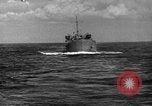
Information about the officers who handle different parts of Landing Ship Tanks in the United States. (WW2)
A World War II training film on design of Landing Ship Tanks (LSTs). An LST underway at sea in the United States. Valves to a tank line. A man working inside the LST. A storage tank consisting of fresh water and fuel oil. Other landing crafts underway at sea. Officers who control the Landing Ship Tank. The conning tower. The Commanding Officer on the conning tower. The officer looks through binoculars. The Communication Officer handles the signal bridge. Below the conning tower, in the wheel house, is the Executive Officer who is the navigator of the ship. The officer looks through binoculars. The Gunnery Officer. The ship's Supply Officer on the stern. An engineer controls the engine. The officer in charge of loading and unloading of important cargo. Tanks are loaded on the ship. Troops seated aboard.
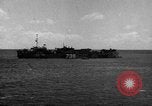
Loading and unloading of cargo from LSTs at beaches in the United States (WW2)
A World War II training film on design of Landing Ship Tanks (LSTs). An LST underway at sea in the United States. It is loaded with troops, tanks and men who operate it. Men standing near guns mounted on the LST. The forward deck gun. Several other guns on the ship. The bow gun and the stern gun. Some protective equipment on the ship. Generator oil stored in drums. A towing cable on the LST. LSTs underway at sea. Cargo loaded aboard an LST at a beach. Tanks, trucks, half trucks, bulldozers and heavy vehicles are loaded. Landing Vehicles Tracked ( LVTs ) and amphibious trucks can be loaded from water. General cargo can be stored on the tank deck of the LST or can be taken up to the main deck in an elevator. Tanks loaded aboard the deck. Men standing nearby. Cargo being unloaded on a beach. Tanks and tracks being loaded on the main deck. An LST is beached. Trucks and other vehicles are unloaded.

Loading of cargo at a harbor and amphibious vehicles at sea aboard an LST in the United States.
A training film on loading and employment of LSTs (Landing Ship Tanks) in the United States. Troops and equipment arrive at a harbor for loading. One of the TQM ( Transport Quartermaster Officer) assistants directs drivers to assigned dock space. A man marks the vehicles for proper storage. Other general cargo is checked. Modern method for facilitating loading and discharging of cargo is to set up communication by means of walkie-talkies between a ship and the dock. A man directs the cargo. The TQM acts as a liaison officer between the troops and the ship. Cargo loaded aboard the ship. LSTs in the harbor. The cargo moves up a ramp. Vehicles at a beach. Soldiers stand nearby and watch the loading activities. Bulldozers are loaded in the last so that they could be taken out first. Amphibious vehicles underway at sea. They arrive near the ship to be loaded. An LVT ( Landing Vehicle Tracked ) is brought up to the ramp. The vehicle is taken aboard. Other amphibious vehicles are taken aboard. The loading activity is completed. The Captain of the ship gives an order to take up the ramp and close the door. (World War II period).
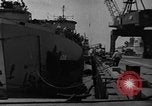
A Captain briefs officers aboard an LST underway at sea in the United States (WW2)
A World War II training film on loading and employment of LSTs (Landing Ship Tanks) in the United States. LSTs get ready at a harbor to get underway. The LSTs underway proceeding in a convoy. Cargo and troops aboard the LSTs. Careful loading is very essential. Tanks and half tracks are loaded below in the LST. Trucks, jeeps and LVTs ( Landing Vehicle Tracked) and other vehicles are loaded on the main deck. Officers gather in the wardroom and get seated at a desk. The Captain briefs them. Data gathered in the meeting is passed on to crew aboard. Men seated on the deck.
CRITICALPAST.COM: About Us | Contact Us | FAQs - How to Order | License Agreement | My Account | My Lightboxes | Shopping Cart | Advanced Search | Featured Collections | Website Terms & Conditions | Privacy Policy ©2026 CriticalPast LLC.
License Agreement |
Terms & Conditions |
Privacy Policy
©2026 CriticalPast LLC.