


 Francais
 Deutsch
 Italiano
Refine Your Search
Nevada United States 1936 stock footage and images
- Showing 4615 to 4620 of 27250 results more
more Hide
Hide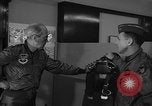
Brigadier General James Stewart speaks to Colonel Frank Everest at Macdill Air Force Base in Florida, United States.
Brigadier General James Stewart at Macdill Air Force Base in Florida, United States during his two week duty training period. Brigadier General speaks to Captain John D Brown and shows him a board with a few important equipment put up on it with their names written on the labels below. Brigadier General being fitted in P anti G cutaway garment, seat harness, flight helmet and mask as officer help him out. Brigadier General gets out from his seat and speaks to colonel Everest.
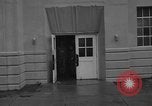
Brigadier General James Stewart gets into F-4C aircraft at Macdill Air Force Base in Florida, United States.
Brigadier General James Stewart at Macdill Air Force Base in Florida, United States during his two week duty training period. Brigadier General along with other officers comes out of a building at Macdill Air Force Base. He writes on a paper and men stand next to him. He comes out of another building, cars parked outside the building. He walks on the flight line at the base, a hangar in the background. He climbs into the F-4C rear cockpit as photographers click pictures. An Air Force officer at the base.

A civil defense worker uses phone at NORAD Defense Center in Colorado, United States.
Aerospace Force Communication Electronics. A civilian defense worker at a desk speaks over phone at NORAD (North American Aerospace Defense Command) Defense Center in Colorado, United States. He keeps the receiver down and works on a console in front of him. He answers a phone call.

Soldiers undergo hot and cold temperature tests at Fort Knox in Kentucky, United States (WW2)
Volunteers undergo Army medical research at Fort Knox in Kentucky, United States during World War II. Soldiers tested for their ability to adapt to hot temperatures. Soldiers carry bags and walk under high temperatures to prepare them for war conditions in deserts and humid jungles. They walk on a treadmill under high temperatures. The amount of liquid to be consumed by each one of them is determined by the medics. At night soldiers relax with temperatures lowered to 90 degrees. Tanks also examined for different climatic conditions. Men check the efficiency of Army clothing. Wire put up on the bodies of soldiers record body temperature. Men wearing clothes enter a cold room and get into sleeping bags. A man in another room observes the body temperatures. Tanks tested for weather efficiency. Men wear jackets and masks for protection against cold weather.

Hurricane Audrey hits Louisiana, United States.
Major events of the year 1957. Aerial view of a town in shambles after hurricane Audrey hit the area killing 300 people in Louisiana, United States. Deserted town, houses submerged in water as a result of the hurricane. The destroyed town of Cameron. A man in a field submerged in water, wreckage on ground. Women and children outside their houses.
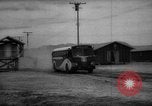
Japanese Americans at relocation center in United States during World War II.
Relocation of Nisei people in United States during World War 2. Japanese Americans arrive at the Manzanar relocation center (internment camp). Family members exit a bus. A young boy looking unsure as he observes the camp. New internees undergo medical examination. They participate in Americanization classes. They train themselves in self government. Block leaders are presented citations at a meeting. Japanese-American children internees are looked after in day care centers as men and women go to work. Young boys and girls seated at a table. Internees at Manzanar working in an experimental laboratory house for extracting rubber from guayule shrubs to increase rubber production during the war. Japanese American internees working in cultivating the guayule shrub. View of a project at the Parker camp where internees were working to irrigate desert land. View of sugar beet fields where internees could work. View of Manzanar war relocation center with mountains behind. War time propaganda narrator promotes the relocation centers as "setting a standard for the rest of the world in the treatment of people who may have loyalties to an enemy nation. We are protecting ourselves without violating the principles of Christian decency."
CRITICALPAST.COM: About Us | Contact Us | FAQs - How to Order | License Agreement | My Account | My Lightboxes | Shopping Cart | Advanced Search | Featured Collections | Website Terms & Conditions | Privacy Policy ©2026 CriticalPast LLC.
License Agreement |
Terms & Conditions |
Privacy Policy
©2026 CriticalPast LLC.