


 Francais
 Deutsch
 Italiano
Refine Your Search
Nevada United States 1936 stock footage and images
- Showing 5425 to 5430 of 27250 results more
more Hide
Hide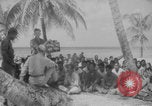
Commodore Ben Wyatt asks Bikini Atoll natives to voluntary relocate before United States testing of atomic bombs
United States Commodore Ben Wyatt, the military governor of the Marshall Islands, sits under a tilted coconut tree as he addresses the natives of Bikini Atoll. James, Commodore Wyatt’s interpreter, speaks to the locals about U.S. planning for nuclear weapon testing in Operation Crossroads. “Alright now James tell them that the United States government now wants to turn this great destructive force into something good for mankind” Commodore Wyatt asks his interpreter. King Juda, the leader of the native tribe, stands up and talks to his people. The interpreter speaks to Wyatt. King Juda gives his answer that his tribe will gladly move to Rongerik Island, as advised by the United States Navy. United States Navy personnel using clapboard before shooting scenes. Children sit near a United States Navy personnel and James the interpreter. A boy sits on top of an oil barrel. King Juda stands and talks to the tribe. The interpreter speaks to Commodore Wyatt. Commodore Wyatt stands and said “Tell him that’s fine, everything being at God’s hands it must be good”. King Juda nods in agreement. Interpreter speaks to the locals. Commodore Wyatt tells his interpreter that they will proceed with the plans for the relocation.
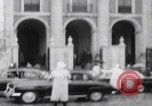
United States military, civilians, and Spanish citizens attend a memorial service for President Kennedy in Madrid, Spain
Memorial Services for United states President John F. Kennedy, held in Madrid, Spain, following President Kennedy's assassination. People enter the San Francisco de Borja church (Calle de Maldonado, 1, 28006 Madrid, Spain) in front of the United States Embassy in Barrio Salamanca, Madrid. Cars driving past the church as crowds started to gather and fill outside the church. United States military personnel and civilians are joined by Spanish civilians outside the San Francisco de Borja church. View of the church façade. A woman in black crosses the street. The San Francisco de Borja church as seen from the United States Embassy. Two men bring wreaths to the church. United States military officials enter the church. Guests with umbrellas continue to arrive for the service.
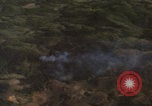
United States Marine Corps deployed in Vietnamese Demilitarized Zone during Operation Hastings
Aerial view showing smoke rising from a bombed jungle in the Vietnam War. Helicopters flying over a jungle just south of the Vietnamese Demilitarized Zone during Operation Hastings. Helicopter landing in open field. United States Marine Corp (USMC) Marines commander Major General Lowell E. English talking outside a tent with officers. Major General Lowell E. English points to a map of the Vietnamese Demilitarized Zone, showing where the People's Army of Vietnam (PAVN) forces are building up in the Vietnamese DMZ and the United States Marines positions at the beginning of Operation Hastings. United States helicopters landing near the Vietnamese DMZ. United States Marines Sikorsky H-34 helicopter landing in field. Marines run and assume prone position along a fence line, possibly the DMV. Marine Corps officer Major Donald Cook discusses how the Marines acted as Operations Hastings developed in the Vietnamese DMZ. A map of the DMZ is seen behind Major Cook. A Marine firing a gun. A United States fighter jet dropping an incendiary bomb. Marines running across the battlefield. Fairchild C-123 Provider takes off from an airfield. Sikorsky H-34 helicopter in the foreground. Dong-Ha Combat Base as seen from an aircraft cockpit. Reserve battalion unload weapons and supplies at Dong-Ha base. A tractor pulls a Howitzer. Lockheed C-130 Hercules parked on runway. Soldiers loading boxes in the back of a truck. Marines moving across dusty field. Some Marines climb into a Boeing Vertol CH-46 Sea Knight helicopter. A helicopter lifts off and flies away. Marines inside a Boeing Vertol CH-46 Sea Knight helicopter. A fighter drops bombs over a field, bombs explode upon impact. A Boeing Vertol CH-46 Sea Knight helicopter lands and a group of Marines exit rear door. The helicopter flies away. Combat scenes showing Marines fighting in the battlefield, with one throwing a grenade. Marine fires M60 machine gun while another drips oil on it to cool it down. Marine hunkered down while trying to unroll a bandage. A Marine communicates with a field telephone.
USDA and FDA authorities test and register new pesticide ‘Compound 776’ for agricultural use in the United States
A farmer driving a tractor sprayer in the United States. The farmer parks his tractor sprayer in front of a garden shed. The farmer inspects bottles of pesticide. Safety precaution written on a pesticide bottle carry a warning that reads “DO NOT USE WITHIN 10-DAYS OF HARVEST”. Various labels and safety instructions on pesticide containers. Photographs of scientists researching on pesticide development in laboratories. An entomologist holding an insect cage to inspect specimens. A chemist inspects a petri dish. United States agricultural officials and experts deliberate as part of a pesticide’s registration process. A farmer fills a sprayer with water. A woman feeds an infant with Gerber baby food. An Afghan Hound dog eats from pet bowl. Scientists and pesticide manufacturers talk inside a laboratory. A can of Compound 776. State scientists test Compound 776 inside a laboratory. Nozzle spraying pesticide. Plant specimens are sprayed with Compound 776 pesticide during testing. A scientist taking notes while inspecting crops during a fieldwork. Another scientist spraying Compound 776 onto plants. A man with a folder labeled “Labels Compound 776” and a data book “Pesticide Petition Compound 776”. A manufacturer submits pesticide registration petition to the Department of Agriculture or the USDA. The “Application for registration of economic poisons” document. USDA Pesticides Regulation Division official examines the pesticide registration of Compound 776. The official opens the data book of Compound 776. A scientist uses rabbits for animal testing. Scientist treats a rabbit’s shaved skin with chemicals. A man visits the United States Food and Drug Authority (FDA). Pesticide manufacturer submits a pesticide registration petition to the FDA in Washington DC. An FDA officer inspects the pesticide petition. FDA scientists probe the residue levels of Compound 776 inside a laboratory. A scientist points to a graph depicting the residue data plotted against time. FDA authorities study industry data on a pesticide. Bottles, jars, and containers stored in shelves of a laboratory. Laboratory rats inside cages react to pesticide. A chemist working in a laboratory. A Federal Register journal of the United States. Camera zooms to “Food and Drug Administration” in the front page of the Federal Register. A “Notice of Registration Under the Federal Insecticide, Fungicide, and Rodenticide Act” from the USDA. Printing press printing pesticide labels. A truck transporting pesticide enters Maryland state line border. Agricultural pesticides and a weighing scale displayed in shelf.
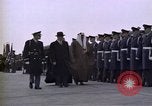
United States officials welcome King Saud of Saudi Arabia and royal party to Blair House in Washington DC
United States President Dwight D. Eisenhower accompanies King Saud bin Abdulaziz Al Saud of Saudi Arabia during the Saudi royal’s state visit to the United States. President Eisenhower and King Saud review an honor guard at Washington National Airport. King Saud and President Eisenhower proceeds by motorcade along Washington DC streets lined with thousands of cheering spectators. Banner stretched across Constitution Avenue reads: "Welcome King Saud" and displays the Saudi flag. King Saud and the President leave the car to enter Blair House. Prince Mashour bin Saud, son of King Saud, is carried by Deputy Chief of Protocol Victor Purse. Men take pictures. President Eisenhower escorts King to the Blair House (1651 Pennsylvania Avenue NW, Washington, DC 20503, United States). A flag of the Unites States and Saudi Arabia.
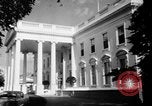
U.S. President Kennedy talks about equal rights for black and white citizens during a speech in Washington DC, United States.
United States President John F. Kennedy's speech regarding racism and racial tensions in Alabama, delivered from Washington DC, the White House. United States President Kennedy seated at a desk and speaks over a microphone. The President speaks about racial discrimination against blacks in the United States. He talks about the University of Alabama not giving admission to two clearly qualified young Alabama residents who happened to have been born African Americans, due to segregation and discrimination practices. View of people crowded outside the University of Alabama (Tuscaloosa, AL 35487, United States). Men take pictures as officials escort entering students Vivian Malone and James Hood into Foster Auditorium of the university. The President says that the nation is founded on the principle that all men are created equal, and that the rights of every man are diminished when the rights of one man are threatened. President Kennedy says that it is right for American consumers of any color to receive equal service in places of public accommodation, to register and to vote in a free election without interference or fear of reprisal. Additional views of Vivian Malone and James Hood walking with crowds and unaccompanied on the University of Alabama campus. A policeman rides a motorcycle on a road at the University. President Kennedy talks about respecting African American citizens and importance of civil rights and equality. The President says that no city or State or legislative body can prudently choose to ignore the rights of any of its citizens. The press record his speech and take pictures.
CRITICALPAST.COM: About Us | Contact Us | FAQs - How to Order | License Agreement | My Account | My Lightboxes | Shopping Cart | Advanced Search | Featured Collections | Website Terms & Conditions | Privacy Policy ©2026 CriticalPast LLC.
License Agreement |
Terms & Conditions |
Privacy Policy
©2026 CriticalPast LLC.