


 Francais
 Deutsch
 Italiano
Refine Your Search
New Mexico United States 1946 stock footage and images
- Showing 12103 to 12108 of 30777 results more
more Hide
Hide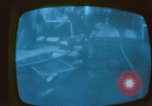
Television screen shows police patrolling the streets after the riots in Washington D.C., United States.
Aftermaths of Washington Riots in Washington D.C. following assassination of Martin Luther King Jr. Television screen (White House footage) shows police patrolling on the streets. African American men walk on street. Police throw tear gas at rioters. Damaged and broken shops. Patrol police comes out of a police van. Fire fighters spray water on a building on fire.
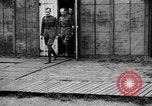
Members of the American Expeditionary Force walk out of a building in the United States during World War I.
Chemical warfare activities of the AEF (American Expeditionary Force) in France during World War I. Members of the American Expeditionary Force walk out of a building. They stand in an open ground. View of the surrounding buildings.
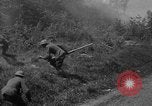
United States soldiers fire poison gas shells at the enemy in France.
American soldiers scurry up a hill after setting gas charges at its base. Next, they are seen ready to remotely set off the charges. They do so, pressing the plungers on their detonators, sumultaneously. The charges explode at the base ot the hill and send huge white clouds of gas billowing over the hill. American soldiers on a hillside overlooking a rural area of France, fire a battery of mortars. Next, the shells are seen striking and exploding in the distance, where they create a virtual wall of gas smoke. Other shells explode, raising black smoke in the midst of the gas. In final scene, several soldiers walk cautiously, widely separated from each other, across a field of flowers, toward the retreating gas cloud, against which they are silhouetted
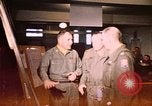
United States Army officers discuss their mission after being dispatched to Baltimore, Maryland, in the wake of riots there in 1968.
U.S. Army intervention during rioting in Baltimore in wake of Martin Luther King assassination. Field grade Army officers discuss their mission in a command center after the military has been dispatched to restore and maintain order in Baltimore Maryland in the wake of riots following the assassination of Martin Luther King, in 1968. Next, a major is seen communicating on a telephone. A soldier is also seen speaking on a telephone.
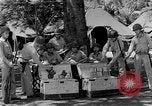
Japanese money being counted by United States marines in Guadalcanal, Solomon Islands during World War II.
Japanese money captured by U.S. Marines on Guadalcanal in the Solomon Islands during World War II. Marine officers check cases of Japanese money. Officers take out money from cases and hand it to checking officer. Money being counted. Marines officers count coins. Money in a case.
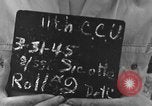
Remains of a United States Army Air Forces B-29 Super fortress that crashed on Tinian in the Northern Mariana Islands., during World War II
Remains of USAAF B-29 number 42-65283 from the 9th Bomb Group, 99th Bomb Squadron, that crashed, 30 March 1945, in World War 2, on Tinian, Northern Mariana Islands. All crew members were immediately killed in the crash, except tail gunner, Sgt. Joseph C. Trullo, Jr., who initially survived but died of his injuries, five days later, and the sole survivor, Radio Operator, Sgt. James Langraf who was injured but eventually recovered. Air Force personnel inspect debris that is scattered across the crash site in sand dunes close to the ocean in the background.
CRITICALPAST.COM: About Us | Contact Us | FAQs - How to Order | License Agreement | My Account | My Lightboxes | Shopping Cart | Advanced Search | Featured Collections | Website Terms & Conditions | Privacy Policy ©2026 CriticalPast LLC.
License Agreement |
Terms & Conditions |
Privacy Policy
©2026 CriticalPast LLC.