


 Francais
 Deutsch
 Italiano
Refine Your Search
New Mexico United States 1946 stock footage and images
- Showing 13525 to 13530 of 30777 results more
more Hide
Hide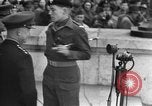
General Eisenhower delivers a speech during a passing out ceremony at Royal British Military Academy in Sandhurst, England.
Passing out Review at Royal British military academy in Sandhurst, England. United States General Dwight D. Eisenhower addresses the cadets at the passing out ceremony at the Royal British Military Academy in Sandhurst, England. Standing on steps of the Old College Building, He thanks General Fanshawe for the invitation to address the cadets. He speaks about the role played by Britain and United States in World War II for the cause of democracy, decency and liberty. He assures the cadets of winning the war. He asks them to fulfill their duties. He also speaks about the optimum and judicious utilization of war resources. General Eisenhower talks about developing leadership abilities and team spirit among the soldiers which is basic necessity to win the World War.
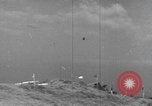
U.S. Army Sherman tank being loaded into an LCM during a joint amphibious training at Crow Point in Devon, England in World War 2
A joint amphibious training of the United States Army and the Navy at Crow point at the assault training center in Devon, England during World War II. United States troops huddled up on a hill at the beach. Soldiers lounge on the hill. Two soldiers walk away as they move down the hill. Some of the soldiers in a fox hole. A U.S. Army Sherman tank being loaded onto an LCM ( Landing Craft Mechanized ). Another Sherman tank rolls on the beach. The tank backs into the LCM. The tank aboard the LCM as a ramp is raised.
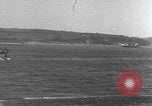
U.S. troops in amphibious training at Crow Point in Devon, England, during World War II.
A joint amphibious training of the United States Army and the Navy at Crow Point in Devon, England during World War 2. A Landing Craft Mechanized ( LCM ) underway at sea as it approaches the beach. United States troops walk past the RR towards the LCM. Men embark onto the LCM. The troops loaded onto the craft and a ramp being raised. All the LCMs carry markings beginning with "NATB."
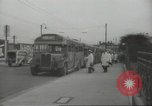
Infirm civilians and British children being evacuated from London during World War 2
Elderly and infirm British citizens and British children being evacuated from London, England during World War II as part of Operation Pied Piper. Row of ambulance buses parked along the road. Queue of people at United States Line offices with British people lined up seeking passage to the United States. Commissioner gives tickets and information to people. Sick person on stretcher being taken out from an ambulance coach as part of hospital evacuation. Injured or sick women on stretcher being unloaded and transferred.
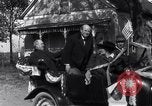
Willian Jennings Bryan campaigning for Wilson in 1916. President Wilson accepting the nomination in 1916.
Willian Jennings Bryan, campaigning for President Wilson, as a private citizen, in 1916 (after having resigned as Wilson's Secretary of State). He stands in a car decorated with patriotic bunting and an American flag, in front of modest house in a rural area. Bryan is accompanied by several associates. A popular Wilson campaign photograph (coming loose at the top) is attached to the car door . The writing under Wilson's picture is not legible. As Bryan sits down in the car, his wife, Mary, is seen next to him. (She had been blocked from the camera while he stood.) The car drives away. In complete change of scene, a crowd is seen completely filling the lawn and grounds of "Shadow Lawn," President Wilson's Summer White House, at Long Branch, New Jersey. They have come to celebrate his renomination as Democratic candidate for President. Camera pans over the crowd. Next, President Wilson is seen standing on a step in the center of the garden, acknowledging and accepting the nomination.
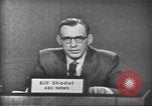
John F Kennedy and Richard Nixon contrast costs of their party platforms during a presidential election debate in the U.S.
The third Kennedy-Nixon Presidential Debate in the United States. Douglass Cater of Reporter magazine asks Democratic candidate Senator John F Kennedy to comment on costing of party platforms calculated by U.S. Vice President Nixon. Kennedy states that he believes in a balanced budget and an unbalanced budget is warranted during a recession or a national emergency. He comments on the cost of his budget and compares it with that of Nixon. He talks about high interest-rate policy that has added huge amounts to interest on debt. He talks about a different monetary policy to reduce the interest-rate burden. He talks about the bill passed by the Congress for the medical care for the aged. He says that more money would be spend on aid to education, housing and defense in his programs. Republican candidate U.S. Vice President Richard M Nixon comments on Kennedy's medical care for aged program under social security. He talks about the cost of his agricultural program and points out resulting rise in food prices. He concludes and states that following Kennedy's program would lead to inflation.
CRITICALPAST.COM: About Us | Contact Us | FAQs - How to Order | License Agreement | My Account | My Lightboxes | Shopping Cart | Advanced Search | Featured Collections | Website Terms & Conditions | Privacy Policy ©2026 CriticalPast LLC.
License Agreement |
Terms & Conditions |
Privacy Policy
©2026 CriticalPast LLC.