


 Francais
 Deutsch
 Italiano
Refine Your Search
New Mexico United States 1946 stock footage and images
- Showing 14515 to 14520 of 30776 results more
more Hide
Hide
Pan American Highway Commission delegates visit Washington DC
Group of 37 members from the Pan American Highway Commission visit United States. The group from 19th sovereign states of Latin America study the highways of North America. The group gathered for a picture with Secretary of State Charles Evans Hughes on the steps of the State, War, and Navy Building (later called the Executive Office Building) on Pennsylvania Avenue. President Calvin Coolidge welcomes the group, and stands together with them on the White House lawn. Another image of Calvin Coolidge alone follows text of one of his quotations.
U.S. President John F Kennedy's Inaugural Parade as 35th President of U.S. in Washington DC.
President John F Kennedy and wife Jacqueline Kennedy in Inauguration Parade cheered by crowd in Washington DC. Parade includes floats presented by various states and military. Float representing President's home state Massachusetts and its Governor John A Volpe and Vice President Lyndon Johnson's home state Texas. President Kennedy and Vice President Johnson with their wives at the Inaugural Ball introduce members of the Cabinet, Secretary of State Dean Rusk with his wife, Secretary of Treasury C Douglas Dillon with his wife, Secretary of Defense Robert McNamara and wife, Attorney General Robert Kennedy and Mrs. Kennedy, and Ambassador to the United Nations, Adlai Stevenson and his Daughter-in-Law.The following day all the cabinet members and John F Kennedy taking charge. 20 January 1961.
Japanese attack on Pearl Harbor in presaged by a decade of Japanese military aggression in China (WW2)
Opening scene shows the famous image of American battleship USS Arizona as attacked by Japanese forces in Pearl Harbor on December 7, 1941 in World War II. The ship is engulfed in black smoke, and listing. Change of scene to a waterfront in Japan during 1938, where numerous Japanese soldiers board troop ships bound for Manchuria, China. Next, are scenes of Japanese troops marching as they occupy Manchuria. Closeups of some Japanese soldiers. Scene shifts to a train moving on the South Manchurian railway, at a station showing a sign reading,"Chin Hsien." View of steam locomotive pulling a train away from the camera position. (Narrator states that a Japanese train, on the South Manchurian Railway, had been dynamited) This incident triggered a Japanese attack on Mukden, Manchuria. Japanese infantry are seen placing numerous bundles of reeds as a bridge across a wide, shallow, stream and proceeding to cross on their way to invade Mukden. Military supplies are carried on pack animals. In the air, overhead Japanese Mitsubishi G3M Type 96 land-based attack aircraft are seen flying in precision "V" formation. On the ground, Chinese civilians run for cover in the City of Mukden. (The date is September 18, 1931.) Glimpse of Chinese civilians looking at bombing victims on street of Mukden. Brief view of Geneva Switzerland, where League of Nations was housed. A memorial stone monument in that city to Woodrow Wilson, President of the United States and founder of the League of Nations. An entrance to the League of Nations headquarters in the Palais Wilson in Geneva, Switzerland. League delegates in session inside the Palais Wilson. A Japanese Naval Fleet, under command of Admiral Kichisaburō Nomura, is seen steaming toward the Chinese coast and begin a naval bombardment, firing their guns, 15 miles from Shanghai. Japanese Naval biplanes are seen in flight overhead. Japanese troops marching in the streets of Shanghai, as sidewalks of onlookers wave Japanese flags. Next, Japanese troops are seen marching out of Shanghai, at the insistence of the League of Nations. (Narrator states Japan signed a truce with China on May 4th, 1932.) View of Japanese troops entering further, into Mongolia. Japanese soldiers waving flag celebrating formation of the Puppet State of Manchuko in Northeast China and Inner Mongolia, in 1932. Japanese statesmen leaving the League of Nations headquarters, after Japan resigned from the League on February 24, 1933. Japanese infantry moving further into China supported by field artillery fire. Explosions from artillery and damaged buildings, as Japanese troops advance in China. Invaders using tall ladders to scale walls of a damaged fortress in China. Japanese pilots receiving briefing and boarding their Mitsubishi Ki-30 single engine light bomber aircraft at an airfield. View of them taking off and inflight, dropping bombs on Chinese targets. Aerial views of bombs exploding on ground below. Retreating Chinese army marching along the Great Wall of China. Chinese people and military forces moving their military and civilian resources deep into the Chinese interior.
Soviet Ambassador Constantine Oumansky addresses nation and presents his views on war in Washington D.C. (WW2)
Soviet Ambassador addresses nation in Washington D.C., United States, the day after the German invasion of the Soviet Union in Operation Barbarossa in World War II. View of the Embassy of the Union of Soviet Socialist Republics building. Soviet Union Ambassador Constantine Oumansky seated at office. He addresses nation and presents his views on Hitler's German invasion of the Soviet Union. He states that Hitler has miscalculated, and that Hitler's invasion will be smashed. Under Secretary of State, Benjamin Sumner Welles, addresses a press conference stating the administration's immediate aim is to stop Hitlerism (Nazism) and Fascism. Reporters note down the points. Photographers take pictures.
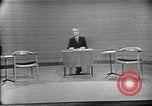
Richard M. Nixon and John F Kennedy give their summation speeches during a presidential election debate in Chicago, Illinois.
The First Kennedy-Nixon Presidential Debate in Chicago, Illinois. Moderator Howard K Smith asks the candidates to give their summation speeches. Republican candidate U.S. Vice President Richard M. Nixon starts his summation speech and compares the progress of the Soviet Union with that of the United States. And he states that in terms of the Gross National Product (GNP), the U.S. is far ahead of the Soviet Union. He compares his proposals with that of Kennedy and states that his own proposals would result in greater growth. He compares his health program which provides a choice of having either government insurance or private insurance with that of Kennedy's health program with compulsory government health insurance under Social Security. He talks about the spendings and inflation during Truman Administration. He concludes his speech and states that U.S. President's should work for every program that would mean growth. Democratic candidate Senator John F Kennedy comments on the statement given by Nixon regarding comparison of the Soviet Union and American economy. He speaks in favor of his proposed health program for aged which was an amendment to the Kerr bill and which provides assistance to all those who were not on Social Security. He thus contrasts Nixon's point on health program for the aged. He concludes his speech and speaks about the goals and responsibilities of the Americans. Moderator Smith thanks the candidates.
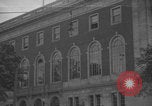
Public buildings in Portland, Oregon in 1910s
Landmark public buildings in the state of Oregon. Pedestrians walk outside the United States Customhouse (220 NW 8th Ave., Portland, Oregon). The Second Oregon State Capitol building (900 Court St NE, Salem, OR 97301) at Salem, Oregon before its destruction from a 1935 fire. Men walking towards the Oregon State Capitol. The Arlington Club at 811 Southwest Salmon Street in Portland.
CRITICALPAST.COM: About Us | Contact Us | FAQs - How to Order | License Agreement | My Account | My Lightboxes | Shopping Cart | Advanced Search | Featured Collections | Website Terms & Conditions | Privacy Policy ©2026 CriticalPast LLC.
License Agreement |
Terms & Conditions |
Privacy Policy
©2026 CriticalPast LLC.