


 Francais
 Deutsch
 Italiano
Refine Your Search
New Mexico United States 1946 stock footage and images
- Showing 15217 to 15222 of 30776 results more
more Hide
Hide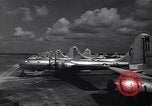
Civilian painters paint U.S. Army Air Force B-29 Superfortress bomber aircraft at an airfield in the U.S. during World War II.
U.S. Army Air Force B-29 Superfortress bombers at an airfield in the United States during World War II. A B-29 that is being protectively sealed in preparation for painting. Fuselage and number 3 engine are sealed. Moveable scaffolding is in place and drums of liquid are on the ground. Painter begins process of sealing an engine nacelle, by taping opening. He then sprays a synthetic "spider web" of material over the opening. Similar material is sprayed into various openings of the aircraft, until a fabric is formed over them. Finally, preformed sheets of fabric are used to seal other sensitive seams on the airframe and trailing edges of wings..
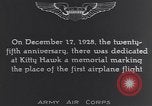
A photograph of the memorial dedicated on the 25th anniversary of the first airplane flight at Kitty Hawk in North Carolina.
A memorial dedicated on the 25th anniversary of the first airplane flight at Kitty Hawk in North Carolina, United States. A still photograph of the stone marker dedicated as the memorial on December 17th, 1928. An inscription on same. A still photograph of Orville and Wilbur Wright.
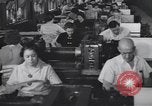
Armed Service Forces men and women ready for invasion of Europe in World War 2, including printing of invasion money.
Armed Service Forces (ASF) personnel at work in the United States during World War 2. Interior of a building. Men and women working. They print invasion money (temporary currency for use in Europe after the Allied invasion, until local currencies can be stabilized). Bills passing through printing machinery. The plan of actions is seen being typed on a typewriter and passed through the ASF network command. An officer talks on phone.
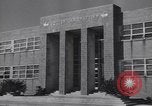
Innovations in communication equipment from the U.S. Signal Corps engineers working in Squier Laboratory during World War 2
Soldiers of the U.S. Signal Corps working on radio equipment in the United States. The exterior of a U.S. Army Signal Corps building with "Squier laboratory" written outside the building. The interior of the laboratory. Engineers conducting experiments and working on various equipment for communications, including Radar, Color Radio Telephoto, and single sideband transmission for long haul radio communication. A machine that appears to be spinning and heating hot glass. An engineer operating a machine beneath a sign that says "Thermionic Shake Tests." An engineer tests various signal lights. Signal Corps men observing a radio tower. Instructors teach and demonstrate various kinds of radio relay equipment to other Signal Corps personnel. A large board reads "Multiplex terminating." An officer explains a diagram to the Signal Corps personnel. Soldiers examine disassembled radios. Demonstration of a map being transmitted to a soldier in the field via facsimile machine. Close views of a spinning drum on the facsimile machine and the map visible on it. A dramatized shot of a B-17 bomber aircraft in flight. The pilot in the cockpit of the aircraft. The pilot looks at the signals transmitted through the radar. The aircraft navigates with the radar in bad weather. A map locates Boston, Lynn, Nantasket and Quincy and it is compared to the radar image of the same region.
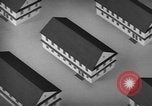
"SNAFU" smokes in bed. Animated film for U.S. troops, during World War II, depicting dangers of careless smoking.
SNAFU smokes in bed. Problems of fire at United States Army posts during World War II. Animated film for U.S. troops during World War 2 depicts fire problems. 17% of the problem is due to soldiers smoking in bed. "SNAFU" reads these facts while lying in bed, smoking. The bed catches fire when he flicks ashes from his cigarette.

American musician and band leader Phil Spitalny and his all-girl orchestra play selections from 'Oklahoma' in the U.S.
American musician and band leader Phil Spitalny and his all-girl orchestra performing in the United States. A girl standing on a stage and speaking about a performance. The girls play several musical instruments including accordions, violins and trumpets. A man directing the orchestra. The girls singing on the stage. The wordings of the songs are shown with the help of an animation.
CRITICALPAST.COM: About Us | Contact Us | FAQs - How to Order | License Agreement | My Account | My Lightboxes | Shopping Cart | Advanced Search | Featured Collections | Website Terms & Conditions | Privacy Policy ©2026 CriticalPast LLC.
License Agreement |
Terms & Conditions |
Privacy Policy
©2026 CriticalPast LLC.