


 Francais
 Deutsch
 Italiano
Refine Your Search
New Mexico United States 1946 stock footage and images
- Showing 15415 to 15420 of 30776 results more
more Hide
Hide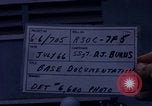
Base Operation buildings and headquarters of Tactical fighter Squadron at Bien Hoa Air Base in Vietnam.
Base Operation buildings and headquarters at Bien Hoa Air Base in Vietnam. Flags of United States and South Vietnam near a building. Air Force personnel pass near around the building. Operations buildings with signs and unit insignias: Headquarter of 3rd Tactical Fighter Wing, 416th Tactical fighter Squadron, Base Operations and control tower. Sign: 'Bien Hoa Base Operations Field Elevation 36 ft, Welcome 23rd VNAF Wing, USAF TAC FTR Wing'. (Vietnam War period).
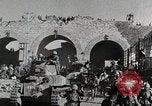
Rape of Nanking during 2nd Sino-Japanese war
Massacres in Nanking during second Sino-Japanese war. Japanese army troops and Type 89 I-Go tanks enter city gates to occupy Nanking, China. they break into a building and take away a Chinese man on a rope tether. Chinese inhabitants confined by the city walls are unable to escape brutal treatment by Japanese soldiers who are seen dragging men, women and children to be shot. Many are herded into a pit where Japanese soldiers standing above, execute them with rifle fire, as others fill the pit with earth, burying any survivors alive. Two Chinese kneeling with arms tied behind them are summarily executed by soldiers with rifles. A Japanese officer follows with a pistol to assure their death. Bodies of dead Chinese civilians litter an alleyway. Many scenes of Chinese killed by Japanese. (Narrator states that Japanese troops murdered 40 thousand men, women and children.) Japanese Field Marshal Count Terauchi Hisaichi is seen stepping from a transport airplane, followed by Field Marshal Shunroku Hata. Count Terauchi looks pleased as he is greeted and exchanges salutes with other officers. Next, the scene reverts, again to the horrors of Chinese peoples' suffering in Nanking, at the hands of the Japanese soldiers. Views of injured and wounded Chinese civilians, at a hospital, in pictures taken by an American Missionary, and smuggled out of china. A woman holding her injured husband as he lies against a cushion in a street. A small child stands near them. Scene shifts to a smiling Field Marshal Shunroku Hata, greeting local commanders, while photographers record the event in background. Views revert to the destruction and human tragedy in Nanking. A picture of Chinese leader, Sun Yat Sen. Chiang Kai-Shek speaking at a podium, and other Chinese political leaders speaking to gathered people, throughout unoccupied China, encouraging them to unite and resist Japanese aggression. Chinese people parading with banners to encourage resistance. Chinese soldiers and political leaders collaborating to raise armies. Chiang Kai-Shek ascending to Political leadership, exhorting Chinese to unite and fight the Japanese. Numerous scenes of rallies calling for unity and resistance. Chinese military officers standing as Chiang Kai-Shek enters a planning session. He sits and then they do. Behind him on the wall is a map of China. Closeup of Chiang as he outlines a strategy to slowly yield territory to Japanese invaders, to buy time for developing and arming Chinese forces. One of his staff goes to a wall map and gestures as he speaks. Next, Chinese soldiers are seen setting dynamite charges and blowing up lines of communication (roads). Chinese people pour petrol on grain fields and set them ablaze. Factory buildings being blown up and similar destruction as China pursues a "scorched earth" policy to hinder the Japanese invaders. Millions of Chinese people on the move to Western parts of China. (Narrator calls this the greatest human migration ever recorded.)
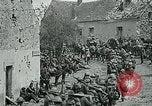
U.S. 4th Infantry troops march into Village of Sergy, France, during World War I
The Aisne Marne Operation in France. United States 4th Infantry troops march around bend of road in Village of Sergy, France. A building with partially destroyed roof at side of road. An American artillery unit is resting at the side of the road with its horses, caissons and artillery pieces. (World War I; World War 1; WWI; WW1)
Troops and artillery of Allied forces advance to Korean area and fire shells on hills of Chorwon in Korea.
United States Combat activities during Korean War in South Korea. Allied units advance in Korea. Troops and artillery advance on road. They go on field. Soldiers carry recoilless rifles. Infantry men fire shells on hills of Chorwon.
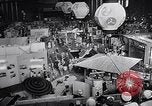
Education given through universities and schools in urban and rural parts of Japan.
Activities of Japanese people in Japan. Japanese trade fair by United States businessmen at the Pacific coastal areas. People watch machinery at the fair. Handicrafts and crockery displayed. Japanese women demonstrate bicycle ride in fair. Students enter the gate of a University. United Educational experts lecture students with Japanese teachers. Women discuss at table. Students in technical school. Teacher writes over board. Trainees work at workshop. Children play baseball in a school play ground. A motion picture about children in other parts of country shown to children by projector. Children sit and watch. Man enters a library. People sit and read at the library. Man takes out a book from a shelf. A child sits and reads a book in the library. A book mobile goes to rural areas of Japan. Man distributes books to rural people. Men and women take books. Man works at printing machine. Newspaper printing. Press vans go out of printing press. Newspapers on sale.
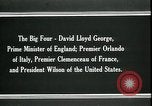
David Lloyd George, Vittorio Emanuele Orlando, Georges Clemenceau, Woodrow Wilson meet for the Versailles Peace Treaty.
Events during the Paris Peace Conference after World War I. The Big Four- Prime Minister of United Kingdom David Lloyd George, Prime Minister of Italy Vittorio Emanuele Orlando, President of United States Woodrow Wilson, and Prime Minister of France Georges Benjamin Clemenceau are seen. They were the dominant diplomatic figures in the Paris Peace Conference and played a major role in designing The Treaty of Versailles.
CRITICALPAST.COM: About Us | Contact Us | FAQs - How to Order | License Agreement | My Account | My Lightboxes | Shopping Cart | Advanced Search | Featured Collections | Website Terms & Conditions | Privacy Policy ©2026 CriticalPast LLC.
License Agreement |
Terms & Conditions |
Privacy Policy
©2026 CriticalPast LLC.