


 Francais
 Deutsch
 Italiano
Refine Your Search
New Mexico United States 1946 stock footage and images
- Showing 175 to 180 of 30776 results more
more Hide
Hide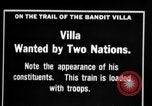
Revolutionists marching; U.S. Army troops fire guns during the punitive expedition seeking Pancho Villa, in Chihuahua, Mexico.
United States punitive expedition against Pancho Villa in Chihuahua, Mexico. Pancho Villa and some of his men standing and posing for camera. New recruits of the Mexican Revolutionists, in regular civilian clothing, marching with Villa's forces heading for Pancho Villa's camp. Buildings along the sides of a street. Trees in the background. U.S. Army soldiers fire artillery. They guard the railroad track so that no more supplies can be brought to Villa. Smoke from firing. American Army punitive expedition soldiers fire a Hotchkiss m1909 Benét Mercié machine gun.
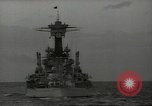
USS Idaho, USS Mississippi and USS New in a column formation underway in Hampton Roads, United States.
U.S. battleships underway in Hampton Roads, United States. The battleships underway in a column formation include USS Idaho, USS Mississippi and USS New Mexico. Troopship Henderson underway at sea.
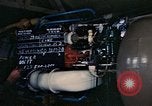
An unassembled power unit of a German V-2 rocket at the White Sands Proving Ground, New Mexico.
A German V-2 rocket power unit at the White Sands Proving Ground, New Mexico. The power unit of the V-2 rocket in unassembled or in breakdown condition.
Farmers work in patterned fields and terrace farms in the United States during Great Depression.
Cargo ships with wheat yield underway off shore. Smoke from the ship stacks. Industrial areas and wheat fields. Farm land and terrace farms. Farmers with horses work on farms and in fields. Cattle graze in fields. Patterned fields to hold the soil. Patterned land enriched with phosphate. Farmers talk about their land and farming problems, and share experience on farming methods to retain soil, learned from hard experiences during the Dust Bowl. Farming and farmland in the Carolinas, Oregon, New Mexico, Indiana, Texas Plains and parts of the Northwest United States. Houses in Pennsylvania. A farmer with his wife and child look over their farm. Wide views of tilled farm land. People in a farm community stand outside a food distribution area and wait for government supplied food aid (bread line) during Great Depression. Machines at work in fields and on farms.
Y-12 atomic production facility; Trinity Shot atomic text explosion in the United States; Truman speaks about atomic secrets.
Atomic bomb production and its use in the United States. Doctor Ernest O. Lawrence experiments with the cyclotron at the University of California, Berkeley. View of the exterior and interior of the cyclotron. An animated diagram shows the results of the splitting of the uranium atom. Diagram shows a nucleus, electrons and protons. Atomic structures of Helium, Lithium and Uranium. A diagram of the creation of barium and krypton, and the release of atomic energy. Aerial and ground views of Y-12 atomic energy testing, uranium enrichment, and manufacturing plant at Oak Ridge, Tennessee created during Manhattan Project. Workers walking on the grounds of the the plant. The Trinity Shot first atomic explosion is shown near Los Alamos, New Mexico on July 16, 1945. Flash of explosion and a cloud of smoke rises as seen from U.S. Army cameras 6 miles away. Two other views of the explosion are seen from other camera positions while narrator explains the effects. U.S. President Harry S. Truman speaks of the need to keep the secrets of the atomic bomb among the U.S., the U.K, and Canada, alone, until they find successful techniques to control the bomb and protect the world from total destruction. He indicates that he will work the the U.S. Congress in the effort and make the power a force for world peace. Truman asks that God guide the U.S. in how to use the technology in His ways and for His purposes. (World War II period).
An oil pumping station which serves important fields and a map shows important oil pipe line systems in the United States.
Pumping and transportation of crude oil drilled in the United States. A political map of the U.S. shows oil pipe line systems which are used to transport crude petroleum. The map shows main trunk pipe line systems including a new line under construction from Wyoming, connecting with the Great Lakes and the Gulf of Mexico. A pumping station which serves important fields in Texas, Oklahoma, Kansas and Wyoming with its chief terminals at East Chicago, Houston, Texas and Salt Creek, Wyoming. Internal combustion engines and machinery at the pumping station.
CRITICALPAST.COM: About Us | Contact Us | FAQs - How to Order | License Agreement | My Account | My Lightboxes | Shopping Cart | Advanced Search | Featured Collections | Website Terms & Conditions | Privacy Policy ©2026 CriticalPast LLC.
License Agreement |
Terms & Conditions |
Privacy Policy
©2026 CriticalPast LLC.