


 Francais
 Deutsch
 Italiano
Refine Your Search
New Mexico United States 1946 stock footage and images
- Showing 2041 to 2046 of 30776 results more
more Hide
Hide
United States and Russian troops in Germany after World war 2; division of West Germany and East Germany
Bomb damaged and ruined buildings of Nazi Germany in 1945, including the Reichstag. Nazi Eagle symbol of Third Reich pulled down from building and crashes to the ground at end of World War 2. United States Army of occupation marches into city as German population lines sidewalks and watches them parade. Sign on a shop reads "Gaststatte Schosser." Many buildings in view are damaged or destroyed from bomb attacks during World War 2. American soldiers occupying German give candy to German children who at first hide from them. Nazi leaders including Hermann Göring, Rudolf Hess, Joachim von Ribbentrop, and Wilhelm Keitel, seen on trial in the Nuremberg war crimes trials. German people struggling to rebuild. women and children trying to gather wood from stumps of trees for fuel. A woman sawing a log. Women and children scraping food from inside trash cans and refuse bins, to stay alive during scarcity and shortages after the war. Americans providing food assistance and feeding German children in relief lines. Close up of a smiling boy as he receives food or drink. Soviet Russian Army soldiers occupying East Berlin and marching in formation. Russians removing an industrial lathe and other machinery and tools from Germany as the Soviet Union continues to strip Germany of resources after the war. A map of Germany and Berlin seen with divided regions as American, British, French and Soviet zones. Views of empty streets and heavily damaged buildings of Berlin after the end of the war. Children play amidst the desolation and destruction in East Berlin. View of Kammergericht, Headquarters of the Allied Control Council. Leaders seen meeting inside include American General Joseph T. McNarney, French General Marie Pierre Kœnig (Marie-Pierre Koenig), Soviet General Georgy Konstantinovich Zhukov,. British Field Marshal Bernard Law Montgomery. View of Spandau Prison guarded by troops of occupying powers. Soviet and American troops drill and march on the grounds of Spandau Prison. An American soldier relieves a Soviet soldier at a watch post. Soviet blockade of West Berlin begins in June 1948. View of a man shutting down power in a power plant and lights going dark in Berlin. Blackout conditions in Berlin during the blockade. Germans plant vegetables in city to survive. Germans exchange goods in black market setting. A man plants vegetables in view of the Brandenburg Gate. The Berlin Airlift operations underway. U.S. Air Force C-54 aircraft flying low and arriving in Berlin, bringing supplies to West Berlin. C-97 landing. U.S. military forces unloading relief supplies and food from airlift aircraft. American C-47s and C-54s in the Berlin Airlift. Soap and milk being unloaded from airplanes. German children gather on a hill and watch low-flying American airlift planes as they approach to land at Tempelhof Aerodrome in Berlin. An Air Force airman throws a package out of the aircraft. It is a very small parachute with candy that drops from the American airplane to the waiting children. Children run to retrieve it and they share and eat the candy. Blockade is lifted in 1949 and rebuilding of West Berlin resumes. View of railroad tracks being re-linked, a locomotive running on tracks, and trains cross between East and West Berlin. Ships loading goods onto trains for Berlin. A coal processing factory running again in Germany. German workers producing industrial parts and goods again in production factories. West German construction workers rebuilding structures in West Germany. German people cast votes, establishing Federated German Republic (West Germany). Figures seen include U.S. General Alfred B. Gruenther with Konrad Adenauer, President of the new German Republic, together in Bonn, Germany. Soviet Russian troops marching on parade in East Germany. East German workers rioting in 1953, in protest of increased production quotas in Communist controlled East Germany. Soviet forces in armored vehicles patrol the streets and disperse the crowd. A large electronic billboard banner flashes West German messages and propaganda to those who can view it in East Berlin. Citizen refugees from East Germany arriving in a processing center in West Germany, carrying bags and luggage. East German refugees laying on the ground on blankets in a crowded immigration processing center of West Germany. A woman irons clothes in the immigration center, while a child plays with dolls.
Liberated United States airmen prisoners at Stalag 7A in Moosburg, Germany (WW2)
Liberated United States prisoners (mostly military airmen) at POW camp called Kriegsgefangenen-Mannschafts-Stammlager (Stalag) VII A, located just North of Moosburg, Germany during World War II. The airmen cook food. Several are seen sunning themselves. Airmen seen shaving, shining shoes and cleaning clothes. A group of airmen around sign 'I Wanted Wings' and 'Luft 3'. These are some of the prisoners who were originally held at Stalag Luft III, in German Province of Lower Silesia, near the town of Sagan (now in Poland). (Note: Stalag Luft III is famous because the "Great Escape" took place there in March, 1944. Prisoners were forced to march from Sagan to Spremburg during the coldest winter in Germany in 50 years. There, they boarded a train of boxcars for a 3 day trip to Moosburg in January 1945, because the Russians were closing in. The addition of these prisoners to Stalag 7A, at Moosburg, led to serious overcrowding of the camp. On May 1, 1945, the New York Times reported that "The Fourteenth Armored Division liberated 110,000 Allied prisoners of war at Stalag 7A at Moosburg." This corrected an earlier report that 27,000 prisoners had been liberated.)
86th Congress at its inaugural session as members take oath and Harry S. Truman looks on in Washington D.C., United States.
U.S. 86th Congress inaugurated in Washington D.C., United States. Members of the house greet each other at the opening session of the newly constituted Congress in the capitol. Joseph Martin steps down as the minority leader in favor of Charles Halleck. Harry S. Truman looks on from the visitor's gallery as the prayers mark the beginning of the first session of the new Congress. The speaker administers the oath of office to the Congressmen.
Schecter Poultry Corporation wins suit against United States overturning certain regulations on the poultry industry
View of the Supreme Court Building in Washington DC. Still image of Supreme Court Justices in session during case of Schecter Poultry Corporation versus the United States. Poultry workers outside a closed, locked building of Schecter Poultry. Man and woman and small crowd smiling, gathered in front front of a "Poultry Market" store sign. Schecter won its case overturning certain regulations on the poultry industry that were part of Congress' power under the commerce clause. The Supreme Court decision declared unconstitutional the National Industrial Recovery Act which was part of President Roosevelt's New Deal plan.
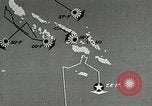
Steps taken by United States Task Forces and Japanese strategy during the Battle of Coral Sea in the Pacific Ocean.
A United States Navy Training Film about the Battle of Coral Sea. Air search conducted by Japanese commandant forces. Commander of 4th fleet analyzes the situation. Duties and work of a commander. Allied and Japanese forces in the Coral Sea. Position of Task Force (TF)-17 support force. Final phase of the battle. Destroyers included in TF-17. Wrong decisions taken by TF 17 discussed. Bombers and torpedoes included in battle. Pilot reports the position of Japanese TF after an air search. Air group in flight. Fighter planes and divers included in the battle. Torpedoes and guns fire at enemy airplanes. Increased air fighter group which includes air patrol group from New York. Time and radar showing the position of TF. Position of TF17's support group. Bombers encounter TF-17 support group. Flight of Australian planes and Japanese counter attack.
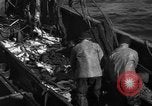
Commercial fishing boat off coast of Massachusetts, United States. Sorting catch and placing in livewell
Fishing activity aboard a New England fishing boat off the coast of Massachusetts in the United States. Crewmen empty fishing net on deck of the boat. Men sort fish. They place the fish in containers of water (livewells ).
CRITICALPAST.COM: About Us | Contact Us | FAQs - How to Order | License Agreement | My Account | My Lightboxes | Shopping Cart | Advanced Search | Featured Collections | Website Terms & Conditions | Privacy Policy ©2026 CriticalPast LLC.
License Agreement |
Terms & Conditions |
Privacy Policy
©2026 CriticalPast LLC.