


 Francais
 Deutsch
 Italiano
Refine Your Search
New Mexico United States 1946 stock footage and images
- Showing 2347 to 2352 of 30776 results more
more Hide
Hide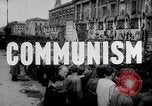
Communist violence and demonstrations in Berlin, France and New York.
A mass Communist demonstration by indoctrinated Germans in Berlin, Germany. Communists resort to violence in France against Marshall Plan aid. In Tokyo, Japan Communists demonstrations crushed by the police. Communists resort to violence at Union Square in New York, United states. Valentin Gubitchev,a Soviet employee in United Nations, being deported, after being sentenced for obtaining secret documents from Judith Coplon.
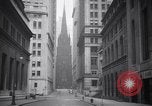
Trinity Church and empty streets of Manhattan, then scenes of traffic, jams, backups and U.S. roadways featuring 1930's cars
Trinity Church and empty streets of Manhattan, New York City. Instrumental audio begins, accompanying scenes of busy roadways and traffic jams in the United States. Many 1930s automobiles seen from Ford, Chevrolet, Packard, Chrysler, and others. Passenger cars as well as delivery and freight trucks. Scenes of cars driving steadily on the highways and roads in the United States. Number of cars drive steadily on a six lane road. Scenes of cars stuck in long lines of traffic. Exasperated drivers. Drivers get out of their cars in the jam to talk to each other. A mechanic replaces flattened tire of a car on the road side. Many outdoor advertising signs featuring local businesses and services. A boy helps a girl peer over a high stone wall where she sees a "no trespassing" sign. The kids join their parents in a picnic on the roadside. A police officer on a motorcycle shakes his head in disbelief at the traffic. Signs warn drivers about traffic safety. A wooden mannequin of a policeman with arms waving to slow down traffic. A man works on the engine of a car. A crashed car and a crane. View from a valley as a car soars over the edge of the road embankment above and crashes down a mountainside, with pieces flying everywhere.
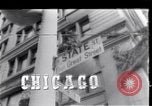
Deserted streets, closed stores and Merchandize Mart in Chicago after the assassination of President Kennedy.
A national television report on public reaction to U.S. President John Fitzgerald Kennedy's assassination in the United States. Chicago: The deserted Main Street during and after the funeral of John F Kennedy. Cars and pedestrians on the street. Closed stores. The Chicago Shopping and Commercial District. A notice in a store window reads 'Day of mourning for President John F Kennedy'. A woman with her baby stops by a store window to look at a picture of President Kennedy with an 'In Memoriam' message. A crowd around a television set watches the news about Kennedy's funeral. The Kennedy family-owned Merchandise Mart (222 Merchandise Mart Plaza Chicago, Illinois) in The Loop. Soldiers lower the United States flag to half-mast. A large crowd outside St. Peter's Catholic Church (110 W Madison St, Chicago, IL 60602, United States) in the Loop wait in long lines for the Mass while others inside pray. A school classroom inside a closed school. African American students put on their own close circuit television to pay tribute to Kennedy. A teacher and students speak about the late President and his life. An advertisement billboard sign reads the date of President Kennedy's assassination as a sign of respect and tribute.
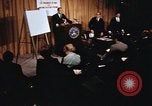
U.S. Deputy Secretary of Defense Richard G. Capen speaks to the press about the American prisoners held by North Vietnamese.
A news conference in Washington D.C., United States about American soldiers held as prisoners of war in North Vietnam. The United States Secretary of Defense, Melvin R. Laird, addresses the press at a conference as he stands behind a podium with the Department of Defense insignia on it. A board in the background reads ' United States POWs and missing in action personnel ' . The Deputy Secretary of Defense Richard G. Capen at the podium as he addresses the press. A board placed next to Capen with pictures on it. A sign on the board reads ' LCRC inspection '. An officer stands near the board. A chart on the board displays the statistics indicating the number of prisoners of war and missing persons in Vietnam. Another chart on the board reads ' duration of captivity ' . A picture of a captured soldier on the board. A picture released by North Vietnamese bears the title ' Identity '. (Vietnam War period).
Ships destroyed during Pearl Harbor attack salvaged in Hawaii.
Aftermath of Pearl Harbor attack. An animation shows a map of Japan as a fictional character Tojo makes a call from Tokyo to Nagasaki and other cities disseminating the news of Japanese attack on Pearl Harbor. He rejoices at the attack. The United States Navy ship Arizona capsized. Wreckage of damaged ships like Nevada, West Virginia, California. Navy personnel along with civil technicians start the salvage of United States ships. Men work on the ships. Ships like California, Nevada and West Virginia underway after repair. Sailors and supplies aboard the ships. Military preparations in United States to counter the Japanese attack. (World War II period).
American soldiers firing recoilless rifles in Korea during the Korean War; views of North Korean soldiers
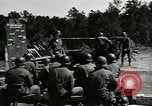
A film about uses and importance of weapons since old times in the United States. United States soldiers being trained in the use of recoilless rifle. Men fire recoilless rifles. Soldiers fire rifles during a training exercise. Smoke rises. A soldier look through binoculars. Scene changes to Korea. North Korean Army soldiers on motorbikes, bicycles and horses advance in Korea during the Korean War. Artillery and mortars being set up and fired by North Korean forces. U.S. Army soldiers carrying rifles advance in Korea during the Korean War. American Army soldiers take up positions on hills overlooking a valley and are seen firing at North Korean enemy positions. U.S. Army soldiers return to the United States after the Korean War. They disembark from a ship. The soldiers loaded in trucks move past cheering crowds in a New York parade.
CRITICALPAST.COM: About Us | Contact Us | FAQs - How to Order | License Agreement | My Account | My Lightboxes | Shopping Cart | Advanced Search | Featured Collections | Website Terms & Conditions | Privacy Policy ©2026 CriticalPast LLC.
License Agreement |
Terms & Conditions |
Privacy Policy
©2026 CriticalPast LLC.