


 Francais
 Deutsch
 Italiano
Refine Your Search
New Mexico United States 1946 stock footage and images
- Showing 24025 to 24030 of 30777 results more
more Hide
Hide
Specialists at the Kessler Institute for Rehabilitation help the disabled and handicapped to recover.
Handicapped and disabled people at Kessler Institute for Rehabilitation, West Orange, New Jersey. A musician who met with a swimming pool accident plays an instrument with sticks. A physically handicapped boy reads a book. A man at the center is tested on Kohs block intelligence test. A woman puts on makeup after recovering from an accident. The founder, Dr. Henry Kessler talks about special training to be given to the patients to recover from disabilities. Specialists including physical therapists at Kessler Institute help the disabled recover. Disabled clients receiving therapy. A new leg is given to a woman who met with an accident and she takes her first step. Kessler specialist helps the woman to walk again properly.
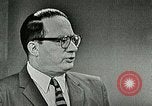
Philip Hauser briefs George Stone on U.S. census from 1820 to 1931 in USA; also some Wall Street depression scenes
George Stone and Dr Philip Hauser at the presentation of U.S. census around 1960. A slide of U.S. map appears on the screen. 1820 and population figures are marked on part of the map inhabited at that time. The reasons for the increase in the population are discussed by George Stone and Dr Philip Hauser. In the next slide census figures of 1830 appears. Concern for the handicapped lead to including of deaf, dumb and blind category in this census is shown. Dr Philip Hauser shows cartoons appearing in newspapers of that time to George Stone. In the next slide, census figures of 1850 and 7 classes of occupation of people are seen. A percentage representation of various occupations in the population is given in the next slide. The stress on accuracy of 1850 census is seen in the next slide. A comparison of number of occupations of males and females from 1840 to 1870 is shown in the next slide. Census of 1930 is mentioned in the next slide. 1931 is shown as a Special Unemployment Census. Newspaper headlines about stock market crash is seen. Around clip timecode 8:13 are images of Wall Street New York Stock Exchange floor near time of stock market crash. Wall Street region in New York City filled with people and views of lines or queues for homeless, unemployed, or food relief during the Great Depression.
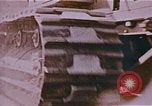
Movement of the circus from town to town, and the business of operating a circus
Taking down the tents and packing up a circus. Ringling Brothers Barnum and Bailey circus workers and local workers disassemble the tents and stages, load wagons and with help from elephants and bulldozers they pack up before heading to a new city. These scenes appear to be 1950s-196s. The circus train moving at speed. Following scenes appear to be early 1970s: Circus managers seated at a table planning a circus act. Scenes of the decorated performers in a real circus. Clowns performing. Circus managers viewing a potential new act involving trapeze,cycles, and acrobatic feats. Performers practicing without an audience.
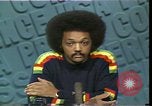
Patrick Borgan questions Jesse Jackson on Civil Rights protests of the 1960s versus 1970s approaches, during a press interview.
Jesse Jackson is interviewed in a press conference. Jesse answers Patrick Borgan of London Times on protesting peacefully with reference to 1968 and its riots and unrest vis-à-vis Civil Rights and racial equality for African Americans. Judith Randal of New York Daily News and Henry McGee of Newsweek Magazine are also present. Bill McCrory of Voice of America is the moderator. Jackson discusses the purposes of the protests of the 1960s, and explains that the vision toward the goal of equality takes time and has curves, rather than being a straight line. He implies that some people because satisfied with the gains from the 1960s, but that there is more to do, and that moral depravity and a lack of good ethics is the current obstacle in the 1970s holding back progress.
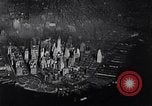
Transcontinental Air Transport (TAT) providing combined rail and air service taking passengers across the U.S.A. from coast-to-coast
Operations of the Transcontinental Air Transport (TAT) Company. Aerial view of New York City's Manhattan Island, below. Camera focuses on Pennsylvania Station (Penn Station) seen from above, and then at street level. Travelers purchasing tickets for combined transcontinental rail and air travel at a window in the station. Families seeing travelers off at one of the railroad gates. Temporary sign at gate reads "The Airway Limited, second section." View of passengers on rear car of train as it pulls out. The car displays Pennsylvania Railroad logo sign reading "The Airway Limited, Pennsylvania Railroad." Views of Pennsylvania RR passenger train and closeup of locomotive wheels in motion. Animated relief map shows train proceeding from New York, past Columbus, Ohio, to Port Columbus station in Ohio. Transcontinental Air Transport, Inc. billboard sign at the station shows picture of passengers connecting between a train and an airplane. Billboard reads: "Port Columbus, Eastern Transfer Point, Air-rail Service, Coast-to-Coast." Passengers leaving the train and entering the station waiting rooms. Their baggage being weighed (Narrator says 30 pounds is the allowance.) View from terminal roof, of a Ford 5-AT-B, trimotor passenger airplane ready to accept passengers for the next phase of their travel. A logo on fuselage has "TAT" with small ribbon through it reading, "Transcontinental Air Transport." View of passengers seated inside the aircraft. The plane taxis and takes off from the Port Columbus airport. Ground is snow-covered, but the runway is plowed. Closeup aerial view of the airplane flying over the city of Columbus, Ohio. Distant view of it flying close to the LeVeque Tower skyscraper (a 47-story Art Deco-style building at 50 West Broad Street). Aerial view of the airplane passing the train, continuing westward, from Port Columbus. Views inside passenger cabin of the plane. Animated map show plane heading to Indianapolis. Officer hands out TAT illustrated map and points out features to passengers. Closeup of map. Aerial view of the airplane on final approach to land at Indianapolis airport. Clerk at airport typing arrival message on teletype, and company executives reading it at their headquarters. Animated map show plane moving to St. Louis, Missouri. View from air of Missouri and Mississippi rivers. Passengers in cabin. aerial view of the plane on final approach, over snow, to St. Louis. The aircraft taxiing on ramp and parking at terminal building, where passengers enter, under cover of awning-covered walk. Closeup of the aircraft engines. Inserted view of TAT engine overhaul facility, with Charles Lindbergh, the airline's technical adviser, and TAT officials inspecting the operation.
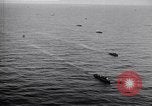
U.S. Coast Guard sailors sight and attack a submarine at sea.
U.S. Coast Guard cutters at sea. U.S. Coast Guard sailors on cutters in heavy seas. A sailor looks through binoculars from the observation deck. Another sailor looks through binoculars, keeps a watch, and informs the crew of a submarine sighting. The cutters attack and drop shells into the water. Massive underwater explosions. The crew mans and fires the deck gun. A pilot readies his plane. Oil from a leaking submarine floats on the water surface. Cutters at sea. A Coast Guard sailor and a SPARS (Coast Guard Women's Reserve) walk along the New York harbor. The Statue of Liberty in the background. The New York skyline as SPARS march. Voice narration in part by James Cagney and Ginger Rogers.
CRITICALPAST.COM: About Us | Contact Us | FAQs - How to Order | License Agreement | My Account | My Lightboxes | Shopping Cart | Advanced Search | Featured Collections | Website Terms & Conditions | Privacy Policy ©2026 CriticalPast LLC.
License Agreement |
Terms & Conditions |
Privacy Policy
©2026 CriticalPast LLC.