


 Francais
 Deutsch
 Italiano
Refine Your Search
New Mexico United States 1946 stock footage and images
- Showing 24067 to 24072 of 30777 results more
more Hide
Hide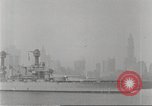
USS Tennessee sails under Brooklyn Bridge in June 1920. Also seen: December 1918 Naval Review and Presidential Yacht, Mayflower
U.S. battleship, USS Tennessee, sails up East River to Brooklyn Naval Yard. Next scene shows her heading back out to sea for maneuvers with a fleet in the Atlantic Ocean. in both, the Tennessee sails under the Brooklyn Bridge. Woolworth Building in Manhattan visible. A tugboat follows.View,upward, to roadbed of the Brooklyn Bridge, from vessel passing underneath. Crew members aboard the ship look at the skyline of New York City. A large boat filled with sightseers passes on the river. A group of U.S. Navy officers poses near a gun turret of the ship. A group of sailors sits under a three-gun turret aboard the ship. Commercial vessels moving in the river. Sailors at railing, look at skyline of Manhattan, New York City, as the ship passes on the East River. Ferry boats pass. View of the Statue of Liberty, in mist, framed above, by three of the Ship's 14 inch guns. Two Admirals and the USS Tennessee's officers, pose on deck, under two turrets with three 14 inch guns, in each. Sailors of the crew pose on deck of the battleship. A different time: December 25, 1918, Crewman in foul weather gear stands at railing of official Photographers boat, with battleships in background, during the great Naval review. A motor launch flying a two-star admiral's ensign, passes at high speed, with the Presidential Yacht, Mayflower, in background. The launch circles and reverses course.
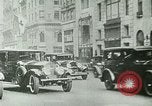
Montage of scenes showing unbridled materialism of "Roaring 20's." Expensive cars; spending sprees; currency notes, coins
Symbolic montage of scenes showing unrestrained materialism, wealth, and spending in the U.S. during the "Roaring 20's," before the 1929 Crash of the New York Stock Market. Rolls Royce cars move on the streets in New York City. Ford cars on the road. A chauffeured Rolls Royce limousine on the road and being parked. Symbols of money: currency notes and jewelery. Currency notes and coins stacked up. Views of Cash Registers from National Cash Register displaying dollars and cents. Coins being dropped into a National Cash Register machine.
Mickey Mantle and Ted Williams compete for 1957 batting championship, and Milwaukee Braves win baseball World Series.
Ted Williams of the Boston Red Sox vies for the major league baseball batting title with Mickey Mantle of the New York Yankees. Mickey Mantle seen seated in the Yankee dugout next to manager, Casey Stengel. Ted Williams of the Boston Red Sox walking across ball field in front of the camera. Ted Williams, at bat, hits a long drive. (Note: Williams won the batting title for the year, with an average of .388 and Mantle was runnerup with .365.) Scene changes to 7th game of the 1957 World Series, between the Milwaukee Braves and the New York Yankees, on October 10th, 1957. Braves pitcher, Lew Burdette, rubs a ball, as he stands on the mound. View of the final pitch, and play of the game that retires the Yankee side and wins the series for the Braves, whose players rush onto the field to celebrate with Burdette. Fans spill onto the field from the stands. (Note: Lew Burdette, started three games, won three games, threw two shutouts,and was named most valuable player in this 1957 World Series.)
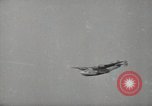
U.S. Ambassador to UK, Joseph Kennedy, arrives aboard Pan American Clipper from England during World War II.
U.S. Ambassador to UK Joseph Kennedy arrives in New York City, aboard a Pan American Clipper from England, during World War II. Pan American Clipper in flight. Clipper descends and lands in Flushing Bay, and taxis on water (using outboard engines, only) towards dock at Laguardia Seaplane base in New York City. Joseph Kennedy and his family gather together on dock after disembarking from the clipper. His wife, Rose Kennedy is seen. He refuses to have a word with reporters until he sees U.S. President Franklin Roosevelt. Kennedy with officials and a policeman walking past the terminal building.
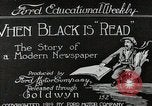
Newspaper printing process; scenes of newspaper boys, newspaper editors, typesetters, and printing press operation
"When Black is Read" Depicts how news is spread all over so fast in the form of newspapers. View of newspaper boys (newsboys, newsies, paper boys) racing out of a newspaper building carrying copies of the latest news. One boy is riding on a 4-wheeled cart. Montage of scenes show possible news stories. A baseball game in progress. A team of firefighters fighting a fire blazing in a building. The building collapses to the ground in a dramatic shot. The reporter reports the news on telephone and editorial department works out the copy text. View of newspaper men in newsroom editorial offices working at desks. Scene of workers working in newspaper printing press. They work on Linotype machines, they create a stiff cardboard Matrix for all pages, then using the Matrix, they cast cylindrical plates from which the newspaper will be printed. Workers in overalls and hats examine the cylindrical plates for quality control. Newspaper printing staff examine a sample final issue of the Detroit News with headline "Italians beat back fierce foe attack." Worker attaches plates to big steel cylinders of printing press, preparing to run the press.
President Roosevelt addresses congress after attack on Pearl Harbor in 1941; civilians enlist in U.S. military for World War 2
World-wide wartime activities during 1941 and 1942. President Roosevelt addresses Congress after the attack on Pearl Harbor in 1941. Crowd applauds. Citizens and cars stopped in busy New York listening to the news on the radio being broadcast regarding the declaration of war against Japan. Long queues and lines of civilian men get registered in the U.S. army as recruits are called up. Men taking oath of U.S. military service in New York and Washington DC (on U.S. Capitol steps) and other cities in mass recruitment events. New recruits stand in line in a city to register for U.S. Navy or U.S. Army service. New recruits shown include baseball star Joe Dimaggio, boxer Joe Louis, John Aspinwall Roosevelt (who was President Roosevelt's youngest son), Tyrone Power, Clark Gable, Douglas Fairbanks Junior, and Warren Pershing (son of famed General John Pershing) all seen registering to enter military service. Justice Frank Murphy of the U.S. Supreme Court is seen operating a machine gun during training. Another scene with a mass group of recruits standing and taking an oath of military service.
CRITICALPAST.COM: About Us | Contact Us | FAQs - How to Order | License Agreement | My Account | My Lightboxes | Shopping Cart | Advanced Search | Featured Collections | Website Terms & Conditions | Privacy Policy ©2026 CriticalPast LLC.
License Agreement |
Terms & Conditions |
Privacy Policy
©2026 CriticalPast LLC.