


 Francais
 Deutsch
 Italiano
Refine Your Search
New Mexico United States 1946 stock footage and images
- Showing 24619 to 24624 of 30777 results more
more Hide
Hide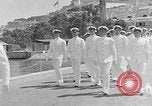
Dedication of memorial to lives lost on U.S. Coast Guard Cutters Tampa and Seneca, in 1918
U.S. Coast Guardsmen parade in dress whites, at pier in Gibralter harbor, and assemble in formation for ceremony to dedicate a memorial. The Coast Guard Ensign hangs over, and hides a memorial plaque on wall of building. Participants include British and American officers and British and American civilian officials, several dressed formally, with top hats. A number of ladies are seated for the event. After brief invocation by clergyman, A British military brass band plays, Coast guardsmen, with rifles, present arms, and the Coast Guard ensign is removed, unveiling the memorial plaque. The plaque honors those lost when the Cutter Tampa was torpedoed by an enemy submarine, in Bristol Channel, on September 26, 1918, with loss of all 115 souls on board. It also honors 11 officers and men of the Cutter Seneca, who volunteered, and were lost attempting to salvage the torpedoed British Steamer, Wellington, in the Bay of Biscay, September 17, 1918. The American flag is displayed above the new plaque, and Coast Guard officers place four wreaths at the base of the memorial. .
British Soldiers of Honorable Artillery Company board railroad train and leave London during World War I.
British troops of the Honorable Artillery Company Regiment leave London by railway train, bound for France to reinforce those already there. The railroad train station platform is filled with new recruits and reinforcement troops as they march toward the train. Soldiers on platform wave to those in the train. (World War 1; WWI; WW1)
Hyde Park, London, turned into a milk distribution center during World War I
Farmers drive wagons filled with milk cans, into Hyde Park, during World War 1. Volunteers help unload the milk cans and line them up along a walkway. Afterwards, they clean their hands in the park lake. A new slate speaks of need to conserve petrol. Men stand looking over stacks of petrol (gasoline) cans in another area of the park. Two trucks (lorries) drive between the stacks of cans. Scene reverts again to volunteers washing their hands in the lake, and to men moving cans of milk. Next, British soldiers in uniform, are seen helping to move milk cans. Scene changes to a long queue of men and women waiting for public transport. Double-decker buses move through the area. A glimpse of a railroad train station, is followed by another look at the men washing hands in the lake. A line of empty trucks leaves the park. A final view of stacked milk cans.
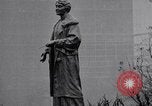
Brief montage of moving images from early 20th Century Women's suffrage and equal rights movement in Great Britain.
Scene opens showing the statue of British Women's suffrage movement leader, Emmeline Pankhurst, located in Victoria Tower Gardens next to the Houses of Parliament, Westminster. (This was erected in her memory, in 1930, two years after her death.) A World War 1 parade of women in clothing of religious orders; nurses; some military; and academics. One group carries a banner reading "Demonstrate-Trained Nurses." It also depicts What appears to be an Angel of Mercy and an appeal to buy war bonds. They are followed by women carrying a large British Union Jack, and by others, in academic garb, carrying banners of academic institutions. (This march was probably organized by the "Women's Party," the 1917 group founded by the Panghursts' to replace their "Women's Social and Political Union." The new party emphasized support for the British war effort.) Scene shifts to suffragist Emmeline Pankhurst (sometimes called a suffragette) viewed from camera behind her right shoulder as she addresses a large crowd. She is standing on a roofed platform in a park-like setting. The audience is mostly civilian, but a soldier is seen here or there. Several London Bobbies are in the audience, close to the speaker's stand. The next scene shows pedestrians gathered near Buckingham Palace, in London. A number of Bobbies (London policemen) are present, some on foot and some on horseback. The Queen Victoria monument is visible in the background. A horse-drawn carriage passes in front of the camera. Next, a woman is seen being arrested by two Bobbies, as passersby watch. An automobile passes and then the woman and police are seen approaching the camera as more officers become involved, keeping spectators away. In the final scene, in the 1920s, a man standing in front of a large group of women, congratulates one (probably Christabel Pankhurst). Closeup shows, from left to right, the man; a somewhat tired-looking Emmeline Pankhurst; and her daughter, Christabel.

Britain's annual Earls Court Motor show in London
Britain's annual Earls Court Motor Show in London. Showcases a world-wide range of cars. Show includes Britain's ultra-luxury cars, Detroit's newest models, Russian cars for export trade, Europe's new "baby" cars, and do-it-yourself car builder's kit.
Allied forces in England on shore liberty, and then loading ships in dry runs for Normandy invasion
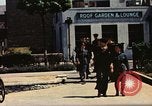
U.S. Coast Guard sailors in England along with women soldiers in uniform, during liberty ashore. They play a game of lawn bowling and the look at swans in a lake. Scenes of sailors loading boxes of rations onto ships. Several soldiers lie, chat, read books and walk on the deck area of landing crafts. An officer looks through a telescope mounted on the ship towards the carrier ships heading towards the beach. Troops loading LCVP crafts and being ferried out to waiting transports. LCI crafts loaded with Infantry soldiers, engineers, and medical corpsmen waiting to move out. Actor dramatization of troops hearing the news that the real invasion is to begin. (World War II period).
CRITICALPAST.COM: About Us | Contact Us | FAQs - How to Order | License Agreement | My Account | My Lightboxes | Shopping Cart | Advanced Search | Featured Collections | Website Terms & Conditions | Privacy Policy ©2026 CriticalPast LLC.
License Agreement |
Terms & Conditions |
Privacy Policy
©2026 CriticalPast LLC.