


 Francais
 Deutsch
 Italiano
Refine Your Search
New Mexico United States 1946 stock footage and images
- Showing 25309 to 25314 of 30777 results more
more Hide
Hide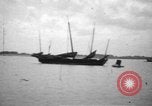
Several vessels in the Huangpu River and views of the Shanghai Bund along the western bank of the river in Shanghai, China.
The Huangpu River in Shanghai, China. A vessel in the Huangpu River. A sail boat and junks on the water. Several buildings in view on the shore. Several sail boats in the river. A paddle wheel steam boat on the water. Boats anchored to the shore. Views of the Shanghai Bund along the western bank of the Huangpu River. Several vessels in the river. The Camelback Truss Waibaidu Bridge (world's first all steel bridge) also known as the Garden Bridge, spanning Suzhou Creek at the Huangpu River. Several buildings at the Shanghai Bund in view including the Headquarters of the Shanghai Branch of the Hongkong and Shanghai Banking Corporation (now known as the HSBC Building or the Municipal Government Building) at number 12, The Bund, and the Customs House at number 13, The Bund, and the China Bank of Communications Building at number 14, The Bund. Also the China Merchant Bank Building and the North China Daily News Building (now the AIA building). Other Bund buildings also seen.
People giving gifts to be shipped to Russia along with the house bought by Russian engineers, in San Bruno, California.
A documentary titled 'News in Brief' in San Bruno, California. A group of men, women and children in front of a building, collecting things in a carton to be sent to Russia along with the house bought by Russian engineers. The people standing around the box carton. Small girls putting toys into the carton. A man holding a miniature mail box. Another man holds a picture frame with Russian letters. A few men standing beside the wooden house bought by Russian engineers. A carpenter and another man working on the house. A man putting an address label on the house which will be shipped to Russia. The parts of the house on a truck trailer.
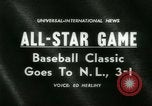
Maury Wills and Willie Mays star as National League wins Baseball's 1962 All-Star Game in Washington
Newsreel clip on baseball's 1962 All-Star Game in Washington -- the first of two played that year. View of new D.C. Stadium packed to capacity for the game. A woman wearing a hat with '1962 All Star Game' written on it. U.S. President John F. Kennedy, a known baseball fan, throws out the ceremonial first pitch. Game begins, scoreless for five innings. In the sixth, Hall of Famer Stan Musial hits a single to right field. Maury Wills comes in to run for him, steals second, then scores on a hit by the Pittsburgh Pirates' Dick Groat. President Kennedy and officials seated near him cheer. Groat scores on an infield hit. Racially mixed crowd watches the action. Billy Moran and Rich Rollins of the American League get hits, then Roger Maris of the Yankees hits a long blast to deep center field -- but Willie Mays catches it against the center field wall. Kennedy, wearing sunglasses and smiling, munches on some peanuts. In the seventh, Wills gets on base, advances from first to third on a single, and scores sliding into home on a fly ball in foul territory. Announcer notes Kennedy stayed until the end of the game. Mays catches the final out in center field. The National League wins the game 3-1.
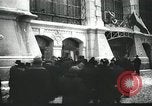
Czechoslovak coup with Communists coming to power; anti-Communist demonstrations in various European nations over 10 years
U.S. propaganda piece about threats by communists against various European countries. The Czechoslovak coup and demonstrations. Czech citizens moving on a street in Czechoslovakia during a strike forcing conservative elements to resign from the cabinet. Scenes of police brutality and beatings against strikers. Communists take over the police. Czech President Edvard Benes with conservative politicians in a government building. Huge crowd on a street. Police clashing with crowd. Czech Prime Minister Klement Gottwald with officials. President Edvard Benes, facing possible civil war or invasion by the Soviet Union, accepts a Communist cabinet. He is seen signing documents to that effect on February 25, 1948. Other officials beside President Benes during the signing. View of the first President of Czechoslovakia Tomas Masaryk's son, Jan Masaryk, who remained the Foreign Minister, and did not agree to the new government. Two days later Jan Masaryk is discovered dead. The body of Jan Masaryk in a coffin. Edvard Benes, who resigned in June 1948 after refusing to sign the communist constitution, is seen walking slowly outside the Parliament using a cane. A guard saluting Benes. View of the body of Edvard Benes, who died in September 1948, laying in a coffin. Mourning citizens offering flowers and cry. Officials bearing the coffin. Shift several years later to street strikes in East Germany in 1953. People during a strike and riot in Poland in 1956. Russian tanks moving on a street and Soviet soldiers are seen. Elevated view of panic and Polish citizens fleeing soldiers. October 1956: Student demonstrators on street in Budapest Hungary during the Hungarian Uprising of 1956. Soviet Russian red star is toppled by crowds from a building roof in a sign of defiance. Russian troops respond with tanks on the streets in Hungary. Crowd fights back. Russians retreat. Crowd overwhelms local police. Imre Nagy, Prime Minister of Hungary, ascends steps. Hungarian crowd on streets burn communist books and papers. Russian tanks invade Hungary to crush revolt. Tanks fire guns on Hungarian street. Imre Nagy's execution announced June 17, 1958.
German Generalleutnant Dittmar formally surrenders to U.S. soldiers in Magdeburg, Germany during World War II.
German General (Generalleutnant) Kurt Dittmar surrenders in Magdeburg, Germany during World War 2. German military commander General Dittmar, who was also Official Military Commentator of the German Armed Forces, stands with his party, including his son, young German soldier Berend Dittmar, Major Pluskat, and Major Werner, as American soldiers escort them. General Dittmar carries on an extended conversation with a French war corresondent. View of destroyed bridge span over the Elbe River, Magdeburg, Germany. German General Dittmar and his son, the boy soldier carrying a white flag with Red Cross on it, walk along sandy shore. They are met by U.S. Army soldiers of the 117th Regiment, 30th Infantry Division, including Captain Henry Abbes of Glendale, Long Island, New York, Commander of 'K' Company, who escort them. German General Dittmar conversing with captors while smoking a pipe, and then walking with his son, accompanied by American officers, through rubble strewn street of Magdeburg. (Records indicate that General Dittmar had traveled across the Elbe to ask for assistance in evacuating injured German soldiers and civilians from the east bank of the Elbe. U.S. Major General Leland Hobbs refused, and rather than returning across the River Elbe, Dittmar surrendered.)
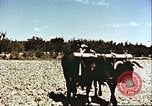
Modernization of Afghanistan transportation and housing in period 1950 to 1960.
Contrasting examples of changes in transportation and housing in Afghanistan during 1950 to 1960. Cattle draw a plow to till a piece of land in the past.. A tractor being used nowadays to till a farm. Men work on a farm with hand cultivators. Nomads migrate from an area on foot. In contrast, a truck is seen being used as a current means of transportation. Men ride on mules and in horse-drawn carts,as they move from one area to another, in the past. In contrast, a man gets into his automobile. People milling about on a street in a village. View of buildings and factories replacing former villages. Machines in operation inside a factory. New homes for factory workers.
CRITICALPAST.COM: About Us | Contact Us | FAQs - How to Order | License Agreement | My Account | My Lightboxes | Shopping Cart | Advanced Search | Featured Collections | Website Terms & Conditions | Privacy Policy ©2026 CriticalPast LLC.
License Agreement |
Terms & Conditions |
Privacy Policy
©2026 CriticalPast LLC.