


 Francais
 Deutsch
 Italiano
Refine Your Search
New Mexico United States 1946 stock footage and images
- Showing 26359 to 26364 of 30777 results more
more Hide
Hide
Civilians volunteer to join Nigerian Army after Biafra declared its independence in Lagos,Nigeria.
Crisis in Lagos, Nigeria. Buses lined up on streets to carry civilian volunteers to Nigerian Army Recruiting Centers. Nigerian men protest and spread violence after the eastern states,Biafra declares its independence. Policemen control the crowd. Women also join the men volunteer for military service.
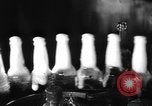
Bartender serves 3.2 beer to the customers at a bank converted into a bar as prohibition ends.
Bottles of beer on an assembly line at the end of Prohibition. Barrels of beer rolling down a ramp outside a brewery. A bartender and his patrons greet each other with raised mugs of beer. A bartender slides mugs of beer down the bar. Barrels of beer are rolled into the former West Highland State Bank on Ashland Ave at 79th Street, which was closed June 9, 1931 and has now been converted into a bar. A sign above the cash register reads, "This Bank gave 3% We give 3.2%" Sign outside the bar reads, "Ladies Entrance." Three women dressed in evening attire are greeted by the doorman as they enter the bar. From a 1958 newsreel recounting events 25 years prior.
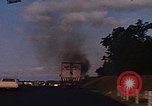
Low pollution "clean air" cars powered by electricity, alcohol, natural gas, propane, and diesel during Clean Air Car Race in Pasadena,California.
Clean Air Car Race in Pasadena,California. Trucks and buses spewing diesel fumes in a crowded city street. Cars gathering for the Clean Air Car Race include Stevens Institute of Technology Electric Vehicle...an electric car, or EV. Other cars have signs on them noting "Powered by Alcohol" , "Powered by Clean Burning Natural Gas" , "San Diego State College" , and "Diesel powered by Wilcap". Mechanics check engines and batteries cars. Drivers at electric vehicle charge station. The clean air car race begins. Cars move one by one. They drive through streets. Driver repairs the engine on a Volkswagen beetle car. Man rides a customized motorbike or motorcycle with a large aerodynamic windscreen. Animated map shows the route of the race. Sign board on the street reads Pasadena. Spectators gathered at the finish line in Pasadena
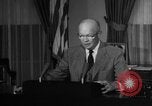
President Eisenhower speaks about his decision to dispatch Federal troops to Little Rock Arkansas
A press conference at the White House in Washington DC. U.S. President Dwight D. Eisenhower seated at a desk in the President's Office at the White House. He addresses reporters about the Little Rock Crisis. He states the duties of the local authorities. He speaks about the functions of the Supreme Court and federal courts and individuals rights and duties. He lays stress on the need to maintain peace and order in the nation.
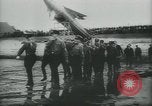
Montage of German rocketry scenes from 1930s through World War II. Nazi surrender. Atomic bomb. Japanese surrender
German rocket pioneer, Gerhard Zucker, attempting to develop postal rockets in the 1930s. Location is Wadden Sea off Cuxhaven, on April 9, 1933, where Zucker follows Nazi Sturmabteilung (also called SA or Stormtroopers) carrying the mail rocket across wet sands. The rocket is set up on a launch stand. Zucker and an assistant ignite the 8 side rockets and the mail rocket takes off. It noses up and loops over backwards, falling to the sand. German Stormtroopers lift up the damaged device. Next, is seen a later, more modern, rocket trial ending in failure. Two German engineers display a model similar to the pulse-jet-powered "buzz bomb" (V-1) employed by the Nazis in World War 2. A brief glimpse of similar American machine on sand flat, as narrator states German acknowledgement of knowledge gleaned from Dr. Robert Goddard's work. A German V-1 flying bomb (aka Doodle Bug) being launched in 1944, during World War 2. View of British houses of Parliament, London, England; an air raid shelter sign in City of Westminster. Londoners waiting out a raid in the shelter. Scenes of fire and destruction during German bombing of London, as narrator speaks about the more advanced German V-2 ballistic missiles employed later in the war. Londoners trudging through debris amongst bombed out buildings. Change of scene to U.S. infantry and armor advancing deep into Germany. Narrator refers to them overrunning rocket bases and other vital war-making facilities, near the end of the war. Glimpse of large number of German prisoners of war. Documents of military surrender being signed by Field Marshal Wilhelm Keitel, in Berlin, May 8, 1945. Closeup of Keitel. Scenes of American forces operating in Pacific theater. Aerial view of atomic bomb explosion. Japanese surrender ceremony on September 2, 1945, aboard the battleship USS Missouri. U.S. soldiers and other service personnel return home and greeting loved ones at end of war. Aerial view of Pentagon building and surrounding area in Arlington Virginia near Washington DC. U.S. troops boarding a ship in San Francisco, bound for war again, this time in Korea (1950).
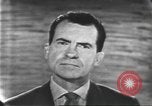
During a presidential election debate in Washington DC, Nixon and Kennedy mention measures to combat unemployment.
The second Kennedy-Nixon Presidential Debate in Washington DC. Harold R. Levy of Newsday asks Republican candidate U.S. Vice President Richard M. Nixon to mention the measures he would advocate to combat unemployment. Nixon states that to combat unemployment, the U.S. should concentrate on depressed areas and analyze sections of society where unemployment exists. He mentions a program for education, for equal job opportunities and for older citizens. He talks about full utilization of government resources and credit expansion in order to fight unemployment. He mentions measures like development of the private sector of the economy, tax reforms and tax cuts to stimulate more jobs. Democratic candidate Senator John F Kennedy talks about the area redevelopment bill passed by his party. He questions as to why Nixon opposes putting medical care for the aged under Social Security. He says that they should increase the use of surplus foods in backward areas and should not impose a high interest rate policy. He concludes and talks about development of educational aid and effective tax policies programs.
CRITICALPAST.COM: About Us | Contact Us | FAQs - How to Order | License Agreement | My Account | My Lightboxes | Shopping Cart | Advanced Search | Featured Collections | Website Terms & Conditions | Privacy Policy ©2026 CriticalPast LLC.
License Agreement |
Terms & Conditions |
Privacy Policy
©2026 CriticalPast LLC.