


 Francais
 Deutsch
 Italiano
Refine Your Search
New Mexico United States 1946 stock footage and images
- Showing 26977 to 26982 of 30777 results more
more Hide
Hide
U.S. soldiers in amphibious assault training on the Chesapeake Bay, during World War II
Officers inspect Thompson submachine gun aboard the USS Elizabeth C. Stanton, AP-69 during landing maneuvers exercises on the Chesapeake Bay, in World War 2. Soldiers crouched in a Landing Craft under way towards a beach. Landing craft from the USS Elizabeth C. Stanton, arriving at the shore. Soldiers on beach advance towards the woods. Soldiers take cover in prone positions and dry fire their weapons.
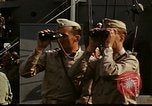
U.S. Naval officers aboard USS Elizabeth C. Stanton, AP-69, during amphibious landing exercises in World War II.
Two U.S. Naval officers, aboard the USS Elizabeth C. Stanton, AP-69, in the Chesapeake Bay, observe amphibious landing exercises through binoculars. A sailor demonstrates nautical knots as officers look on. Several Landing Craft Personnel (LCP) from the Elizabeth C. Stanton practice maneuvering near the ship.
U.S. amphibious landing exercises in the Chesapeake Bay during World War II
U.S. soldiers lower equipment over the side of the USS Elizabeth C. Stanton, AP-69, during amphibious training on the Chesapeake Bay in World War 2. They then descend a rope net to landing craft below, as a photographer takes pictures. Next scenes show several landing craft from the USS Elizabeth C. Stanton, arriving at the beach and soldiers leaving them to charge the beach. Some soldiers are seen briefly in the background, assembled in formation on the beach.
Plywood used to make crafts, boats and airplanes for the Invasion of Normandy during World War 2
Plywood used to make war material for the Invasion of Normandy. Birch, maple and mahogany logs are boiled for 24 hours. The logs are rounded on rollers and then peeled into long sheets of veneer. Women war production workers take out thin sheets of wood made from the logs. The sheets are then put into drying ovens to reduce the moisture. Women make an alternating wood and glue pile. These are stacked and put into a machine press to make the finished plywood. Workers put together and weld the prepared plywood. The plywood is used to make landing crafts, boats, pontoons, army holding boards, gliders and fighter planes. Men construct boats and crafts. A glider takes off. Worker under the plane. British de Havilland Mosquito bombers parked in a row. The plywood was a major component of the Mosquitoes .
American film and stage actor, Tyrone Power appeals to the public during the 1953 Cancer Drive.
American film and stage actor, Tyrone Power opens the 1953 Cancer Drive. Tyrone holds the American Cancer Society symbol and begins his appeal to the public. He talks about cancer, the crusade to save lives, research programs and the need to become aware. He holds up an envelope model and appeals to the people to donate generously and send gifts for the cause. He holds up an American Cancer Society poster to increase awareness about cancer.

Ground Procedures during pre-flight inspection of a U.S. Navy T2J-1 Buckeye trainer aircraft.
Ground Procedures during pre-flight inspection of a U.S. Navy T2J-1 Buckeye trainer aircraft. T2J-1 Buckeyes parked at an air base. A pilot and an airman approach a plane. Three airmen talk. An airman shows the pilot special check points on the aircraft. Port side of the aircraft. He inspects the canopy air bottle gauge, tank oil fuel filler, and hydraulic filler gauge. They move forward and inspect the static pressure vent and baggage compartment latches. They inspect the nose wheel assembly and nose intake duct under the nose. They move around the nose to check for any fuselage damage and the equipment door on the starboards side. They inspect the starboard wing surfaces and check the wheel brake hydraulic level gauge. Inspection of the wing tip tank, side gauge, wing aileron, flaps, and the main landing gear including tires and brake discs. They further inspect the fuselage, tail pipe, turbine section, tail surface. The men move to the portside for further inspection.
CRITICALPAST.COM: About Us | Contact Us | FAQs - How to Order | License Agreement | My Account | My Lightboxes | Shopping Cart | Advanced Search | Featured Collections | Website Terms & Conditions | Privacy Policy ©2026 CriticalPast LLC.
License Agreement |
Terms & Conditions |
Privacy Policy
©2026 CriticalPast LLC.