


 Francais
 Deutsch
 Italiano
Refine Your Search
New Mexico United States 1946 stock footage and images
- Showing 2719 to 2724 of 30776 results more
more Hide
Hide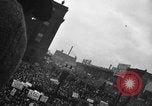
U.S. President Franklin Roosevelt addresses large crowd during 1940 Presidential campaign
Thousands of people gathered in streets of a town to hear President Franklin D. Roosevelt speak during the 1940 Presidential campaign in the United States. Numerous signs carried in the crowd display CIO and AFL letters representing unions.One reads: "Labor wants Roosevelt." One refers to New York truck drivers who support Roosevelt. The President addresses the crowd from a balcony overlooking the street corner. He is surrounded by photograpers and newsmen, and others.
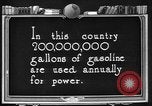
Busy city street with 1920's era automobiles; also Kerosene and by-products obtained from distillation of crude petroleum in US
Slate indicates that 200 million gallons of gasoline are used annually in the United States for power (in 1925). View of a busy city street, possibly New York City, circa 1925 with motor vehicle traffic, pedestrians and many tall buildings. Many early automobiles seen. A worker tests flash point of kerosene. Lighted candle in stuck block of paraffin (wax) showing wax or parrafin as a byproduct of petroleum. Slate indicates that petroleum provides motor fuel, common light, a lubricant for machinery and other important by-products.
American pioneers conquer the west in the 1800s, compared to 1940s workers
The U.S. Capitol dome at night. Montage of U.S. Declaration of Independence with view of U.S. founding fathers at time of American Revolution. Reenacted depiction: 17th century immigrants or pilgrims arriving in the U.S. on large sailing ships. Group of men marching while carrying a "Don't Tread on Me" Gadsden flag. Depiction of Betsy Ross with U.S.A. flag. A covered wagon at sunset. 18th century men cutting down trees. 18th century men building a log cabin. Settlers arrive to the remains of their burned out cabin. A stage coach on the U.S. prairie. A covered wagon in the midwest. A stage coach traveling through grass lands. 18th century depiction of a western town in the United States. A white man and a Native American Indian man driving the last spike to complete a railroad as the steam locomotive starts. An 18th century steam locomotive passes by. Actual footage of external view of 1940s factory or production plant. Inside 1940s factory men are building engines. Wide shot of workers entering factory. New York City street scene. Los Angeles street scene. A rancher mends a barbed wire fence. Cowboys-ranchers on their horses. Fisherman pulling in nets on shore. Tobacco farming. Leather worker. Shirtless worker wielding a pick axe. Plant worker turning a large valve. A woman painter with a maritime village scene...perhaps Provincetown. A woman scientist in a laboratory. A 1940s family at the dinner table. Farm laborers harvesting melons. Man drives a tractor with woman riding behind him.
Shows the importance and application of camouflage techniques during combat in World War 2.
A film 'Camouflage in Combat' underlines the importance of tactical exploitation and counteraction of shadows and use of nets, underbrush and other camouflage during World War II. The film shows U.S. soldiers going into a theater in the United States and watching a movie 'Camouflage'. The movie shows a soldier in a forest. He is shot down. A soldier approaches him. He looks skywards. He applies mud on his face to camouflage himself. Soldiers paint each other's faces with GI paint. On 5th June 1944, fully camouflaged Airborne and pathfinder U.S. paratroopers preparing for D-Day invasion jump over Normandy, France. Soldiers with camouflaged helmets. A soldier camouflages his helmet with grass and twigs. A soldier on an island with his helmet camouflaged with grass and twigs found in the area which gives him a perfect blend. U.S. soldiers with camouflaged helmets in France. A camouflaged tank rolls. An officer inspects soldiers standing in a line. Their helmets are camouflaged. A U.S. soldier hiding in shadows in Casino, Italy fires his gun. His ring sparkles. A soldier in a prone position fires. A New Zealand soldier fires while in shadows.
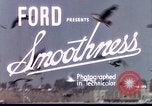
Advertisement promoting the 1939 Ford automobile
A technicolor commercial advertisement for the new Ford car in the United States. Scenes near ocean. Seagulls in flight. 1939 Ford automobile driving along the road. Narrator extols the car's soft springs and smoothness of the ride. A man and two women stand at water's edge and point at the seagulls in flight. They enter a 1939 Ford coupe. The man drives and the two women sit with him in the front seat.
"By Request Department" shows scenes of soldiers' home towns for soldiers deployed overseas in World War 2; views of several American towns circa 1945.
Busy streets of the cities in the United States. A woman officer at a desk of Army-Navy Screen Magazine's "By Request Department" addresses U.S. soldiers overseas during World War 2, and says they will show views of various American home towns by request. Busy intersection along Capitol Street in Charleston, West Virginia. 1930s automobiles on roads and American citizens walking on city streets. Next scene shows the main street of Wytheville, Virginia with cars, pedestrians, and shops. Next scene is of main street area in Fall River, Massachusetts. Buildings seen on either sides of the streets and buses at bus station depot. Next view is of Springfield Street, looking toward Market Street in the center of Newark, New Jersey. Main streets of Winslow Arizona, with citizens dressed in Western wear, and then a main intersection in Tucson, Arizona, where a paper boy sells newspapers on a street corner.
CRITICALPAST.COM: About Us | Contact Us | FAQs - How to Order | License Agreement | My Account | My Lightboxes | Shopping Cart | Advanced Search | Featured Collections | Website Terms & Conditions | Privacy Policy ©2026 CriticalPast LLC.
License Agreement |
Terms & Conditions |
Privacy Policy
©2026 CriticalPast LLC.