


 Francais
 Deutsch
 Italiano
Refine Your Search
New Mexico United States 1946 stock footage and images
- Showing 28033 to 28038 of 30777 results more
more Hide
Hide
U.S. Army Training film emphasizing Army Air Forces safety rules of the air for pilots training in PT-17 "Kaydet" aircraft.
Opening scene shows a fuel gauge reading half empty in a U.S. Army Air Forces Stearman Boeing PT-17 “Kaydet” bi-plane trainer aircraft. Closeup of pilot with helmet and goggles in open cockpit of the airplane. Narrator says rules require pilot to return to base immediately. View of the aircraft descending toward the field. Animated diagram showing proper entry into left traffic for the active runway. View of PT-17 on final approach to the runway. Closeup of pilot in the cockpit. He makes a three-point landing on the first third of the runway and rolls without braking. Next, assisted by a wing walker, the pilot taxis to an open slot on a line of aircraft and stops on a parking line. The pilot steps from the cockpit, wearing a seat pack parachute, and begins walking to the field office, when he stops to converse with the narrator. He complains, somewhat about the restrictive rules for pilots in training and expresses desire to fight the Germans and Japanese in World War 2. Narrator defends the rules of safety, first, saying "You can't fight until you can fly." Scene shifts to four pilot trainees who "washed out" of the program for various infractions of the trainin safety rules. They are carrying their belongings in duffle bags and wait at a bus stop for transportation away from the base. Camera focuses on each of the men in turn, as narrator describes their failures to follow rules. Scene shifts to the airdrome where successful student pilots are seen walking toward the camera. Series of scenes showing student pilots performing various preparatory actions before flying their planes. One standing on a wing, checks the "Form One" that contains aircraft maintenance record. Another sitting in his cockpit notes that his gas, oil,cockpit switches, and flight controls all check OK. Another pilot is fastening leg straps of his seat pack parachute and comments about need to keep checking when taxiing down the line for takeoff. Closeups of pilots addressing the camera with admonitions about rules to follow. View of massed parked PT-17 training planes. Views of current war planes in flight, including Bell P-39 Aircobra, Lockheed P-38 Lightning, Republic P-47 Thunderbolt, and Martin B-26 Marauder bombers. Many good views of such airplanes in takeoffs, formations and aerobatic maneuvers. (World War II; WW II; World War 2; World War Two)
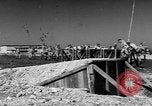
Basic training of Aviation Cadets in the U.S. Army Air Forces
Entire film is devoted to challenging obstacles that U.S. Army Air Forces aviation cadets are required to run through as part of their basic training. They are seen climbing walls. running up platforms, jumping and catching hold of ropes, and facing similar kinds of physical challenges on an extensive obstacle course. (World War II; WW II; World War 2; World War Two)
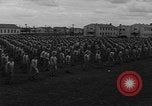
U.S. Army Air Forces Aviation Cadets in basic training..
In opening scene, hundreds of Army Aviation Cadet candidates are seen running in formations.This consumes most of the film. Next, they are seen lined up outside their quarters and practicing Judo throws, in pairs. Later, some run on a track around the field as others gather in the center of the field and play football.
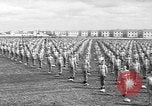
U.S. Army Air Forces Aviation Cadets in basic training physical exercises.
In opening scene, hundreds of Army Aviation Cadet candidates in formation are seen engaged in calisthenics. They perform several different types of exercises, starting at attention and moving their arms forward, then to their sides and down. After doing a number of repetitions, they begin doing numerous "Jumping jacks" combined with deep bends to the ground. They conclude their exercises with a number of squat pushups. (World War II; WW II; World War 2; World War Two)
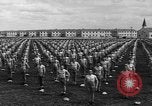
U.S. Army Air Forces Aviation Cadets in basic training perform calisthenics
In opening scene, hundreds of Army Aviation Cadet candidates are seen in formation with hands on their hips. They perform calisthenic exercises, principally Jumping Jacks, which the camera shows from several viewpoints. This activity dominates the remainder of the film. (World War II; WW II; World War 2; World War Two)
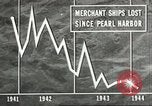
U.S. Coast Guard and maritime authorities assure protection and safety of U.S. ports during World War II
A chart shows the losses of American merchant ships to German submarines diminishing over the course of World War 2. Women walking into the Merchant Marine Council headquarters in Washington DC. Council member officers meeting in their board room. Glimpse of merchant vessels and tugboats. Sign identifies office of the Captain of the Port. Inside, two men discuss movement and anchorage of ships. View of anchor being dropped from a large ship. A small Coast Guard patrol boat moves among anchored ships, checking for possible threats. Closeup of officers aboard the patrol boat with American flag behind them. Sign at office of Port Security Officer. Inside, men update a chart showing ships in port and locations. Coastguardsman patrols cargo area for safety and threats. Cargoes being moved on rail at the port. Explosive cargo and artillery shells are seen in containers. Officer oversees loading of munitions on a ship. Coast Guardsman walking across stacks of military gas cans (Jerrycans) on a barge. Officer and guardsman examine one that appears to be leaking, and remove it.
CRITICALPAST.COM: About Us | Contact Us | FAQs - How to Order | License Agreement | My Account | My Lightboxes | Shopping Cart | Advanced Search | Featured Collections | Website Terms & Conditions | Privacy Policy ©2026 CriticalPast LLC.
License Agreement |
Terms & Conditions |
Privacy Policy
©2026 CriticalPast LLC.