


 Francais
 Deutsch
 Italiano
Refine Your Search
New Mexico United States 1946 stock footage and images
- Showing 28111 to 28116 of 30777 results more
more Hide
Hide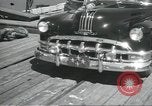
Admirals board the USS Nautilus for part of its sea trials
Opening scene shows a 1954 Pontiac VIP staff car, displaying 4-stars on its bumper plate. It is parked on a wharf next to the nuclear submarine, USS Nautilus (not seen).Admiral Robert B. Carney, Chief of Naval Operations, and Admiral William Fechteler, former CNO step from the car. Next, Admiral Carney is seen below decks on the Nautilus, making a selection on a juke box installed in one of the boat's compartments. Glimpse of officers standing on the foredeck as the Nautilus makes way on the surface. Admiral Fechteler, at the helm and Admiral Carney, seated next to him. The admirals and ships officers watching sailors at the helm. Momentary glimpse of Admiral Carney at the juke box. Crew members eating in the sailors mess. Officer briefing the admirals at the helmsman's station. Crew members, in cold weather gear, descending stairs inside the Nautilus. The boat making way in calm waters, with several crew standing on deck. A sailor wearing headphones and communications gear. The admirals saluting as they arrive on the Nautilus.
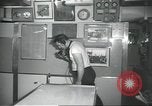
First Nuclear powered submarine, USS Nautilus SSM-571 underway in early trials with Admirals Carney and Fechteler aboard.
A mixture of scenes shot during trial runs of the first nuclear powered submarine, USS Nautilus (SSN 571)in which Admiral Robert B. Carney, Chief of Naval Operations Admiral William Fechteler, former CNO, were onboard. A sailor inside the Nautilus, wearing a headset View from above of the bow of the Nautilus plowing up the water ahead as it begins to slowly submerge. Admiral Fechteler at the helm and Admiral Carney sitting next to him. View from above of the Nautilus foredeck as it makes way on the surface. The admirals on the foredeck with two crew members. Closeup of Admiral Carney on deck wearing sun glasses. He looks through a pair of binoculars. Glimpse of Commander Eugene P. Wilkinson, USN, Captain of the USS Nautilus, in the Conning Tower with admirals Carney and Fechteler. Admiral Carney, at position next to helmsman, observing instruments. Foredeck of Nautilus with hatch open as it makes way on surface. Sailor going below and closing hatch behind him. Admiral Carney conversing with a crew member at his duty station, and then looking through the boat's periscope. Admiral Carney on deck smoking a cigarette. Hooded lookout sailor on deck. Commander Wilkinson leading the admirals below decks and briefing them. View astern from the boat's sail at its wake behind. A crew officer standing behind the admirals who are at the helm and nearby controls. A sailor takes a reference manual from the ship library. a cook preparing food on a grill in the galley. . Admiral Fechteler at the periscope. Commander Wilkinson showing the admirals equipment that includes a magnetic tape recording reel. Admiral Carney going below through deck hatch. View of metal plate installed on the Nautilus, citing it as the sixth ship in the fleet to bear that name, and providing other information.
Reenactment shows early 20th century U.S. research in gas turbines that contributed to development of turbojet airplane engine
Views of Cornell University where mechanical engineer, Stanford Moss, conducted research into gas turbines as part of his doctoral thesis work in 1903. Dr. Moss later joined the staff of General Electric Company. During World War I Dr. Moss is called to Washington DC to discuss, with the National Advisory Committee on Aeronautics (NACA), development of a turbo supercharger for airplane engines. View of a biplane with turbo supercharger mounted on top of radial engine. Animated diagram illustrating workings of a turbo supercharger. Using a supercharged engine, the U.S. Army Air Services established an altitude record of 36 thousand feet. (The pilot, flying without supplemental oxygen, passes out and doesn't regain consciousness until the airplane has fallen about 30 thousand feet.)
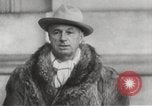
How turbo superchargers facilitate high altitude airplane flight. World War II warplanes equipped with superchargers
General Billy Mitchell wearing fur coat and western style hat. Animated illustration of U.S. Army Martin bomber operating at 15 thousand feet during the famous demonstrations of air power against battleships, in 1921. This was possible because the aircraft engines were supercharged, an outgrowth of Dr. Sanford Moss's developments at General Electric Company.World War 2 scenes of U.S. Army Air Forces aircraft that use supercharged engines: P-51s; P-47s; P-38s; B-24s; B-17s and B-29s. View of atomic bomb explosion.
First flight of Bell YP-59A aircraft. GE develops J-33 jet engine. First flight of Lockheed P-80 jet fighter.
Official films of the flight of Bell YP-59A Airacomet jet-powered airplane, October 1, 1942. Workers at the General Electric plant in Lynn, Massachusetts, producing versions of increasingly more powerful jet engines: the I-16 with 1600 pounds of thrust and the J-33, with 4000 pounds of thrust. First flight, January 8, 1944, of a Lockheed P-80 shooting star fighter jet powered by the J-33 engine. Formation of P-80 fighter planes in flight. (World War 2 period.)
General Electric plant and operations at Lockland, Ohio. Advances in jet propulsion. Jet airplanes of the early 1950s.
Animated illustration of rapid improvements in GE jet engine designs. Views of the GE plant at Lockland, Ohio. Interior of a jet passenger liner airplane, as envisioned in 1951. View of flight attendant or stewardess in uniform, delivering tray of food to a passenger in the cabin of a passenger aircraft in flight. View of Dr. Sanford A. Moss, standing in front of the Collier Trophy, looking at his award certificate, in 1941. The trophy was awarded to him and the U.S. Army Air Corps for development of the aircraft engine supercharger. Discussion of Atomic Energy Commission, U.S. Air Force, General Electric and Convair ideas about building an atomic powered airplane. Views of the GE gas turbine laboratory. Montage of jet aircraft of the early 1950s. Among those seen are: Convair SF-92 delta wing fighter plane; The Chase XCG-20A 4-engine cargo plane; North American F-86 sabrejet; Grumman F9F panther; F-89 Scorpion; and B-36 bomber, plus several unidentified experimental aircraft. Several scenes of B-47s in rocket assisted takeoffs.
CRITICALPAST.COM: About Us | Contact Us | FAQs - How to Order | License Agreement | My Account | My Lightboxes | Shopping Cart | Advanced Search | Featured Collections | Website Terms & Conditions | Privacy Policy ©2026 CriticalPast LLC.
License Agreement |
Terms & Conditions |
Privacy Policy
©2026 CriticalPast LLC.