


 Francais
 Deutsch
 Italiano
Refine Your Search
New Mexico United States 1946 stock footage and images
- Showing 28507 to 28512 of 30775 results more
more Hide
Hide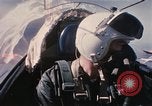
NASA Mercury Astronaut seated in jet cockpit undergoes weightlessness training at Edwards Air Force Base, California.
One of the NASA Project Mercury Astronauts during weightlessness training at Edwards Air Force Base, California. Astronaut seated inside a jet cockpit. Aircraft in flight over Edwards Air Force Base. Astronauts in the Project Mercury program included Virgil Grissom, John Glenn, Scott Carpenter, Donald Slayton, Gordon Cooper, Wally Schirra Alan Shepard.
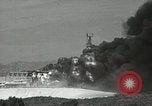
Atlas missile 27E launches and blows up at Vandenberg Air Force Base, California.
Atlas missile 27E launches at Vandenberg Air Force Base, California. Missile blows up soon after its launch. Fire and black smoke rises from the explosion.
Atlas missile 27E launches with huge explosion on the ground at Vandenberg Air Force Base, California.
Atlas missile 27E launches at Vandenberg Air Force Base, California. Missile ready for the launch. It falls with a large explosion on the ground. Fire and black smoke rises from the explosion.
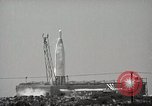
Atlas missile 27E explodes soon after its launch at Vandenberg Air Force Base, California.
Atlas missile 27E launches at Vandenberg Air Force Base, California. View of Atlas 27E ready to launch. Large explosion on the ground soon after its launch. Fire and black smoke rises from the explosion. (Note: This was the ninth E-series Atlas launched and the first from the West Coast. The missile suffered combustion instability in one booster engine, the resultant asymmetrical thrust causing it to tip over and explode on impact with the silo wall. OSTF-1 suffered extensive damage and did not host another launch for nine months.)
Atlas missile 27E ready to launch from a launch pad at Vandenberg Air Force Base, California.
Atlas missile 27E launches at Vandenberg Air Force Base, California. View of a launch pad and Atlas 27E ready to launch.
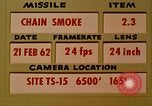
Missile Atlas 52D launches from ground coffin launcher and explodes during the flight.
Missile Atlas 52D Test code named Chain Smoke ready for launch by the Strategic Air Command (SAC) from pad 576 B-3 at Vandenberg Air Force Base, California The missile takes off and begins its flight upward. At TC:01:49 some white smoke emanates from the missile and it is seen to be burning. A moment later it explodes in a huge fireball with pieces ejected trailing white smoke. The camera tracks the largest piece as it falls and crashes behind a ridge at the shoreline (likely into the water). Various vehicles are seen along fence line at secure area set back from the shoreline. (Note: The booster gas generator experienced a leak which resulted in high thrust section temperatures and eventual propulsion system failure. The sustainer and verniers shut down 49 seconds into launch, followed by the booster engines at 68 seconds. The missile destroyed itself at 72 seconds.)
CRITICALPAST.COM: About Us | Contact Us | FAQs - How to Order | License Agreement | My Account | My Lightboxes | Shopping Cart | Advanced Search | Featured Collections | Website Terms & Conditions | Privacy Policy ©2026 CriticalPast LLC.
License Agreement |
Terms & Conditions |
Privacy Policy
©2026 CriticalPast LLC.