


 Francais
 Deutsch
 Italiano
Refine Your Search
New Mexico United States 1946 stock footage and images
- Showing 30109 to 30114 of 30776 results more
more Hide
Hide
Glider assembly (WW2)
Military vehicles bring large crates containing gliders to Greenham Common, England during World War II. Soldiers open one of the large crates. An M2 Cletrac transports a large crate, passing by a Quonset hut. Soldiers assemble a Waco CG-4 glider. Mechanics work on the fuselage of a Waco CG-4 glider. They carry the cockpit part and attaches it to the fuselage. The men assemble the tail part. Mechanic uses a wrench.
Soldiers assemble a Waco CG-4 glider (WW2)
A soldier directs M2 High-Speed Tractors (or M2 Cletracs) on dusty road in Greenham Common, England during World War II. A Cletrac pulls a glider body from a large crate. Soldiers ride a truck. Soldiers assemble a Waco CG-4 glider. A mechanic uses a screwdriver to attach the wing. They attach support under the glider’s wing. A glider is being towed. Numerous gliders lined up on field.

Paratroopers gather before D-Day (WW2)
Paratroopers of the 101st Airborne Division and the 502nd Infantry Regiment (502nd Parachute Infantry Regiment) arrive at an airfield for troop carriers in World War II. The troops happily wave with their helmets at the camera as they carry supplies. Some of the paratroopers’ faces are darkened. The paratroopers crowd to hear orders of the day. Some of the paratroopers’ helmets are seen with the distinctive heart shaped symbol of the 502nd Infantry Regiment. Paratroopers put on their life vests (Mae West) and chutes. The jump master gives out last minute instructions. Three paratroopers with blackened faces discuss plans. Lieutenant General Lewis H. Brereton bids good luck to a paratrooper chaplain and a medical corps officer before the paratroopers board their Douglas C-47 Skytrain transport plane. Paratroopers climb aboard the transport plane. General Brereton presents a paratrooper with a rabbit’s foot as a good luck charm Nose of Douglas C-47 Skytrain “That's All, Brother” (N88874) before taking off for Normandy, France on D-Day.
Major General Richard Gale addresses troops as they prepare for D-Day (WW2)
British Major General Richard N. Gale gives a final message to airborne troops at the headquarters of the British Sixth Airborne Division in Harwell, England a day before D-Day in World War II. The airborne troops raise their berets. A British pathfinder officer briefs his men. He points to a map. The soldiers huddle together to discuss plans. Airborne troops receive supplies and food rations in cans. The troops also receive their salaries in French Francs. A box labeled “Invasion Currency France” and French Francs on the table. A hand counts French Franc bills. A pair of hands hold French Francs currency. The soldiers inspect their French Francs. British soldiers paint white star identification bands on field equipment. A soldier tests a radio set. A group of soldiers inspect shrapnel mines, small alarms, and ammunition. A soldier inspects a Bren machine gun. Another soldier inspects a pistol. A soldier locks a submachine gun. Trooper sharpen a knife. Soldier puts bullets into his Ammunition pouch. Troops break camp and depart for glider and airborne carrier bases at dusk. They synchronize their wrist watches. The soldiers load their supplies on the back of trucks. Trucks with troops drive away.
Allied soldiers load weapons and supplies into gliders before D-Day (WW2)
Allied Horsa gliders parked on an airfield in England before D-Day during World War II. Soldiers load a six pounder anti-aircraft gun into a glider. A British soldier drives a Jeep on a ramp into a transport plane. Soldiers roll a large cylindrical container containing guns and ammunition. They place it into a pile. The troops load the container into a glider. A British Horsa glider being towed. British path finder paratroopers put on black face paint and helmets.
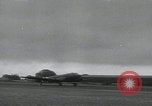
Allied planes continue to take off from England after the start of D-Day (WW2)
Multiple Allied transport planes and bombers take off from an airfield in England after the start of Normandy landings on D-Day in World War II. The planes take off one at a time. Allied aircraft flying in formation crossing the English Channel.
CRITICALPAST.COM: About Us | Contact Us | FAQs - How to Order | License Agreement | My Account | My Lightboxes | Shopping Cart | Advanced Search | Featured Collections | Website Terms & Conditions | Privacy Policy ©2026 CriticalPast LLC.
License Agreement |
Terms & Conditions |
Privacy Policy
©2026 CriticalPast LLC.