


 Francais
 Deutsch
 Italiano
Refine Your Search
New Mexico United States 1946 stock footage and images
- Showing 3463 to 3468 of 30775 results more
more Hide
Hide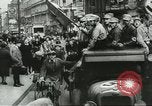
Mistreatment and brutality against Jews as part of Nazi German antisemitism campaigns before and during World War 2
Nazi brownshirts riding on a truck yelling anti-Jewish propaganda in streets of Germany during anti-Semitic campaign of 1933. Signs on Jewish-owned businesses encouraging boycott of those businesses. Brownshirt drawing sign on storefront glass of a shop. Sign with skull and slogan "Achtung Juden" posted on front door of Cafe Unter den Linden. Crowd of German citizens interacting with brownshirts, mostly in support, but one brief scene shows a citizen arguing with a brownshirt posted in front of a Jewish-owned shop. Nazis with swastika armbands leading anti-Jewish chants, while some citizens raise their hands in Nazi salutes. Next scene deals with the Nuremberg Laws including the Reich Citizenship Law and the Law for the Protection of German Blood and German Honor. It shows Herman Goering addressing government officials at the seventh Nazi party congress in September 1935, and reading parts of the so-called blood purity laws and standards. Rudolf Hess and Adolf Hitler are seated in the foreground. Goering reads the proclamation that German citizens are only those of German or related blood, willing to serve the Reich and German people. Goering then reads that marriages between Jews and citizens of German or related blood are prohibited. Scene from courtroom during 1946 Nuremberg trials. Next scene shows Jewish citizens being forcefully and brutally dragged, beaten, and evicted from their homes by Nazis. Some have been stripped of their clothing. A woman is dragged by her hair. A man is beaten. Scenes of German citizens and possibly Gestapo beating and harassing Jewish people in the streets. Clearing of the Warsaw Ghetto in April 1943. Close-up of hand turning device to generate explosive charge. Large explosion in Warsaw Ghetto. Views of buildings burning in the Warsaw Ghetto. People carrying bodies on stretchers. A person being dragged by Nazi soldiers out of a sewer holes where they had been hiding. Nazi German tanks and armor rolling through the ghetto, and artillery being fired at a building. Waffen SS, gestapo police, and Wehrmacht participating in brutality. Jewish man being hit and dragged across street.
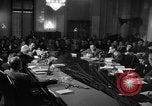
Howard Robard Hughes, Jr. testifies about profits on war contracts during Senate Hearings,1947 in Washington DC.
Senate Hearings,1947 in Washington DC. Officials and dignitaries seated for Senate Hearings, 1947. Howard Hughes, Jr. is questioned. He testifies about profits made on war contracts by him before Senate War Investigating Committee. He says that he has not made any profits on war contracts in year 1946. He asserts that any profits he made came from selling oil well tools and Grand Prize Beer (of Gulf Brewing Company) which are not the subject of the investigation. He further comments, "if I didn't make a little money somewhere, how could I put 9 million dollars into the Flying Boat?" Views of Hughes and other dignitaries sitting during the hearings.
Dr. Frederick Earl McLendon, Atlanta, Georgia
Dr. Frederick Earl McLendon and his wife Mrs. Bennie B. McLendon are seen with a guest on the backyard terrace of their home in Atlanta, Georgia. They are then see in front of their house. Dr. McLendon, pulls mail from his mailbox. The couple returns to the house. Mailbox address reads “Dr. F. Earl McLendon 866 Woodmere Dr. N.W.” Dr. McLendon is then seen talking with an older associate while sitting at a patio table on the terrace. View of the home's swimming pool. African American Doctor Frederick Earl McLendon founded the McLendon Medical Clinic, later McLendon Hospital, which served African-American residents in Atlanta at the height of the Jim Crow era. The hospital opened in April, 1946 during a time of segregation in the south.
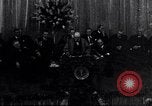
United States President Harry Truman and British Prime Minister Sir Winston Churchill at Westminster College in Fulton Missouri
United States President Harry S. Truman and British Prime Minister Sir Winston Churchill speak at Westminster College in Fulton, Missouri. The speakers recognize College President Franc L. McCluer and Missouri state Governor Phil M. Donnelly. President Truman praises Churchill. Prime Minister Churchill addresses the assembled intellects and dignitaries at the meeting in his "Sinews of Peace" address. Truman says Churchill "Is a great Englishman. But he's half American." During this famous speech which became known as the "Iron Curtain speech," Churchill thanks the college for giving him an honorary degree. He describes the times as "anxious and baffling." He says the U.S. "stands at the pinnacle of world power" and that it has an "awe-inspiring accountability to the future." With a "sense of dutydom, and anxiety lest you fall below the level of achievement... Opportunities here now, clear and shining for both our countries."
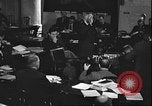
US Army Major General Walter Short testifies during the investigation of Pearl Harbor attack in the United States.
Investigation of the Pearl Harbor attack by Japan during World War II in the United States. Officials of the Joint Congressional Committee on the Investigation of the Pearl Harbor Attack gather in the court room. Officials seated at their desks and Major General Walter C. Short, U.S. Army (retired), addresses them about the Pearl Harbor attack by Japan. He states that he appeared for the hearing of Pearl Harbor attack in August 1944. No indication was made by the war department about the attack. No information was furnished by them. If they had furnished the information, some decisions or actions could have been taken. He talked to officials of the war time division, but no conclusions were made.
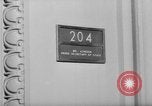
Dean Gooderham Acheson and David Lilienthal discuss a document in Acheson's office in Washington DC, United States.
Dean Gooderham Acheson in his office in Washington DC, United States. A name plaque on a door reads "Mr Acheson - Under Secretary of State'. Dean Gooderham Acheson and American public official David Lilienthal discuss a document. A report on the International Control of Atomic Energy.
CRITICALPAST.COM: About Us | Contact Us | FAQs - How to Order | License Agreement | My Account | My Lightboxes | Shopping Cart | Advanced Search | Featured Collections | Website Terms & Conditions | Privacy Policy ©2026 CriticalPast LLC.
License Agreement |
Terms & Conditions |
Privacy Policy
©2026 CriticalPast LLC.