


 Francais
 Deutsch
 Italiano
Refine Your Search
New Mexico United States 1946 stock footage and images
- Showing 5713 to 5718 of 30777 results more
more Hide
Hide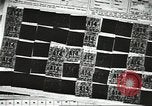
Penalties for accepting counterfeit gasoline stamps charged by the Office of Price Administration in the United States.
Dramatizes the detection of counterfeit and stolen ration stamps by trained personnel in the OPA (Office of Price Administration) and penalties for accepting illegal stamps in the United States. A woman shows a collection of bingo sheets with illegal stamps. She further details on a chart how gasoline distributors are prohibited from selling gas and how a dealer's gasoline allocation is decreased in ratio to the illegal stamps transmitted.
Precautions taken by gasoline station dealers against counterfeit gasoline stamps in the United States during World War 2.
Dramatizes the detection of counterfeit gasoline ration stamps by a gas station dealer after following precautions suggested by an OPA (Office of Price Administration) officer in the United States. A gas station dealer during wartime in World War 2 calls up his distributor and expresses need for more gasoline at his service station. He visits an OPA officer when the distributor refuses to deliver more gasoline. The OPA officer speaks to the dealer and warns him about accepting illegal gasoline stamps. View of a car pulling into a gas station, and a gas station attendant checking for a proper ration book and not just loose coupons. The gas station attendant is seen fueling the car and checking under the hood. Station attendant also checks license plate to make sure it matches the ration book records. Another gasoline dealer and service station operator meet the OPA officer and complain about receiving illegal coupons. The OPA officer emphasizes that the legitimate gasoline dealer should refuse to accept loose stamps and should check ration books with the auto license. A peddler who sells illegal gasoline stamps is seen in a car.
Puppies playing and a litter with their mother at a farm in the United States.
Animals at a farm in the United States. Chicken feeding in an enclosure. Puppies playing and a litter with their mother.
Spectators look at bears moving in a cage in a zoo in the United States.
Wild animals in a zoo in the United States. Two bears move in a cage. Spectators look at the bears moving in the cage.
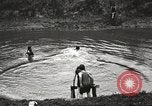
Children diving, playing and swimming in a stream in the United States.
Children at a stream in the United States. The children swim in a swimming hole. They run along the bank of the stream and play in the stream. The children dive into water.
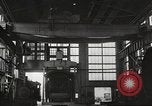
A crane lifts a railroad locomotive in an industrial plant of Ford Motor Company in the United States.
An industrial plant of Ford Motor Company in the United States. A crane in the industrial plant lifts a railroad locomotive from tracks. The crane turns it 180 degrees and lowers it back onto the tracks.
CRITICALPAST.COM: About Us | Contact Us | FAQs - How to Order | License Agreement | My Account | My Lightboxes | Shopping Cart | Advanced Search | Featured Collections | Website Terms & Conditions | Privacy Policy ©2026 CriticalPast LLC.
License Agreement |
Terms & Conditions |
Privacy Policy
©2026 CriticalPast LLC.