


 Francais
 Deutsch
 Italiano
Refine Your Search
Norway 1941 stock footage and images
- Showing 97 to 102 of 1737 results more
more Hide
Hide
Norwegians including Vidkun Quisling, meet with German officials in Oslo.
Akershus castle in Oslo, Norway. Snow covered cannons outside the building. A motorcade of German and Norwegian officials on the road. Civilians lined on either side. Vidkun Quisling is seen arriving inside Akershus castle, for the ceremony in which he will be appointed Minister-president. Walking ahead of him is German Reichskommisar Joseph Terboven.The gathering greets them with a Nazi salute. Quisling takes to the stage and gives a Nazi salute. The Third Reich flags on stage. The officials receive flowers from little girls. Soldiers at attention. Civilians watch the event. Quisling and officials on a balcony greet the crowd gathered below. (World War II period).
Trial of Vidkun Quisling in Oslo and German leaders surrender in Germany at end of World War 2.
The first preliminary trial of Nazi war criminals following end of World War II in Europe. Norwegian leader Vidkun Quisling is tried for high treason in Oslo, Norway. Men are seated during the trial. Vidkun Quisling sits during the hearing. View of the Norwegian ship "Patria" which is now Allied headquarters, in Flensburg, Northern Germany. On May 9, 1945, the Allies arrest all elements of the German shadow government at Flensburg. German prisoners march near the harbor. Ships in the background. High German officials are arrested. Two German Navy officers and a non-uniformed official (who has the appearance of a Hitler doppelganger) stand with their hands behind their heads. Exterior view of Castle at Flensburg. Inside lies the body of General-Admiral Hans-Georg von Friedeburg, after he committed suicide. Picture of Admiral Doenitz, on wall above the body. Colonel General Alfred Jodl, leaving the Germany Army Headquarters at Flensburg, as he is taken into custody. Exterior view of German shadow government headquarters at Flensburg. Grand Admiral Karl Doenitz, successor to Hitler, is taken into custody. Doenitz and Jodl, are escorted by Allied armed guards, through a tunnel in the Flensburg compound. View of house in Luneberg, Germany, where Nazi SS leader, Heinrich Himmler, commits suicide after his arrest by British soldiers. View of cyanide poison pills taken from Himmler, before he succeeded in taking one he had hidden in his mouth. Body of Himmler.
Richard Byrd's 1926 Arctic Expedition. Members devise means to transport their Fokker airplane from ship to shore through ice floes
The 1936 Byrd expedition to fly an airplane over the North Pole. Lacking a place to dock, at Kings Bay, Spitsbergen, Norway, expedition members lash lifeboats together for a raft to float their Fokker F-VII Tri-motor airplane, the "Josephine Ford," from their ship, the SS Chantier, to the shore. Snow is falling as they complete the lashing and begin fastening planks across the lifeboats to complete the raft. Using poles and oars, they maneuver the raft close to the Chantier. Then, using her cranes, they lower the airplane's fuselage onto the raft followed by its wing, that they place atop it. They fasten the load with lines and propel the raft and plane through the ice floes, using poles and oars. Writing on the airplane reads: "Fokker, Josephine Ford, Byrd Arctic Expedition." Closeup of two oarsmen rowing and another pushing ice floes away from the raft. View from under the airplane wing, of the SS Chantier with ice floes piled up beside her. Five men in a dingy, trying to clear a path for the raft, and others, on the raft doing the same. View from the Chantier, of the raft and men struggling to make their way to the shore. The Norwegian gunboat and dock in the background.
Fokker aircraft strikes a snowbank and breaks a ski in attempted takeoff during Byrd's 1926 arctic expedition to fly over the North Pole
Lieutenant Commander Richard Byrd's 1926 arctic expedition to fly an airplane over the North Pole. The expedition's F-VII Tri-motor airplane, the "Josephine Ford," is seen parked on the snow at Spitsbergen, Norway. Men work to level a surface in the snow to permit takeoff. Snow and ice covered mountains in the background. The aircraft with engines running. It begins a takeoff roll, but strikes a snowbank and breaks one of its skis. Men gather near the airplane. They shovel snow from the airplane.
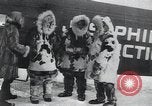
Admiral Richard Byrd and aviator Floyd Bennett, in Spitzbergen after ostensibly flying over North Pole in their Fokker F.VII
Admiral Richard E. Byrd and aviator Floyd Bennett, in Spitzbergen, Norway, being congratulated by other expedition members, after ostensibly making a round-trip flight to the North Pole and back, in their Fokker F.VII trimotor airplane named: " Josephine Ford."
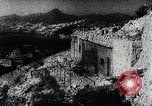
Japanese troops occupy Hong Kong after British forces surrender on Christmas day 1941 (WWII)
The Japanese occupation of Hong Kong following British surrender on Christmas day, 1941 (World War II). Japanese propaganda newsreel, narrated in accented English: Japan occupies the entirety of Hong Kong and British surrender on December 25, 1941. Destroyed British island defenses including bunkers and pill boxes. Wrecked buildings and oil storage tanks in Hong Kong. Japanese troops pose as a group and shout “Banzai” for the camera. Destroyed British tanks and artillery. British military prisoners gathered in a courtyard. Japanese officer inspects captured artillery. Japanese troops pile up shells from surrendered British forces. Captured British soldiers and sailors crowd British officers exit the "New Oriental Building" (Formerly 2 Connaught Road, Central, Hong Kong) after surrender discussions with Japanese forces. White flag hoisted on top of the New Oriental Building. Aerial view of Hong Kong area. Japanese aircraft in formation over the city making their formal occupation entry. Japanese troops parade through the streets with commanding officers on horseback.