


 Francais
 Deutsch
 Italiano
Refine Your Search
Norway 1941 stock footage and images
- Showing 223 to 228 of 1737 results more
more Hide
Hide
British Prime Minister Winston Churchill in many meetings before and after America's entry into World War II
Opening slate reads: "Quebec Conference August 1943." The English battleship, Prince of Wales, is seen in fog off the Coast of Newfoundland, in August 1941. View of sailor on fore-deck of the British ship. View inside engine room of the ship where sailor manipulates her power. Closeup of engine crankshaft stopping as she drops anchor in Placentia Bay. View of Prime Minister Winston Churchill, greeting U.S. President Franklin D. Roosevelt aboard the Prince of Wales. He proffers a letter to the President, from the King of England. View of Roosevelt and Churchill seated on deck with their respective military leaders standing behind them. Admiral Ernest King, U.S. Chief of Naval Operations converses with U.S. Army Chief of Staff, George Marshall, as they stand behind Churchill and Roosevelt. Wider camera view shows the larger military entourage accompanying the Prime Minister and the President. Glimpse of prisoners and enslaved workers taken by Nazi Germans in Europe. Glimpse of bombs falling from an airplane. Classic film views of the Japanese attack on Pearl Harbor in December 7, 1941. Bombs exploding along "Battleship Row." Heavy smoke rising from the bombed ships. The USS Arizona tilted heavily and burning. Camera pans along the path of destruction, as the voice of President Roosevelt is heard in the background, asking the Congress to declare that the Japanese attack created a state of War between the United States and the Japanese Empire. View of President Roosevelt speaking to the U.S. Congress. Seated behind him are Vice-President Henry Wallace and Speaker of the House, Sam Rayburn. Glimpse of Congress members applauding. Change of scene shows President Roosevelt and Winston Churchill meeting in Washington, DC, in December of 1941, during World War 2. Views of war preparations in the United States, including the building of new war production plants and facilities. A large steel ingot being forged into an artillery gun barrel. Machinist at work turning a gun barrel on a lathe in a munitions factory. Views of manufacturing plants in operation and steel being made. A railroad train carrying new Army trucks. Another meeting of Churchill and Roosevelt in Washington, D.C. June, 1942. Standing behind them is President Roosevelt's special assistant, Harry Hopkins, a British naval officer, and an American navy Captain. American soldiers boarding a troop ship, and closeups of them as they enter the ship, looking out of portholes, and waving from the ship's deck. Glimpse of Washington Monument and its image in the reflecting pool in Washington DC. Closeup of a book entitled, "Time Table for Invasion." General George Marshall with several of his generals doing preliminary planning. Series of scenes involving senior military officers engaged in war planning. A convoy of warships is seen at sea during the Operation Torch Allied invasion of French North Africa during 8–16 November, 1942. Views of Allied Navy ship guns firing. Allied troops riding in landing craft, and advancing from beached craft on shore of Algiers. Aerial view of a flight of Douglas Dauntless bombers in formation. "Bombs away" view from Allied airplane dropping bombs. Allied troops firing camouflaged antiaircraft guns from sandy positions near shore. Enemy shells or bombs exploding nearby. Two U.S. Army soldiers holding a document in French entitled, "Message from the President of the United States.
Part of a newsreel restrospective about U.S. President Franklin D. Roosevelt, made after his death in 1945
Film opens showing forward port section of the British Battleship HMS Prince of Wales in Placentia Bay, Argentia, Newfoundland. Next, Winston Churchill is seen greeting President Franklin D. Roosevelt as he arrives to meet with him during their Atlantic Conference in 1941. The President is assisted by his son, Army Captain James Roosevelt. The entire ship's company is seen assembled on deck for a church service. Closeup of President Roosevelt, Prime Minister Churchill and their principal advisors. all singing "Onward Christian Soldiers" during the service. Scene shifts to December 7, 1941, showing the American battleship USS Arizona and other battleships being bombed by Japanese aircraft. View shifts to the White House in Washington, DC. on July 19, 1940, President Roosevelt is broadcasting his speech to the Democratic National Convention, accepting nomination for an unprescedented 4th term as President. Views of ordinary Americans in various settings. Legislators congratulating the new Vice President, Harry S. Truman, after inauguration in January 1941. Truman seated and surrounded by staff and well-wishers. View of Truman, his wife, Bess and daughter Margaret, walking across the lawn at their home in Independence, Missouri. View of the three of them, inside their home, opening and sharing congratulatory messages received by the new Vice President. Immediately following FDR's death, now, President Truman is seen assuring the public that he will continue the course set by his predecessor. Glimpses of President Roosevelt seated in front of the White House and at his desk. In Yalta for the Big Three Conference, Roosevelt rides in a jeep as Prime Minister Churchill walks beside. Closeup of Roosevelt and Churchill. Participants gathering for the Yalta conference. Closeup of Roosevelt and Stalin. Churchill arriving and taking his seat. Closeup of the Big Three, Winston Churchill, Franklin D. Roosevelt, and Joseph Stalin. (World War II period).
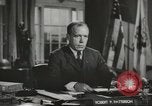
American Undersecretary of War speaks to difficulties facing Allies in confronting Germany and Japan in World War II
Undersecretary of War, Robert Porter Patterson, Sr. speaks about a report from the General staff outlining the needs for combating Germany and Japan in World War 2. He cites Operation Husky, the invasion of Sicily, as an example of what will be needed. He continues to narrate in the background as an animated map appears showing the buildup of supplies and Allied forces in North Africa; Allied air forces flying 60 thousand sorties over Sicily and, the direct amphibious assault using 3,200 vessels. Map also depicts opposing forces of 12 (“unwilling”) Italian Divisions and 3-1/2 German Divisions. View of Allied troops carrying some of their 31 thousand casualties on stretchers from field ambulances. Allied medics attending to the wounded. Some are seen lying on stretchers in a row on the ground near a wall. Interior of a field hospital where surgeons and other medical personnel treat the wounded. Animated map shifts to Europe with Germany at its center, showing , in contrast to Sicily that was only an “outpost,”, the heavily fortified perimeter of Axis controlled areas; the axis industrial might; and the disposition of 300 German Divisions (mostly on the Eastern front) defending the region. Next, the map illustrates Japan’s defended regions in the Pacific Image returns to Undersecretary Patterson i n his office, speaking of the Allied offensives planned for next year (1944), and emphasizing their challenge and difficulty. Scene shifts to General Jonathan Wainwright and his garrison at Corregidor, in the Philippines, surrendering to Japanese forces in 1941. Japanese military camera pans over the Americans being taken prisoner. Other Americans and Filipinos are seen being marched together under guard. Scene shifts to classic views of the Japanese attack on Pearl Harbor, Hawaii, on December 7, 1941. View of Japanese soldiers executing two Chinese civilians in 1937. Dangling bodies of persons hung by Nazis during Operation Barbarossa in Russia, in 1941 A Russian soldier comforts a little girl as he escorts her across a snowy landscape. Time bomb left by German forces retreating from Naples, Italy, in 1943, blows up a Post office building . Views of damage to building and bodies of victims. American Military Police assisting a victim. American soldiers carrying an injured civilian on a litter. Scene shifts to British Foreign Minister, Anthony Eden, Soviet Foreign Minister, Vyacheslav Molotov, and U.S. Secretary of State, Cordell Hull, entering a hall in the Spiridonovka Palace, during the 1943 Moscow Conference in Russia. Close-up of the American, Soviet, and British flags on a table. View of many delegates seated around the table. Close-up of Molotov, Eden, and Hull signing conference document.
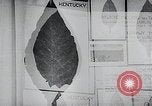
Norwegian workers sort and pack tobacco in a German warehouse.
Tobacco packing in German warehouse. Leaves of imported Tobacco in display boxes. Tags in boxes read, "Kentucky," "Trapezund," "Machorka," "Virginia.". Norwegian women hang tobacco leaves on strings and let the leaves to dry. Dried over tobacco leaves hung in rows on a circulating drying machine. Woman worker sorts leaves. Man collects leaves and puts it in box. Leaves are compressed by machine. Closeup view of a label on a tobacco bundle. Bundles of tobacco leaves stored in a warehouse.
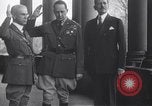
General Douglas MacArthur in 1930-1945; training of the Philippine Army; leading Allied troops against Japanese forces (WW2)
General Douglas MacArthur is appointed Chief of Staff, with rank of full General, in 1930. United States troops marching with the American flag. General MacArthur with two French military officers, during a tour of Europe. He is decorated by French Officials. MacArthur visits Germany and inspects German troops. U.S. President Roosevelt reappoints MacArthur as Chief of the Staff. MacArthur speaking to an audience in Washington DC. Scenes of MacArthur's headquarters in the Philippines. Filipinos walking outside MacArthur’s office. MacArthur at his office in the Philippines with Eisenhower at his side. MacArthur talks on the telephone. Flags of the United States and the Philippines. Filipino troops marching at Fort Santiago inside the walled city of Intramuros in Manila. MacArthur supervises the creation of a Philippine Army before World War 2. Philippine Army cadets perform outdoor calisthenics and attend a meeting. Philippine Army cadets train in knife fighting together with U.S. soldiers. View of Japanese attack of U.S. Navy ships and airfields at Pearl Harbor in December 1941. Japanese bombardment of the Philippines in December 1941 and into early 1942 as Japanese occupy Philippines during World War II. View of Corregidor Island. U.S. Army and Filipino soldiers on Corregidor load and fire artillery at the Japanese before the fall of Corregidor. U.S. soldiers in the Bataan peninsula. Face of MacArthur superimposed over a montage of American factory workers manufacturing ammunition and military vehicles. Start of the Bataan Death March. PT boat carrying MacArthur leaves Corregidor. War equipment prepared in factories. A battleship underway to Australia. MacArthur in Australia. U.S. convoy moves towards Japanese held islands in the Pacific. Allied soldiers land on the islands. A soldier lands on a beach and raises the American Flag. MacArthur points to the Philippines on a map and discuss war strategy. In accordance with the plan key positions in the Pacific are attacked. MacArthur looks on as United States soldiers land on the islands. MacArthur while smoking a pipe inspects the landing of Allied soldiers on islands behind heavy bombardment. Amphibious tractors land on the beach of Palo, Leyte. Allied paratroops make a landing. United States troops sail on rubber boats towards the beach of Palo, Leyte. Paratroopers on parachutes landing in Leyte. MacArthur confers with Allied Commanders. Allied troops walk past a destroyed Bahay Kubo nipa hut. Japanese soldiers are taken as prisoners in the Philippines.

General Motors guidelines for maintaining private cars during World War II, when none were manufactured in the U.S.A.
General Motors film entitled: "It's up to US," explains how to maintain private cars during World War 2, when all manufacturers switched to production of war materiel. Bugler, in U.S. Army uniform, blows reveille. Montage of American scenes, including homes and gardens; mountains; forests and lumberjacks felling a tree; an oil well gusher spewing crude oil; open pit mining operations; Niagara falls; flock of sheep grazing; workers picking cotton and it being delivered to a processing plant by horse-drawn wagon; a large timber log being cut into boards in a lumber mill; steel being manufactured for the war effort; a woman housewife or homemaker saving foods in a refrigerator in a vintage 1940s kitchen; a man cutting his lawn; a woman vacuuming her carpet; a woman taking clothes from a washing machine; a farmer plowing with a tractor; automobiles on American road and in parking lot of a defense plant. A driver with worn and dented 1938 Chevrolet Coupe car parked in front of a home is assisted by another who drives up behind him in a 1941 Oldsmobile and gives him a push. Sign at a Chevrolet service garage reading: "Official O.P.A. Tire Inspection Station." A 1942 Chevrolet 2-door fastback car drives into the garage. Mechanic greets driver and begins routine service, including: adding distilled water to battery; draining oil from car up on hydraulic lift. Scene shifts to a mechanic lubricates fittings on a 1937 Chevy on a lift at a gas station. Scene reverts to the earlier garage where mechanic drains cooling system, and refills it. The mechanic removes the carburetor and services it on a bench. He checks distributor rotor and makes compression checks. He cleans and re-gaps spark plugs, and checks tires and brakes. Cars driving on a town street. Mechanic aligning wheels on 1941 Chevrolet. Animated illustrations of tire wear from alignment problems. Servicing air in tire of 1942 2-door Chevy. More animated illustrations of tire problems. Illustrated explanation of rotation for bias tires.