


 Francais
 Deutsch
 Italiano
Refine Your Search
Norway 1941 stock footage and images
- Showing 289 to 294 of 1737 results more
more Hide
Hide
Japanese forces entering Thailand during World War II
Japanese forces entering Thailand, December,1941, in World War 2. Views of trucks filled with Japanese troops making their way through the countryside and into the capital, Bangkok. Japanese flags are visible many places. Japanese troops take up positions throughout the city. A Japanese soldier distributes leaflets to a crowd of local people. Among landmarks seen in the capital, Bangkok, are the Democracy monument and the American Consulate. (Note: Thailand declared war on the United States,January 25, 1942. After brief incarceration, the U.S.Ambassador, Willys R. Peck, left Thailand on June 29, 1942.)
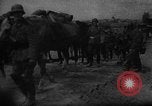
German Forces attack Bialystock, Belorussia, during Operation Barbarossa on the Eastern Front in World War II
German infantry and artillery move towards Bialystock, Eastern Poland (Belorussia) in June, 1941, during their suprise offensive (Operation Barbarossa) on the Eastern Front in World War 2. They enter a town through a decorative gateway. Destroyed Soviet T-26 tanks sit in the woods. German mechanic inspects a destroyed Soviet BA-20 Armored car. Others inspect a destroyed Soviet Bt 7 tank. A badly damaged Soviet KV-1 tank with tread and drives destroyed. german troops in work parties building a pontoon bridge. stacks of wood in a clearing. Troops shoulder a boat to be used as a pontoon. Some soldiers take advantage of a lull in fighting to relax and sleep. A few drink from their canteens. A German armored car crosses the now finished pontoon bridge across the Biala River. Assorted other vehicles follow. Next infantry march across the pontoon bridge. The foundations for a former bridge sit next to this one. Two columns of heavy smoke rise in the distance accompanied by sound of heavy artillery. Glimpse of German gunners at a 105mm howitzer. Smoke rising from a shelled building. Dense white smoke obscuring an entire area. Gunners fire a 105mm howitzer and strike a smoke stack, bringing it down. A wounded German soldier carried on a litter. More German artillery being fired and explosions and smoke from it seen in the distance. Several Soviet soldiers in uniform (and one civilian) surrendering with hands in the air.
Nazi Operation Barbarossa in World War 2. Goebbels makes radio broadcast announcing invasion of Soviet Union.
Invasion of U.S.S.R. on 22 June 1941 (German code name: Operation Barbarossa) during World War II. Early morning street activities in Berlin on the morning of invasion of USSR. Preparation for a broadcast at radio station. At 5:30 AM German Propaganda Minister Joseph Goebbels sits at desk and makes an announcement. People listening. Foreign Minister of Germany, Joachim Von Ribbentrop walks into conference. Newspaper headline.
Adolf Hitler declares war against the United States during a speech to the Reichstag in Germany.
Nazi Declaration of War on the United States 11 December 1941 during World War II. German Chancellor Adolf Hitler walks past honor guard into Kroll Opera House where the Reichstag meets. View of Italian delegation and Japanese official envoys present at the declaration on behalf of the Axis. Audience cheers. Hitler seated as he prepares to speak. Hitler at podium and speaks. Members of German general staff who look grim, Nazi Party diplomats, and Nazi party members listen to him.
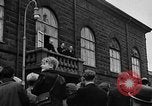
Prime Minister Winston Churchill visiting Iceland on return from the Atlantic Conference in New Foundland, during World War II
British Prime Minister Winston Churchill is seen on the balcony of the Alþingi (Parliament House) in Reykjavik, Iceland on August 17, 1941, when he visited during voyage home from the Atlantic Conference in Newfoundland, in World War 2. To his left are Icelandic Prime Minister Hermann Jonasson and Regent Sveinn Björnsson. Churchill appears to make brief remarks to a group of civilian Icelanders assembled in the plaza below. The crowd is passive. Some take photographs. (Iceland is under British occupation at this time.)
The island of Guam attacked and invaded by Japanese forces.
View of horizon and cloudy skies from a moving vessel in the Pacific Ocean. Guamanian sailors aboard the vessel in conversation. One of the sailors points in a direction. Goods unloaded from a boat at a peer on the Guam Island. View of a native village and Guamanian civilians indulged in various activities. Children are checked at a dressing station. Children study in a classroom. Guamanian naval cadets get training. Guam Militia's Drum and Bugle Corps, march. Guamanian marines carrying American flags march at an academy. Sign, 'Joak Radio Tokyo'. Japanese officers discuss a map. Japanese man prepares a tactical map. On 7th December, 1941 Japanese attack Guam. Guamanian troops on alert. Japanese air raid on Guam. American garrison on Guam is completely destroyed. The news of attack on Guam is headlined in all the major newspapers. Scenes of destruction in Guam. Wounded marines are taken on stretcher. An injured marine is treated at an aid station. (World War II period).