


 Francais
 Deutsch
 Italiano
Refine Your Search
Norway 1941 stock footage and images
- Showing 487 to 492 of 1737 results more
more Hide
Hide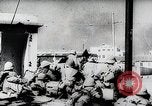
Street fighting, burning oil storage tanks, and British prisoners in Hong Kong as Japanese forces seize Hong Kong (WW2)
Imperial Japanese Army (IJA) troops street fighting during Battle of Hong Kong in World War II. Burning oil storage tanks. Smoke rises from an oil dump in Hong Kong. Destroyed British bunkers and defenses, oil plants and wreckage. Japanese senior officers including Takashi Sakai pose inspecting the captured city. Japanese ships at sea. British prisoners in a courtyard in downtown Hong Kong. A British prisoner of war drinks from a can.
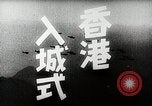
Japanese troops march into the city of Hong Kong at conclusion of the Battle of Hong Kong.
Conclusion of Battle of Hong Kong between Japanese and British forces. Japanese airplane in formation fly above mountains. Aerial view of city of Hong Kong. Soldier stands holding the Japanese flag. Japanese troops and officers parade on the streets of Hong Kong. (World War II period).
Japanese actions leading to 2nd Sino-Japanese war and attack on United States at Pearl Harbor in World War II
Japanese army officers examining foreign military equipment. A Japanese worker employing electric drill developed in a Western country. The Japanese freighter, Tatsuno Maru, loading scrap iron at a port in the United States. Other Japanese freighters loading coal and oil for shipment back to Japan. View of the Washington Naval Conference in Memorial Continental Hall, Washington, DC, held in 1921-22 and again in 1927 and 1930, to deal with several lingering issues. Glimpse of Japanese people holding flags while gathered near the Imperial Palace in Tokyo. Glimpse of Japanese army troops on parade. Japanese Navy warships at sea. A fleet of Japanese Mitsubishi G3M bombers and Nakajima Ki-27 pursuit planes, parked on an airfield. A loose formation of Ki-27s airborne. Animated map illustrates Japanese fortification of Mariana, Caroline, and Marshall islands in the Pacific. Animated map illustrating China's greater size and population vis-a-vis Japan. Animated map illustrating Japanese occupation of Manchuria in 1931. New York Times newspaper with headline "Japs Seize Manchuria" hovers over fires burning in Manchuria. Other newspaper headlines reporting on Mussolini's invasion of Ethiopia; the Spanish civil war; surrender of Czechoslovakia; invasion of Poland; assaults on France, Belgium, and the Netherlands by Nazi Germany; the London Blitz; and Nazi advances against Russia on the Eastern Front. Fnally, a Boston Hearald extra edition headline reports: "Pearl Harbor Bombed." A still photograph of Japanese Baron Tanaka Giichi (on left) with two other dignitaries, circa 1929. Japanese infantry streaming into Manchuria and then celebrating as they walk into local town. A busy street in a Chinese city. Japanese soldiers in Manchuria escorting local prisoners along a street. Animated map illustrating Japananese warships surrounding harbor of Shanghai, China. View from a Japanese ship bombarding Shanghai. Smoke rising from shell striking on Shanghai waterfront. View from land of severely damaged buildings on a street, and a shell exploding in background, as Chinese defenders move to successfully repel the Japanese forces. New map illustrates subsequent Japanese move, annexing Jehol, from occupied Manchukuo, and Korea. Japanese troops entering a town in Jehol. Sun newspaper headline: "League Censures Japan." Chinese diplomat protesting at League of Nations. Japanese troops exiting railroad trains in Jehol. Aisin Gioro Puyi aka Henry Pu Yi, Kangde Emperor (Kang-te Emperor) of the Japanese puppet state of Manchukuo, is seen saluting Japanese troops on parade. Closeup of Puyi wearing shaded glasses, looking directly into the camera. chiang Kai-shek, with other Chinese officers. Reenactment of barbarian forces riding against China and thwarted by the Great Wall. Many Chinese walking in a long line along the Great Wall. Map tracing the Great Wall across China. Aerial view of the Great Wall from overflying airplane. Japanese troops marching through a city gate; infantry climbing a sheer cliff; and helmeted Japanese soldiers marching past civilians in a city. Map illustrated progress of Chinese unification by year 1937. Japanese officers conferring during occupation. Japanese troops leave a barracks, riding in open trucks. A line of the troop trucks moving along the dirt street of a town. The troops climb from their trucks in the town.
Children of Japan during World War II
Scenes depicting daily life for children in Japan during World War II. View of Mount Fuji in Japan. Japanese children walk through terraced rice and tea fields on their way to school during World War 2. Japanese schoolgirl carries a bento box wrapped with traditional Furoshiki cloth. Other children carry Western-style lunchboxes. Japanese schoolchildren carry standard randoseru backpacks. Children pass by a tea picker working. Children walk past boats and nets. Japanese school children passing by factories with smokestacks. A Japanese boy, his sister and father put on shoes together before leaving their house. Japanese children are wearing the standard school uniform while their father is wearing a Waffenrock-style Western coat. A Japanese grandmother eats breakfast with a young grandson. Grandmother helps her grandson finish his tea. Japanese mother says “iterasshai” (“Go ahead and come back later” in Japanese), the children reply using a more polite form of language to their mother. The Japanese woman bids her husband good-bye using the same polite form of language her children used. Father accompanies his children on the street on his way to work. The three stops at a post office and the boy posts a letter. Japanese father talks to his daughter while waiting outside the post office. Japanese father bids good-bye to his children, telling them to listen to their teacher’s lessons. Children bow to their father upon leaving. Japanese man enters his office to begin his work as a train station manager. Japanese train manager speaks on phone in his office.
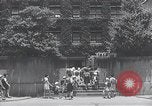
Japanese children at school in World War II
Japanese children attending school during World War 2. Japanese schoolchildren bow and greet their teachers “先生おはようございます。” (“Good morning teacher” in English). Japanese schoolchildren taking off their street shoes and changes into their uwabaki (上履き) indoor slippers in front of their assigned getabako (下駄箱) shoe cupboard. Children taking their seats inside their classroom. Outdoor shoes neatly arranged in wooden cupboard outside classroom. Japanese schoolchildren hold books during a reading lesson. A boy stands up to recite from his Japanese book. Schoolboy reads from a basic Japanese workbook. An illustration from the Japanese workbook depicting respect for the elderly inside a train. A girl stands up to recite from her book after being called. A bespectacled Japanese schoolteacher reads from book. Illustration from a Japanese book depicting people exercising together.
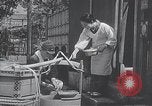
Children learn to write Chinese characters (Kanji), play baseball, and practice kendo in Japan.
A Japanese maid buys soft tofu (soybean curd) from a street vendor. Street vendor cuts a block of tofu. A Japanese woman practices Ikebana flower arrangement. Japanese woman places the finished flower arrangement on the Butsudan, a small household Buddhist shrine for family ancestors. An old Japanese woman sews on a new kimono while a little boy plays with his toys. Japanese woman bows in front of the Butsudan. At the railway station the Tokyo Express steam train arrives on time and official in-charge writes the train report. Engineer inspects steam train. Children learn to write Japanese characters inside a classroom. Schoolchildren use bamboo calligraphy brushes to write basic Chinese characters or Kanji. Japanese boy writes Chinese characters that read “Great Japan”. Children play baseball during school recess. Older children practice kendo, a modern Japanese martial art.