


 Francais
 Deutsch
 Italiano
Refine Your Search
Ohio-State-football stock footage and images
- Showing 7261 to 7266 of 24493 results more
more Hide
Hide
United States Chief Prosector Robert Jackson addresses the court during the Nuremberg Trials in Germany.
Prisoners seated in the dock during the Nuremberg Trials in Germany. Military Policemen stand guard. United States Chief Prosecutor Robert H Jackson addresses the court. Hermann Goering, Rudolf Hess, Joachim von Ribbentrop,Wilhelm Keitel, Karl Doenitz, Erich Raeder, Baldur Von Shirach, and Fritz Sauckel in the prisoners' dock. Hermann Goering makes notes on pad. Map on a wall indicates German aggression. (World War II period).
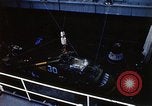
United States Marine Corps UH-34Ds hoisted on deck of USS Spiegel Grove (LSD-32) to support Mercury-Atlas 7 mission
United States Marine Corp UH-34Ds being hoisted from cargo hold and placed on deck of USS Spiegel Grove (LSD-32) while underway to support recovery of Aurora 7 space capsule in Mercury-Atlas 7 mission.
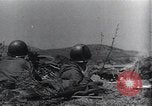
United States Army 187th Airborne Regimental Combat Team returns to Japan from Korea and is welcomed by City of Beppu, Oita
Clip opens with rapid changing scenes: American troops in trench in Korea during the Korean War. American tank on street in Germany. American Ski troops in Alaska. Amphibian assault training in Puerto Rico. Rotating Globe shows: U.S. Army on alert to defend against aggression. Sergeant Stuart introduces episdoe and states that U.S. Army has come to Japan to know their culture and make friends after war and occupation. U.S. Army troops of the 187th Airborne Regimental Combat Team, are seen arriving by railroad train at a train stateion near their base near Beppu,Oita on the island of Kyushu, Japan. U.S. Army soldiers, including white and African American soldiers, exit train cars. They receive a warm welcome from Japanese population. Banner reads:" Welcome Pala Troop comin back from Korea, City of Beppu."[sic] Women holding flowers and families with small children waving American and Japanese flags, welcome them on the train station. A sign over the train station platform reads: "Welcome 187 Para Troop Coming Back From Korea, City of Beppu." The troops stand in formation on the platform while the unit's officers receive the flowers from the women. Japanese men in fraternal uniforms and the general population all join in the welcoming ceremonies. The troops march off the train station under another sign reading: Welcome Home 187 RCT." and march down the main street of Beppu under a swirl of paper confetti. Next scenes are from autumn of 1945, as U.S. soldiers march through streets of Japan during occupation following the end of World War 2. U.S. troops seen marching behind Japanese police to occupy Japan, in 1945, amidst the aftermath of suffering and destruction of the war. The local population standing at road sides and watching with worry and concern. Scenes of postwar destruction in Japan. Rubble of bombed buildings. Scene of simple wooden dwelling shacks and wreckage nearby. A Japanese boy with his baby brother on his back. The baby is crying. Next scene moves again to circa 1950 in streets of a Japanese city, possibly Tokyo, rebuilt and with busy scenes of traffic on streets and commerce. Large outdoor rally with a Communist speaker addressing large crowd of Japanese people who sit and listen. Scenes from a what the narrator describes as a Communist rally in Japan, against America, which turns violent. Protestors running in streets during demonstration, with signboards and police and fire fighters extinguish flames at scene of an overturned, burning car. Flashback again to 1945 or 1946 as U.S. Army soldiers use tractors and heavy equipment to clear and level an area of war rubble and debris during rebuilding efforts after World War 2. Japanese citizens look on, watching the machines at work.
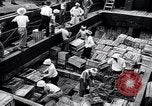
United States Army provides medical, food and material aid to Japan.
United States Army helps and provides aid to Japan in the years soon after end of World War 2. Workers unload the cargo of food from truck. Aerial view of flooded area. Ambulances of 'Army Medical Care' pass through muddy land. To care for the sick, doctors and nurses reach the flooded area of Japan in ambulance. Nurse gets down from ambulance. Army personnel lift the boxes of food and clothing. Sign of 'Toy Factory'. Interior of toy factory. Japanese work at machines in factory, where they process and recycle tin cans received from American military bases, and turn them into toy cars for children. Women work at machines in toy factory. Toys of small cars made and displayed.
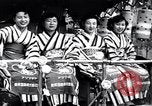
Japanese, United States Army and Americans celebrate anniversary of Yokohama Port which opened in 1859.
Anniversary celebration of Yokohama port, which opened in 1859. Japanese women seated in striped kimonos. A dragon dance in Yokohama’s China Town. Celebration Parade down Isezaki Street, in Yokohama. Dragon floats dance. Musicians march as they play music. U.S. Army participates in celebration. Yokohama locals dressed in costumes ride in parade floats. Japanese women in swimsuits wave from moving float. Military Police personnel ride on top of armored vehicles. A woman wearing a wedding dress dances on top of float. Japanese children wearing paper crowns enjoy the parade. Japanese policemen control the throng. Japanese children watch the various floats. The Big Picture host Sergeant Stuart Queen speaks about friendship of United States with Japan after the end of World War II.
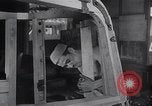
United States Army helps reconstruction and industrial development during Military Occupation of Japan
Industrial development in Japan with the help of United States Army: Workers in automobile plant. Skilled Japanese workers repair damaged equipment for Allies, during Korean war. Ship under construction in Japanese shipyard. Japanese children run behind jeeps of American soldiers. Japanese children pose for camera. American soldier gives candy to Japanese children who swarm over him. American soldier gives doll to little Japanese girl. Americans and Japanese participate in swimming meet. Americans and Japanese together participate in activities after World War II.
CRITICALPAST.COM: About Us | Contact Us | FAQs - How to Order | License Agreement | My Account | My Lightboxes | Shopping Cart | Advanced Search | Featured Collections | Website Terms & Conditions | Privacy Policy ©2026 CriticalPast LLC.
License Agreement |
Terms & Conditions |
Privacy Policy
©2026 CriticalPast LLC.