


 Francais
 Deutsch
 Italiano
Refine Your Search
Ohio-State-football stock footage and images
- Showing 9715 to 9720 of 24492 results more
more Hide
Hide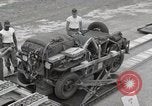
Parachute riggers check assembly line and load cargo for air-drop under instructor's guidance in United States.
A jeep assembly with G-11 parachute. Riggers check the cargo assembly. Riggers in groups practice cargo assembling. A rigger tightens screw of the modular platform. Riggers arrange honey comb material on the platform. A jeep is kept on the honey combs. It is strapped to the platform. A qualified rigger inspects the assembly. The cargo is transported to the air field. A load master along with a rigger inspects the cargo assembly. The cargo is loaded and secured in the plane. Riggers are examined. Plane takes off. The load is dropped and its parachute opens. Riggers also drop from the plane. Parachutes are seen in the sky. Riggers land on ground. Instructor allows Parker, a rigger to try his cap. Animation of rigger's pledge.
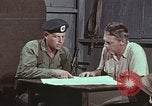
Preparing landing-zones during war in United States.
Rigger landing on ground. Firing in a forest area. Smoke and dust arise after a bomb blast. Officials shake hands with Detachment Commander in a meeting. The Detachment Commander shows them a map marked with landing-zones (LZ). Men level a LZ. Thick vegetation exists on one side of the LZ. Men remove shrubs and weeds from the LZ. A man carries another man as a piggy-bag, on the runway to check sub-soil firmness.
Animation of specificity of landing-zones in United States.
Animation showing runway specifications for landing. Specifications for landing of light and medium aircrafts during day and night are displayed. Runway length and breadth and safety area are marked in steps for various aircrafts in the animation. 25 feet strip along length of the runway is marked in the animation. A landing-zone cleared in a forest area is animated. It has 1-2 nautical miles turning zones. Mountain on one side of the runway is animated. Light and medium aircrafts along the slope of the mountain are shown in animation. Climb and glide ratios are marked for them. Safe distances of the obstruction from the runway and the permissible height of the obstruction are animated.
Various signals used to assure safe landing of aircraft in landing-zone during day time in United States.
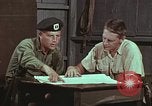
Detachment Commander discuss with another official. Soldiers move to an aircraft. It takes off. Soldier carries a wounded on stretcher over a LZ (Landing-Zone). A signal bomb releases blue smoke for day time landing. Two soldiers stretch orange panels as signals to the approaching plane. The plane lands on the runway. The plane unloads and wounded are transferred to the plane. It takes off, leaving behind a cloud of dust.
Various activities to assure safe landing of aircraft in water landing-zone during night in United States.
Detachment Commander discuss with another official. A map showing position of a river. Animation shows specifications for day and night landing of light aircraft in water LZ (Landing Zone). Required depth and wind speeds blowing around in a water LZ are animated. Various stations and RCL (Reception Committee Leader) are marked on a water LZ in animation. A green line indicates night signal formed of light while a green patch marks day signal from a signal bomb in the animation. Security party checks the LZ. They board four boats and leave for LZ. An aircraft approaches LZ. A signal is given to land. It lands, turns to right and reach a boat forming RCL. It then takes off.
Various activities to assure safe landing of helicopter in landing-zone during night in United States.
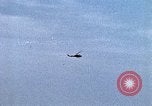
A helicopter moves in sky as it's pilot looks down. Animation shows specifications for night landing of helicopter in LZ (Landing-Zone). A map on ground on which stations and RCL (Reception Committee Leader) positions are shown with red and blue chips. Detachment Commander with soldiers around the map discusses landing procedure for helicopter during night. Soldiers with guns move in LZ. Recognition signal is given from ground. A helicopter approaches LZ. It lands. Wounded soldier on stretcher is moved to helicopter. The helicopter takes off.
CRITICALPAST.COM: About Us | Contact Us | FAQs - How to Order | License Agreement | My Account | My Lightboxes | Shopping Cart | Advanced Search | Featured Collections | Website Terms & Conditions | Privacy Policy ©2026 CriticalPast LLC.
License Agreement |
Terms & Conditions |
Privacy Policy
©2026 CriticalPast LLC.