


 Francais
 Deutsch
 Italiano
Refine Your Search
Ohio-State-football stock footage and images
- Showing 13087 to 13092 of 24492 results more
more Hide
Hide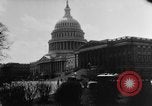
Personnel files for U.S. Army soldiers. A Personnel officer examines qualification record of an Army soldier.
United States Capitol in Washington DC, United States. A U.S. Army Captain (Personnel Officer) at desk in his office. A man takes out a document from a rack. Officer looks at qualification record of a John Kalph Thomson. A soldier is fingerprinted, as required of every Army soldier. (World War I; World War 1; WWI; WW1)
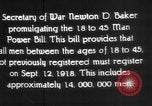
Secretary of War Newton D Baker works on a Man Power Bill for World War I in Washington DC
WWI draft and mobilization activities in 1917-1918. United States Secretary of War, Newton D Baker at his office in Washington DC, United States. He works on a Man Power Bill to make military registration compulsory for previously registered men between the ages of 18 and 45.
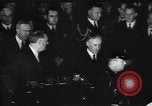
President Franklin D Roosevelt announces results of numbers drawn under the Selective Service System in Washington DC.
Officials draw drafts under Selective Service System at the Department of Labor auditorium in Washington DC, United States. Attorney General Robert H Jackson and Secretary of Navy, William Franklin Knox draw numbers and President Franklin D Roosevelt announces them, during United States initial build-up of military forces prior to the country's involvement in World War 2. A man writes down the numbers drawn on a draft board.
President Franklin D Roosevelt gives a message to the Congress about rearmament during World War II in Washington DC.
A session of the Congress in Washington DC, United States. President Franklin D Roosevelt in his message to the Congress emphasizes about the need for rearmament to avert the danger of an attack during the World War II. In his speech he talks about the need to protect the American hemisphere against an invasion. He also enumerates the possible threats to the independence of United States. He lays emphasis on the need to increase the production of war materiel and ammunition to get ready for the war in case of an attack.
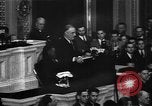
President Franklin D Roosevelt during the Rearmament speech declares peace as the main objective in Washington DC.
President Franklin D Roosevelt during the Rearmament speech before the Congress in Washington DC, United States talks about the superiority of the United States Armed Forces. He says that security must be absolute. He also talks about the possibility of an emergency session of the Congress in case of National Emergency. He declares peace as the main objective of America. Congressmen stand and applaud in appreciation after the speech ends.
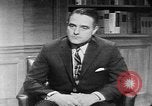
Sargent Shriver interviewed in Washington DC about the charges labeled against the Peace Corps by communist countries.
Journalists Len O' Connor and Art Barriault interview the First Director of Peace Corps, Robert Sargent Shriver. O' Connor asks Shriver about the charges labeled against the Peace Corps by the communist countries? Shriver states that the newspapers and other media carry such positive stories about the Peace Corps that usually prove the charges as incorrect. He also states how the parents of boys and girls serving as volunteer in Peace Corps seem fully satisfied.
CRITICALPAST.COM: About Us | Contact Us | FAQs - How to Order | License Agreement | My Account | My Lightboxes | Shopping Cart | Advanced Search | Featured Collections | Website Terms & Conditions | Privacy Policy ©2026 CriticalPast LLC.
License Agreement |
Terms & Conditions |
Privacy Policy
©2026 CriticalPast LLC.