


 Francais
 Deutsch
 Italiano
Refine Your Search
Ohio-State-football stock footage and images
- Showing 13873 to 13878 of 24492 results more
more Hide
Hide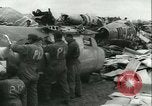
Reclaiming salvaged materials during and after World War II.
A United States post-war report about salvage and reclamation efforts to reuse supplies and reduce costs both during World War 2 and after the war. Technicians create aluminum plates for Army mess gear from salvaged aircraft parts during World War 2. Reclaimed parts used to make washing machine of gasoline drums, field telephone wires, air force tire trailer. The army salvaging and reclaiming cranes, chains, tents, tanks, shoes, axes, medical equipment, musical instruments, fire lamps, fire extinguishers. Technicians load crates of reclaimed materials on conveyor belts. An Army signal corps cameraman holding a motion picture camera. Films being picked up in bags from an Army van. Films being edited, cut, rebuilt and run on film projector equipment.
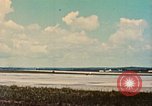
Convair B-58 aircraft in flight and as it makes contact with KC-135 refueling tanker, the aircraft for refueling.
A film shows the potentialities of Convair B-58 aircraft as a weapon system. Convair B-58 with pod under its wing takes off from ground. A diagram shows its distance in miles. KC-135 refueling tanker aircraft's position shows Convair B-58 aircraft flying behind. Convair B-58 aircraft makes contact with KC-135 refueling tanker aircraft for refueling. Animated aircraft flies above the range of ground attacks. Map of United States of America. Animated Convair B-58 aircraft with pod under its wing in flight
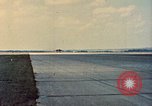
A film shows Convair B-58 aircraft's range, speed and distance.
A film shows potentialities of Convair B-58 aircraft as a weapon system. Convair B-58 with pod under its wing takes off from ground. A diagram shows increase in speed of Convair B-58 aircraft, as the range increases. Animated Convair B-58 aircraft in flight with pod under its wing. Diagram shows its distance in miles to Molotov, Odessa and other places. Map of United States of America.
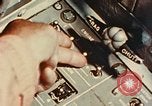
Convair B-58 aircraft in flight with pod under its wing.
A film shows the potentialities of Convair B-58 aircraft as a weapon system. Airman operates controls inside Convair B-58 aircraft. Convair B-58 with pod under its wing takes off from ground. A diagram shows Convair B-58 aircrafts in flight refueling from KC-135 refueling tanker aircraft. Map of United States shows Convair (Consolidated Vultee Aircraft Corporation ) base in Texas. Diagram depicts the distribution of money to sub system vendors and production vendors. Convair B-58 aircraft in flight with pod under its wing.
U.S. Army Air forces pilots learn about the Republic P-47 Thunderbolt airplane
From a U.S. Army Air Force Training film, "How to Fly the P-47. Pilot Familiarization." United States pilot seated on table writes a postcard to his mother, "Mrs D.Q. Hopkins. 1024 Clay Avenue, Pelham, New York" Board in the background with 'Daily Assignment of today' written on it. Scene shifts to forward view from cockpit of a Republic P-47 aircraft flying low over the flight line at an Air Base. Momentary glimpse of the pilot and his post card in the office. Back again, to forward view from cockpit of a P-47, but this time it is on final approach to the runway. Scene shifts to ground view of a P-47 landing. It taxis to the ramp and parks. The crew chief stands on the wing as the pilot completes and signs the aircraft's Form 1 (record of any problems). Five pilots walk past the flight line. The pilot, wearing a seat pack parachute, climbs down from the cockpit. The five pilots, seen earlier, approach, and one introduces them to the P-47 pilot (Captain Hopkins). They are Lieutenants assigned to his training flight. He greets them and shakes hands with all. The group ask questions about the P-47. Then they all go to the pilots room. As Captain Hopkins takes off his flight gear he tells them the P-47 is designed to operate at high altitude. He describes the P-47, referencing a large illustration of it on the wall. (World War II; WW II; World War 2; World War Two)
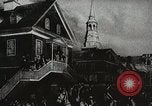
Sketches of the Boston tea party and unrest among American colonists
Sketches of struggle for borders and territory between Canada and United States. Leaders of American colonists like Patrick Henry protesting taxation without representation. British guards protecting paper. Burning of paper used for taxation. Images of traders from New York area who made great wealth trading overseas. Fire on British ships. Sketches of the Boston tea party with colonists disguised as Indians hurling tea into the harbor. Sketches of former British Prime Minister William Pitt and Lord North shown debating in Britain. With commentary and narration by J. Frank Willis.
CRITICALPAST.COM: About Us | Contact Us | FAQs - How to Order | License Agreement | My Account | My Lightboxes | Shopping Cart | Advanced Search | Featured Collections | Website Terms & Conditions | Privacy Policy ©2026 CriticalPast LLC.
License Agreement |
Terms & Conditions |
Privacy Policy
©2026 CriticalPast LLC.