


 Francais
 Deutsch
 Italiano
Refine Your Search
Ohio-State-football stock footage and images
- Showing 14497 to 14502 of 24492 results more
more Hide
Hide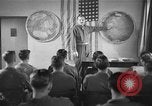
U.S. Army officers discuss treatment for combat exhaustion cases among World War II Army soldiers
Reenactment dealing with treatment for World War 2 combat exhaustion cases among U.S. soldiers. Army personnel receive training to know the reasons for exhaustion and the methods to rehabilitate the soldiers. The flag of the United States on a wall. U.S. Army officers seated at a table. The army personnel and an officer are in discussion about combat exhaustion. Personnel receive answers of their questions in the discussion. (Note: Clips deals with treatment for Combat Exahaustion, also later termed Post-traumatic Stress Disorder or PTSD)
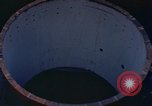
A unit of engineers and officers assembles, places and checks the nuclear reactor and its parts on the NS Savannah in the U.S.
The nuclear reactor of the Nuclear Ship ( NS ) Savannah and its parts are assembled in the United States. The reactor component is lowered. A unit of engineers place the reactor. An engineer inspects the fitting of the parts. The engineers use specially designed handling tools to assemble and disassemble the reactor. They place the fuel container. A unit member lowers equipment with an electric chain. A component is lowered and placed. An engineer of the Savannah and a Coast Guard officer check the Savannah unit to convert the reactor power to ship power. A unit member takes readings for natural radiation level. A unit member checks a wheel by turning it. The final assembling and fueling takes place. All unit members wearing nylon suits, boots and caps work on the final assembling. A unit member speaks on headsets. The head of the reactor is installed. It is placed after completing the fueling. The reactor is ready for starting. An operator controls the dials in a control room. The power range is increased.
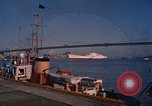
The NS Savannah undergoes final sea trials including operation at full power from its nuclear reactor
The Nuclear Ship ( NS ) Savannah during its test trials in the United States. The NS Savannah leaving the New York Shipbuilding Corporation yards at Camden New Jersey, enroute to Yorktown, Virginia, is seen passing the Delaware Memorial Bridge, as she cruises along the Delaware River. views of spray blowing across the ship underway. View of reactor control room, where increasing levels of power are demanded until full (100%) power is set on April 14, 1962 and the Savannah achieves a speed of 22 knots. The NS Savannah docks at her home port of Savannah, Georgia.
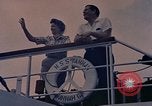
Modern and luxurious accommodation and facilities aboard the NS Savannah as it travels with its first passengers in the U.S.
Modern and luxurious facilities on the Nuclear Ship (NS) Savannah in the United States. A passenger aboard the NS Savannah stands near railings. Modern and attractive accommodations of the ship in its role as a cruise ship. Passengers enter a cabin which is spacious and well equipped. The passengers seated in a luxurious lounge. A woman looks at a wooden table. The passengers have drinks. A golden model of the Savannah is displayed at the entrance to a dining hall. A couple enters the dining room. People seated around a dining table have food. A couple climbs down stairs towards a swimming pool. People seated in resting chairs beside the pool. The passengers dance on a dance floor. A couple has drinks at a table in the foreground. A passenger looks through an equipment on the ship bridge. Engineers work on radar equipment in the control room. Giant and massive gear on the ship. An officer in a control room. Officers and the captain standing aboard the Savannah.
Flashbacks show USS Wakefield being christened as SS Manhattan, and famous passengers aboard in the early 1930s
Famous passengers aboard ocean liner SS Manhattan (later USS Wakefield during World War II) in the United States. Flashbacks show the USS Manhattan being christened by Mrs. Theodore Roosevelt on 5th December 1931. It is seen being launched from New York Shipbuilding Corporation in Camden New Jersey. View of maiden voyage on 10th August 1932, with passengers boarding the ship. It leaves a port for her first trip to Ireland, England, Germany and France. Couples dance aboard the deck of the SS Manhattan. Passengers including Babe Ruth, Jimmy Walker, Glenn Cunningham, and aviator Douglas Corrigan ("Wrong Way Corrigan") seen aboard the ship.
The disease carrying parts of a fly and bacteria grow from germs planted on a culture plate by a fly in the U.S.
Animated diagrams show fly as a disease carrier in the United States. Animated drawings of a fly. Garbage in a dustbin shows that flies breed in filth, resort to the filth and carry filth wherever they go. Drawings show the disease carrying parts of a fly including the proboscis, the intestinal tract and the feet. Microscopic views of feet show that they are equipped with claws and pads covered with sticky hair. Flies sitting on flask, 6 feather dusters and 12 damp sponges collect dirt and germs. A fly is caught and is put on a culture plate. The fly moves on the culture plate. A fly sits on a plate of food. Bacteria grow from germs planted on the culture plate by the fly.
CRITICALPAST.COM: About Us | Contact Us | FAQs - How to Order | License Agreement | My Account | My Lightboxes | Shopping Cart | Advanced Search | Featured Collections | Website Terms & Conditions | Privacy Policy ©2026 CriticalPast LLC.
License Agreement |
Terms & Conditions |
Privacy Policy
©2026 CriticalPast LLC.