


 Francais
 Deutsch
 Italiano
Refine Your Search
Ohio-State-football stock footage and images
- Showing 15337 to 15342 of 24492 results more
more Hide
Hide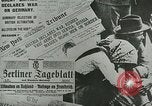
British, Turkish, Belgian, Serb, French, and Australian soldiers mobilize for World War I.
Headlines in various New York and Belgian newspapers report the entry of Austria, Germany, Russia and Great Britain into the World War 1. A poster part of the recruitment campaign by Lord Kitchener, British Secretary of State for War. British troops in the streets of England, mobilize for the war. King George V, his son and uncle, inspect British troops. Turkey: The Sultan of Turkey and other military officials emerge from a building. The Sultan takes his seat in horse carriage and is driven away. Turkish troops at a port and soldiers seated in a ship. Belgium: Bombarded buildings and ruins in Louvain. People and soldiers on the street. People in carts on a road in search of new homes. Military officers study a map. Belgrade: Serbians bomb Belgrade. Soldiers fire artillery guns. Bomb explosions on a hill. British soldiers camp with French soldiers across the channel. Australian soldiers march ahead to join the war. Germany: Retired General Paul Von Hindenburg, commander of the Germans, and other military officers pose outside a building. The German emperor, Kaiser Wilhelm II ascends from the sand dunes of Belgium to inspect his troops in a field. France: French soldiers on alert in trenches and bunkers, defend the borders of Paris. General Gallieni and his troops leave Paris for the front in taxicabs.
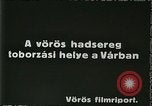
The red army's recruitment efforts in the Hungarian Soviet Republic following World War One
Slate refers to The Red Army recruiting place at the castle. Many Hungarian and some Russian men are seen. Most are in military uniforms. This is during the brief World War I post-war period when Hungary had a communist Government, the Hungarian Soviet Republic. Slate states that Red soldiers, one of them Russian speaking, appeals to patriotism of the recruitment candidates.
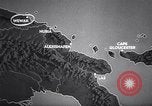
USAAF B-24 Liberator bombers drop 1000 lb demolition bombs over Nubia in World War II.
1943: An animated map depicts the strategic Japanese air and shipping base at Nubia in Papua New Guinea, during World War Two. 25 August 1943, Nubia: USAAF 5th Air Force B-24 Liberator bombers drop 1000 lb demolition bombs, from 16,000 feet, over Nubia. They target bivouac and supply areas. That afternoon, U.S. B-25s, flying low to the ground, make strafing attacks against the Japanese airfield at Nubia. United States soldiers unload jeeps, bulldozers, scrapers and other construction equipment in an abandoned Japanese airfield at Nadzab. U.S. 5th AAF constructing their air base. USAAF C-47s bring Australian infantrymen to the new base.

The funeral procession of Lt. Istvan Horthy de Nagybanya in Budapest, Hungary
The funeral procession of Lt. Istvan Horthy de Nagybanya, son of Hungarian regent Admiral Miklos Horthy, in Budapest during World War 2. Mounted soldiers in the street. A large crowd gathered to pay homage. The dome of the Hungarian Parliament Building. Officers walk along with the casket on a cart. Officers salute as soldiers carry the casket into the cathedral. A long line of people wait outside the cathedral to pay their respects. Soldiers carry the casket inside the cathedral. Banners stating: 'Adolf Hitler' and 'Benito Mussolini'. A banner with the Swastika. Officers give a Nazi salute. Foreign Minister of Germany Joachim Von Ribbentrop and of Italy Gian Galeazzo Ciano attend the services. The decorated casket. The officials and dignitaries seated inside the cathedral.
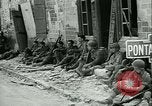
U.S. Forces rest in Pontaubault on their way to Paris in France.
United States Army forces rest in Pontaubault on their way to Paris. Soldiers seated on the roadside. They relax and smoke. Destroyed buildings and ruins in the city. U.S. Army soldiers march on the streets and enter St. James (Marche) France, widening the Brittany corridor, as crowds of French citizens welcome them. Soldiers in jeeps and trucks. Market area in the town. Civilians, nuns and children wave out to soldiers. Civilians with flowers and French flags welcome the troops. Soldiers on vehicles as people cheer for them. People gather around as a man pastes a proclamation on the city walls. (World War II period).

A modern field hospital to receive wounded and ill prisoners from Red captivity, raised at Panmunjom in Korea.
A modern field hospital to receive wounded and ill prisoners from Red captivity, raised at Panmunjom in Korea. Military tents, pre-fabricated buildings, trucks and jeeps at the camp. Soldiers construct roads with heavy equipment and machinery. Barb wires put up for boundaries. Military ambulances parked in the camp area. Supplies stacked in boxes. Nursing and medical personnel at the camp. A United States Medical Department ambulance train. GIs make the beds inside the train.
CRITICALPAST.COM: About Us | Contact Us | FAQs - How to Order | License Agreement | My Account | My Lightboxes | Shopping Cart | Advanced Search | Featured Collections | Website Terms & Conditions | Privacy Policy ©2026 CriticalPast LLC.
License Agreement |
Terms & Conditions |
Privacy Policy
©2026 CriticalPast LLC.