


 Francais
 Deutsch
 Italiano
Refine Your Search
Ohio-State-football stock footage and images
- Showing 17173 to 17178 of 24492 results more
more Hide
Hide
U.S. President Lyndon B. Johnson visits Korea and Inaugurates the 'Johnson Hill'.
United States President Lyndon B. Johnson visits Korea after the Manila Summit Conference. Various scenes from the Korean War. City ruins and debris in Seoul after the Korean War. Korean refugees flee on foot with their belongings. Tall modern buildings and factories in Seoul, Korea. Korean civilians gather along the canal as they hold a Korean flag in hand. President Lyndon B. Johnson shakes hands with the Koreans. President Johnson inaugurates 'Johnson Hill' in Suwon, Gyeonggi Province (near Seoul) as a remembrance to his visit in Korea. He flies off in his helicopter back to Seoul after his visit to Gyeonggi Province.
Japan extends its empire into Manchuria, Mongolia, and China in 1931 and 1932
Brief opening scenes show ships being engulfed in flames and smoke from Japanese attack on Pearl Harbor, December 7, 1941 in World War 2. Focus is primarily on the USS Arizona. Scene shifts to Japanese troops assembling on a pier and boarding troop transport ships bound for Manchuria and China, following the Mukden Incident of September, 1931. Japanese troops are then seen marching into Manchuria on September 18, 1931. A formation of Japanese soldiers presents arms. In another formation, they shoulder swords. Closeup of a Japanese soldier in a steel helmet with chin strap in place. A steam locomotive pulls a train into the Chin Hsien station on the South Manchurian Railway. A Japanese train on that line had been dynamited, triggering a Japanese push into Mukden. View from behind a train leaving Chin Hsien on the South Manchurian Railway. Japanese battalions place bundles of straw across a stream to facilitate troop crossing. A column of Japanese troops is seen crossing the water on the makeshift straw crossing. Japanese troops advancing along with supplies carried by pack animals. Troops traverse a sandy berm past an abandoned two-wheel cart. A formation of 12 Japanese G3M bombers flies overhead in a "V" formation en route to bomb Mukden. View of Chinese population running for shelter from the bombing. Chinese walk past some civilian casualties lying in a street. The League of Nations headquarters in Palais Wilson, Geneva, Switzerland. A memorial to Woodrow Wilson at the Palais Wilson reads: "A La Memoire De Woodrow Wilson President des Etats-Vnis,Fondatevr DL La Societe Des Nations, La Ville de Geneve." A car driving away from the entrance of the League Headquarters. Closeup of doorway with sign identifying it as the entrance for delegates and members of the Press. League delegates are seen inside its meeting hall. Japanese warships are seen next, attacking 15 miles from Shanghai with naval gunfire.Three Mitsubishi 2MR4 (Type 10)Reconnaissance biplanes are seen in flight above the barrel of a large naval gun. Japanese troops marching into Shanghai, as people on the roadside wave Japanese flags. Next, they are seen marching out of Shanghai at the insistence of the League of Nations. After signing a truce with China, on May 4, 1932, Japanese troops are seen entering Mongolia, in September, 1932, which they reconstituted as the Puppet State of Manchuko. A Japanese soldier standing atop a building waving a Japanese flag. Japanese statesmen resigning and leaving the League of Nations in protest after it labeled Japan an aggressor. Japanese forces fire a long barrel Type 89 cannon (150mm) as they push into China proper. Group of Japanese artillerymen use range finders, Periscopic viewers and binoculars to guide the gunners. Shell explodes raising large amount of earth. More views of artillery firing and infantry advancing. Infantry crossing a bridge and raising siege ladders to scale a fortress. Engines running on Japanese Ki 30 Type 97 airplanes, as pilots get final briefing and orders. They salute, board their aircraft, and are seen in formation aloft, dropping bombs. View from the air of bombs striking below. View from a bomber of its bombs dropping from the aircraft (bombs away view) and exploding on the ground. A column of Chinese soldiers moves along a section of the Great Wall of China heading into the interior of China. Civilians moving all manner of equipment and machinery into the interior.
Fire fighters clear debris and search for bodies following Marlborough Hotel fire in Minneapolis, Minnesota.
Fire in the Marlborough Hotel (1301 2nd Ave S, Minneapolis, MN 55404, United States), built in 1890, in Minneapolis, Minnesota. Fire blaze damage visible all through the apartment hotel. Snow and ice cover vehicles and buildings nearby. Fire fighters dig to get the bodies of the victims. They clear the debris. (World War II period).

Race horse, Bimelech, jockeyed by Fred A. Smith, wins the Preakness Stakes, in 1940
Newsreel showing highlights of the 65th running of the Preakness Stakes, at the Pimlico Race Course in Baltimore, Maryland, United States.The race was held on May 11, 1940. After failing to win the Kentucky Derby, Col. Bradley's favored 3-year old, Bimelech, jockeyed by Fred A. Smith, redeems himself before a crowd of 50,000, winning by two lengths. (Note: some intermittent sound is heard but not really discernible.)
Montage of scenes depicting America in World War I, from 1917 to 1919.
U.S. President Thomas Woodrow Wilson signs the declaration of war during World War I. U.S. ships sink after torpedo attacks. United States troops aboard a troop carrier ship bound tor France. Assistant Secretary of the Navy, Franklin D. Roosevelt. U.S. troops disembarking on docks in France. Navy ships being built in U.S. shipyard. Allied troops attack across no man's land. Allied rail gun firing. U.S.Soldiers fire howitzers. Smoke pours out of Allied biplane aircraft after being shot down. German troops fighting in trenches. A horse falls into a trench after being shot. Tanks in action. Tanks advance and fire. German machine gunners. German prisoners walk in a line. American troops in France celebrate the end of hostilities with the Armistice on the 11th hour of 11th day of 11th month, 1918. The American flag flies on a pole as a symbol of victory. Huge crowds of Americans celebrate in Manhattan, New York city, waving newspapers with headlines announcing German surrender. In 1919, President Wilson and General John (Black Jack) Pershing review victorious American troops marching in Chaumont, France (Pershing's headquarters). Franklin D. Roosevelt, Assistant Secretary of the Navy with Secretary of the Navy, Daniels, in France. U.S. troops board transport ships to return home after war. Returning U.S. Armies hold a victory parade in Manhattan, New York City, where they parade through a temporary Victory Arch constructed expressly for the purpose in Madison Square. Hydrogen balloons decorate the Arch. New York City mounted police monitor the crowds.
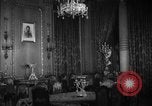
USSR Ambassador, Constantine A Oumansky converses with his daughter at Soviet Embassy in Washington D.C. , U.S.
Soviet Union Ambassador, Constantine A Oumansky at Soviet Embassy in Washington D.C., United States. Constantine A Oumansky with his daughter in one of the rooms at the Soviet Embassy. Constantine A Oumansky converses with his daughter and looks at documents. Picture of General Secretary of the Communist Party of the Soviet Union, Joseph Stalin on the wall.
CRITICALPAST.COM: About Us | Contact Us | FAQs - How to Order | License Agreement | My Account | My Lightboxes | Shopping Cart | Advanced Search | Featured Collections | Website Terms & Conditions | Privacy Policy ©2026 CriticalPast LLC.
License Agreement |
Terms & Conditions |
Privacy Policy
©2026 CriticalPast LLC.