


 Francais
 Deutsch
 Italiano
Refine Your Search
Ohio-State-football stock footage and images
- Showing 1717 to 1722 of 24493 results more
more Hide
Hide
United States President Lyndon Johnson declares that U.S. pilots have resumed bombings over North Vietnam.
United States President Lyndon Johnson addresses the nation. United States resumes bombings over North Vietnam. U.S. aircraft carry out air strikes against Vietnam. President Johnson sits in his office. U.S. pilots inspect their aircraft and work under the wings. Air raids on supply depots and railroad lines. The planes take off from an aircraft carrier. U.S. soldiers in trenches. An aerial view of the land below. Smoke rises up due to explosions. A meeting in the United Nations Headquarters. Dignitaries of various countries seated during the conference. (Vietnam War period).
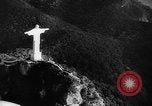
FBI agent William Sebold (posing as Harry Sawyer), and successful filming of members of Duquesne spy ring in the United States.
Aerial view of Christ Redeemer Statue on Mount Corcovado, Brazil. The director of the Federal Bureau of Investigation (FBI), John Edgar Hoover, narrates this 1944 clip and talks about enemy agents in the United States during World War II, before America's entrance into the war. German and Japanese suspects seen in South America. A German fleet carries German agents aboard merchant and cargo ships. German agents in formation on deck of ship, shown debarking the ship after receiving instructions. Japanese and Nazi German colonies being established in South America in large cities and in remote areas of Patagonia. Automobile industries, hotels, shops, and other industries established by Nazi German agents. German signs and Nazi Swastikas and Nazi flags shown on some buildings in South American countries including Brazil. A Nazi flag. A view of German factories in South America. Photographs of Adolf Hitler in a school building where young boys and girls are being instructed by their teacher. German pilot shown operating a passenger airliner; aerial view of from aircraft of Rio de Janeiro Brazil, including port and city areas. A dramatization depicts well planned accidents in the factories and sabotage attempts to slow production of goods bound for the United States. The Federal Bureau of Investigation (FBI) receives reports about planning of German attack on the Panama Canal. A woman watching a teletype machine as a report arrives. A man in a radio room of the Federal Bureau of Investigation receives information and turns to type out a report on his typewriter. Men and women convicted as spies are seen together in a room with U.S. federal agents. The spies are taken in a police van. Man serving as projectionist seen running a film projector. A film of Fritz Duquesne case in the FBI office shows FBI Agents' successful secret filming of members of the Duquesne spy ring. The film is shown being loaded onto a projector and then played. FBI agent William Sebold (posing as spy Harry Sawyer) is seen with Fritz Duquesne and other spy ring members: Pedestrians and vehicular traffic on a New York street corner as Sawyer and Duquesne prepare to meet. German spies sit together in a hotel room in New York City, recorded by hidden camera. Heinrich Clausing, a spy ring member and former cook on the cruise ship SS Argentine is seen. Also seen is Hartwig Richard Kleiss putting on his hat and smoking a cigar. He's shown giving money to Sawyer for purchase of a spy camera, according to narration. J Edgar Hoover notes that German agents communicated through a Long Island radio station that was secretly controlled by the FBI. Hartwig Kleiss is seen showing the blueprint plans of the steamship SS America, including plans for its secret gun emplacements. Fritz Duquesne is shown in the film, removing diagrams of various American arms that he had concealed in his sock Japanese agent Takeo Ezima, of the Imperial Japanese Navy, is also seen meeting in the hotel with Harry Sawyer.
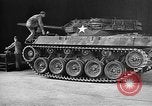
A Gun Motor Carriage M-18 is partially disassembled to show the various units of the suspension system in the United States.
Basic principles of torsion bar suspension used on army track vehicles are explained in the United States. United States tank destroyer 76 mm Gun Motor Carriage M-18 is partially disassembled to show the various units of the suspension system. Several mechanics remove the weight from torsion bar and lift the wheels. The vehicle suspension uses a torsion bar as the main weight bearing spring. Torsion bar and suspension arm in view. The spindles, shock absorbers, bumpers and compression links in view. A man points at the torsion bar retainer.
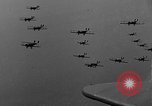
Bomber aircraft Keystone LB-5 and Curtiss-Martin NBS-1 in flight in formation in United States.
Aircraft in flight during United States Air Corps Demonstrations at Command Schools in United States. U.S. Army Air Corps bomber aircraft Keystone LB-5 in flight. Planes in formation. Several U.S. Army Air Corps Curtiss-Martin bomber aircraft NBS-1 in flight in formation. Aerial view of the land below.
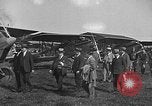
Inspection of aircraft equipment by Congressmen and other Government officials in United States.
Air Corps Demonstrations team during tour of Command Schools United States. Inspection of aircraft equipment by Congressmen and other Government officials. United States Assistant Secretary of War for Air F. Trubee Davison talks to U.S. Brigadier General Benjamin Foulois and other staff. Men stand together in front of the aircraft parked on a field. Bombs lying on the ground. Two men arrange them. A sign near the bombs read 'Danger'. Two men fuse bombs in an aircraft. U.S. Army Air Corps attack aircraft Curtiss A-3 Falcon in flight. The planes frag bomb on targets. Smoke rises up due to explosions.
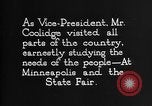
Vice President Calvin Coolidge visits Minneapolis State Fair and breaks ground for the Roosevelt Memorial in Portland.
A pictorial depiction of episodes in the life of Calvin Coolidge as the Vice President of the United States of America. Vice President Coolidge visits Minneapolis State Fair. People gathered on the sides of a path. Officials accompany Coolidge. Coolidge on a center stage on which the U.S. flags are hoisted. He addresses the crowd. Coolidge breaks ground for the Roosevelt Memorial at Portland, Oregon, and turns the first spadeful of earth. Cannons are fired. Vice President Coolidge talks about Roosevelt's contributions. The U.S. flag and several men in the background.
CRITICALPAST.COM: About Us | Contact Us | FAQs - How to Order | License Agreement | My Account | My Lightboxes | Shopping Cart | Advanced Search | Featured Collections | Website Terms & Conditions | Privacy Policy ©2026 CriticalPast LLC.
License Agreement |
Terms & Conditions |
Privacy Policy
©2026 CriticalPast LLC.