


 Francais
 Deutsch
 Italiano
Refine Your Search
Ohio-State-football stock footage and images
- Showing 20113 to 20118 of 24492 results more
more Hide
Hide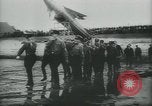
Montage of German rocketry scenes from 1930s through World War II. Nazi surrender. Atomic bomb. Japanese surrender
German rocket pioneer, Gerhard Zucker, attempting to develop postal rockets in the 1930s. Location is Wadden Sea off Cuxhaven, on April 9, 1933, where Zucker follows Nazi Sturmabteilung (also called SA or Stormtroopers) carrying the mail rocket across wet sands. The rocket is set up on a launch stand. Zucker and an assistant ignite the 8 side rockets and the mail rocket takes off. It noses up and loops over backwards, falling to the sand. German Stormtroopers lift up the damaged device. Next, is seen a later, more modern, rocket trial ending in failure. Two German engineers display a model similar to the pulse-jet-powered "buzz bomb" (V-1) employed by the Nazis in World War 2. A brief glimpse of similar American machine on sand flat, as narrator states German acknowledgement of knowledge gleaned from Dr. Robert Goddard's work. A German V-1 flying bomb (aka Doodle Bug) being launched in 1944, during World War 2. View of British houses of Parliament, London, England; an air raid shelter sign in City of Westminster. Londoners waiting out a raid in the shelter. Scenes of fire and destruction during German bombing of London, as narrator speaks about the more advanced German V-2 ballistic missiles employed later in the war. Londoners trudging through debris amongst bombed out buildings. Change of scene to U.S. infantry and armor advancing deep into Germany. Narrator refers to them overrunning rocket bases and other vital war-making facilities, near the end of the war. Glimpse of large number of German prisoners of war. Documents of military surrender being signed by Field Marshal Wilhelm Keitel, in Berlin, May 8, 1945. Closeup of Keitel. Scenes of American forces operating in Pacific theater. Aerial view of atomic bomb explosion. Japanese surrender ceremony on September 2, 1945, aboard the battleship USS Missouri. U.S. soldiers and other service personnel return home and greeting loved ones at end of war. Aerial view of Pentagon building and surrounding area in Arlington Virginia near Washington DC. U.S. troops boarding a ship in San Francisco, bound for war again, this time in Korea (1950).
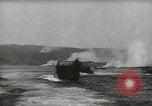
Montage of World War II combat scenes.
Montage of combat all over the world, during World War 2. Amphibious assaults, American soldiers advance and fire artillery on the battlefield. Soldiers fire rifles near gun emplacements on a Japanese island. U.S. medics or corpsmen give medical aid to a wounded soldier. German soldiers holding up white handkerchief and surrendering in a town in Europe as American soldiers receive the German prisoners of war. American soldiers leading an unclothed Japanese prisoner of war at gunpoint on a Pacific Island. A newspaper headline reads ' Japan surrenders'. Numerous jubilant Victory over Japan or VJ Day celebrations in the United States. Crowds gathered in celebration, sailor and soldier in uniform celebrating with civilians. Ticker tape rains down from buildings in New York City and other cities. A large crowd of civilians gathered on the streets to celebrate the end of World War 2.
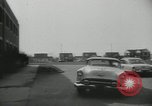
U.S. Army National Guard troops respond to alert and pick up arms and equipment to commence mission in New York city
An emergency practice training of U.S. Army National Guardmen in the United States. A car drives through streets and arrives at a National Guard Armory. A National Guard soldier, not yet in uniform, gets out of a mid 1950s sedan car and runs into the building, where he and other uniformed National Guardsmen are issued rifles from a rack and depart on their mission. They run up a flight of stairs. They get in jeeps and advance through streets of New York City, near the United Nations building, during a practice training alert. An officer issues instructions and is saluted. A National Guard sentry guards an essential military site.
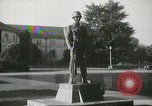
Infantry soldiers attend mechanical and practical training at the U.S. Army Infantry School at Fort Benning in Georgia, U.S.
The U.S. Army Infantry School at Fort Benning in Georgia, United States. A statue in front of the U.S. Army Infantry School. An officer teaches infantry soldiers in a classroom. They attend a mechanical training to learn tactics. Men from the U.S. Navy, the U.S. Marine Corps and the U.S. Air Force arrive for training. Men work on publications in the correspondence school operated by the infantry school. Infantry soldiers undergo practical training under the guidance of experts. The soldiers take down notes. 'Follow Me' is the motto of the school. Infantry soldiers learn to advance and fire artillery during field exercises.
Infantry soldiers learn handling and firing of weapons at the U.S. Army Infantry School in Fort Benning, Georgia.
The U.S. Army Infantry School at Fort Benning in Georgia, United States. 'Follow Me' statue in front of the school. An infantry soldier fires a rifle. An officer instructs soldiers during a training fire course. Under expert instructions the soldiers learn the handling of weapons and firing them at fixed and changing targets. A soldier learns to detect a target and fire from different positions. The infantry soldiers learn to fire machine guns and use hand grenades.
Soldiers learn to use machine guns, flame throwers and grenade launchers at the U.S. Army Infantry School in Fort Benning.
The U.S. Army Infantry School at Fort Benning in Georgia, United States. Infantry soldiers learn to use grenade launchers. An officer instructs the soldiers on the use of flame throwers. A soldier uses a flame thrower and other uses a machine gun.
CRITICALPAST.COM: About Us | Contact Us | FAQs - How to Order | License Agreement | My Account | My Lightboxes | Shopping Cart | Advanced Search | Featured Collections | Website Terms & Conditions | Privacy Policy ©2026 CriticalPast LLC.
License Agreement |
Terms & Conditions |
Privacy Policy
©2026 CriticalPast LLC.