


 Francais
 Deutsch
 Italiano
Refine Your Search
Ohio-State-football stock footage and images
- Showing 20521 to 20526 of 24492 results more
more Hide
Hide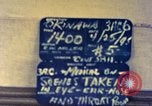
3rd Medical Battalion doctor examines eye of a patient in Okinawa, Japan during World War II.
United States Marines 3rd Medical Battalion in Okinawa, Japan during World War II. A doctor in 'eye-ear-nose and throat room' as he examines a patient's eye with flash light. Doctor closely examines a patient's eye.
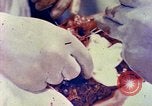
U.S. Navy doctors operate a wounded soldier's leg and arm in Okinawa, Japan during World War II.
United States Navy doctors perform an operation in Okinawa, Japan during World War II. Dr. Roy Schubert performs an operation on the leg of a man with a wound caused by bomb fragment. Lieutenant Walker Mersheimar assists doctor Schubert. A gauge shows a reading. Damage caused to muscles and tissue. Doctor cuts away flesh. Damaged flesh and tissue. Doctors operate the arm of the same patient. Arm being held together by two sections of skin and flesh. Doctor uses surgical instruments on the arm of the patient. Doctor cuts away flesh and tissue. Bloodstained instruments. Doctor cuts around a piece of bone and then pulls the piece of bone out. Doctor places instruments in special drawers.
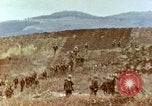
Medical supplies arrive in Saipan during World War II.
A U.S. Navy training film about the treatment and recovery of soldier wounded in Saipan during World War II. United States Marines advance on the island. Marines fire a gun. Injured Marine on a field. Supplies in a sling being unloaded. Water canes being unloaded. Medical supplies arrive at a shore and being unloaded. Carts, jeeps being used to carry supplies inland. Fatigued and war weary Marines arrive at a clearing station for rest and relaxation. Wounded Marine being examined by a doctor.
Doctor takes blood samples of natives to detect malaria cases in the Pacific Theater during World War II.
A U.S. Navy training film titled 'Medicine in action : Pacific enemy number 2 Malaria' about controlling and curing malaria among United States soldiers in the Pacific Theater during World War II. Ships underway in the Pacific Ocean with U.S. troops aboard it. Coast of a Pacific island as waves wash the shore. Natives in a village. A man cleans a rifle outside a hut. Anopheles mosquito, malaria vector. A U.S. Army doctor takes a blood sample of a native. Sample being observed under a microscope. Children with swollen stomach as they suffer from malaria. Children in the village. A man with enlarged liver. A U.S. doctor examines soldiers suffering from malaria as they lie in beds.
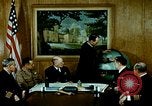
U.S. soldiers take various precautions to control malaria in the Pacific Theater during World War II.
A U.S. Navy training film about controlling and curing malaria among United States soldiers in the Pacific Theater during World War II. U.S. Navy officers confer about fighting malaria in the Pacific Theater. Officers at a map as they discuss the areas most affected by malaria. Officer points at such areas on the map. Water ponds and dense jungle in Pacific Theater. A malaria casualty being carried on litters. U.S. soldiers advance and walk through the jungle. Soldiers roll down their shirt sleeves. One of them applies repellent on his neck to keep of mosquitoes. A mosquito net and insect spray being used to prevent malaria. A soldier sleeps in bed in an open area without taking any precautions against the malaria causing mosquitoes. Soldiers in a mess line as they take Atabrin pills to save themselves from from malaria. A poster about Atabrin pills. Military vehicles on a beach. A sign on a building reads 'Headquarters of Malaria control' U.S. military personnel conduct census of mosquito population. Men take samples of water to detect the presence of malaria causing anopheles. Seabees detonate dynamite to blast off pools of water to kill mosquitoes. Oil being sprayed on water surface to kill mosquitoes. Scientific combat team works to control malaria. Men work on a dam to flush out mosquito breeding streams.
President Chiang Kai Shek poses with American officers at Nike-Hercules site in Taipei, Taiwan.
United States Army Nike-Hercules missile site in Taipei, Taiwan during Operation Hurry Up. President of the Republic of China Chiang Kai Shek poses with an American military officer at the Nike-Hercules missile site. Nike-Hercules missile in the background. Chiang Kai Shek walks towards a car and gets into the car.
CRITICALPAST.COM: About Us | Contact Us | FAQs - How to Order | License Agreement | My Account | My Lightboxes | Shopping Cart | Advanced Search | Featured Collections | Website Terms & Conditions | Privacy Policy ©2026 CriticalPast LLC.
License Agreement |
Terms & Conditions |
Privacy Policy
©2026 CriticalPast LLC.