


 Francais
 Deutsch
 Italiano
Refine Your Search
Ohio-State-football stock footage and images
- Showing 22015 to 22020 of 24494 results more
more Hide
Hide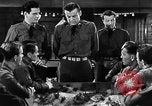
A Rifle Squad officer briefs the Sergeants about the Squad Column, Skirmish Line and Open Squad Formation in U.S. (WW2)
The advantages of the battle formations during World War II. The U.S. Army Sergeants seated at a desk and discuss the model. A Rifle Squad officer talks about the Battle Formations made by the smallest unit the Rifle Squad. He holds a stick in his hand. The model shows the two basic formations first the Squad Column and second the Skirmish Line. The officer also talks about Squad Wedge formation. He speaks about the usage of different formations. The officer explains the details of the formations that is how and when they are used. He first talks about the Squad Column which is the basic and easiest way of formation to control the fire. The troops hold each other's belt during the squad formation. He also speaks that always use Squad Column at night. Next is the Open Squad Column which is useful in crossing the open terrain where there is no cover. The Rifle platoon during the Open Squad Column formation. The officer asks the Sergeant about the questions regarding the Squad Column. The Squad Wedge which can form a Skirmish Line and is faster then the Squad Column. The Sergeant listen to him as he talks about the responsibility of Squad Leader during the formation. A model depicts the formations of Wedge. A Sergeant asks question related to the difference between the Open Squad Column and Wedge and the officer answers. Last formation the Skirmish Line. A model depicts the Skirmish Line formation by the Rifle Squad and usage of it to start the attack. The model shows the troops advancing for attack. The officer sums up in short three of the formations. He also speaks about the other formation and gives example.
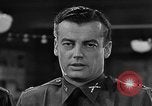
An officer questions Sergeants about different situations during battle formation (WW2)
The advantages of battle formations during World War II. A U.S. Army Rifle Squad officer talks about imagination and alertness during battle. The Sergeants seated around a desk. A model on the desk. The officer asks the Sergeants questions about the conditions they will adopt during different situations, and they explain it with the help of the model. Question for the interior unit is about the exact route to be followed to reach the road. The other situation is where the Squad Leader asks them to take their squad through a bridge and cover his crossing. The next situation is where the platoon moves forward, an officer gives a signal, the squad deploys, and when he returns, they are moving in different directions. Next, the Platoon moves into a thick wooded area and command a left squad, you are under orders not to change your formation without the permission of the platoon leader. The last situation is where the platoon leader has become irresponsible, you are the leader, and the troops advance and artillery is fired. How would you cross this field and what action's will you take. The sergeants answer one by one and take the help of the model.
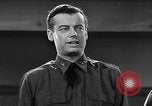
The officer explains the main points of a different battle formations like Squad Column, Skirmish Line and Wedge formation (WW2)
The advantages of the battle formations during World War II. A U.S. Army Rifle Squad officer speaks about the main points to be remembered during the battle formations . First the Squad Column which is the easiest formation, should be used at night and platoon leader will always suggest this formation first. Second Wedge formation which is helpful when the squad is alone. Skirmish Line Formation useful for advancing attack, cross small open area to be shelled and not to be used at night. The officer talks about the proper fighting formation to be adopted and about their responsibility. The Sergeants listen to him.

The working of Rebecca-Eureka radar device for dropping bombs over blind targets.
A training film 'Blind Bombing' depicts Rebecca-Eureka radar device being used for low level bombing over blind targets. A bomber aircraft in flight at a low altitude over the forest. The OSS (Office of Strategic Services) officers look at the plane. Animation depicts the Eureka agent guides the Bomber aircraft in flight. The OSS men carry at the field. A hand of OSS ground agent encircles the enemy objective in his area. Bomber aircraft in flight over the objective area. A parachutist jumps in the target area. Animation shows the ground agent helping the Eureka agent to enter the target area. A part being selected for setting up Eureka beacon. A man hold Eureka, a radar beacon in his hand. U.S. Army Air Forces A-20G Havoc fighter aircraft in flight. The Rebecca operator in a cockpit. The Rebecca operator reads an indication. The aircraft in flight from where the beacon can give signal. OSS officers looks at the enemy location on a map. A parachutist boards the aircraft. The aircraft in flight. The ground agents look at the enemy target. The parachutist jumps at the target area. The agents runs and help him to gear off and they leave the field. They look into a paper. Both of them read the bombing table and set the Eureka location according to it. The Eureka being set up and tested. The ground agent activate the Eureka. The pilot and Rebecca operator get in the aircraft . Pilot at controls. The aircraft in flight. The beacon contact being made. The operator looks from the siliscope and signals back to Eureka. The aircraft in flight over the beacon. Animation describes the Seliscope pattern and aircarft in flight according to the beacon position. Aircraft in flight and Rebecca operator sends the alert signal. The ground member in contact with the Rebecca. The operator picks up the bomb release and in action. The ground agent gives signal and the bomb being drooped. Animation depicts the bomb being dropped at the right position (World War II period).
An officer talks about the three basic problems to be solved by the Platoon leader in any formations (WW2)
A war film on the 'Battle Formations' The Rifle Platoon depicts the advantages of the different formations during World War II. The U.S. Army Sergeants stand around a desk and talk A Sergeant looks at a wall map. A Rifle Squad officer enters and ask a Sergeant about the people present. Sergeants seated around a table and a model kept on the desk. The officer talks about the battle formations of the platoon. He also talks about why the platoon is led by officers. He explains the battle formation of the platoon. The officer also give details about why and when theses formations are to be used. He talks about the three basic problems to be solved by the Platoon leader in any formation like security, maintenance and direction of control and minimum vulnerability to hostile fire and explains it with a help of the model. The officer explains the Platoon Column formation on the model. The Sergeants listen to him and see the formations made by the platoon leader.
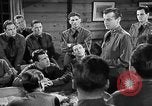
An officer explains different types of platoon formations and its usage and advantages (WW2)
The advantages of the different Platoon formations during World War II. The U.S. Army Sergeants stand around a desk. A Rifle Squad officer talks about the formal formations of the Platoon. He first explains the Platoon Column Formation which is useful at night and during low visibility. Secondly he speaks about the Platoon in Line of Squad Column in which the center is the Base Squad and is useful only when the location of the enemy squad is known. A Sergeant asks a questions and the officer answers. Next is the Platoon in Squad Column formation with center squad back this formation is most useful and widely used. It provides Rifle Squad support and allow use of covered approach terrain further movement in Platoon Column. A Sergeant asks question about the number of squad to be used in the formation. The officer answers. Another sergeant questions him about maintaining contact with security measure. The officer explains this answer with the help of a example.
CRITICALPAST.COM: About Us | Contact Us | FAQs - How to Order | License Agreement | My Account | My Lightboxes | Shopping Cart | Advanced Search | Featured Collections | Website Terms & Conditions | Privacy Policy ©2026 CriticalPast LLC.
License Agreement |
Terms & Conditions |
Privacy Policy
©2026 CriticalPast LLC.