


 Francais
 Deutsch
 Italiano
Refine Your Search
Ohio-State-football stock footage and images
- Showing 22273 to 22278 of 24494 results more
more Hide
Hide
Animation : Mind control operation in Japan showing Japanese people during World War II.
"A Few Quick Facts -Japan" . An animated World War 2 anti-Japanese propaganda film with 'Sato San' shows citizens of Japan during World War 2. Animation depicts the operation thought control in Japan. Japanese men under umbrellas. A Japanese man drinks tea. Another Japanese man commits suicide. Animation shows how mind control operation affects the minds of Japanese people. Japanese policemen arrest Japanese people for thinking wrong.

Assortment of unrelated scenes from post-World War 1 period, containing mostly U.S. Navy officers.
A Rear Admiral steps from a doorway, resplendent in special full dress uniform, complete with cocked hat and special embroidered rank insignia on his sleeve. The uniform appears to be European (not American). The scene is repeated in a second take. A French aviator, in leather jacket, walks in front of an early French bi-wing headless pusher airplane parked in an open hangar. (Unlike a Curtiss headless pusher aircraft, this one does not have tricycle landing gear.) He bends to greet a little girl who walks to meet him with a woman, the girl's mother. The three pose for the camera. Next scene shows U.S. Navy Vice Admiral Richard H. Jackson (Commander Battleship Divisions Battle Fleet, 1925-1926). He steps from a building followed by Naval officers. Jackson converses with a young Navy Captain, as others relax behind them. . Closeup of Admiral Jackson and the Captain. The group moves away. Next, a fairly young U.S. Navy Rear Admiral (unidentified) is seen in front of a long, wide, set of granite steps, shaking hands with a Navy Petty officer. They engage in conversation and then the Petty Officer leaves, followed by the Admiral. Next, is seen the entrance to a building numbered 22, that has U.S. Navy signs in its windows. A U.S. Navy Rear Admiral (unidentified) exits the building, accompanied by a Commander and a Lieutenant Commander. The weather is cold enough to show visible moisture from their breath. The three share entertaining conversation, including smiles and laughs.
Rear Admiral William Moffett, Chief of U.S. Navy Bureau of Aeronautics. Admiral William Sims, commander of U.S. naval forces in Europe.
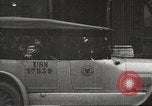
Brief glimpse of a U.S. Navy staff car parked in front of a Federal Government building entrance, where several naval officers and at least one army officer prepare to board the car. Attending the car are two sailors wearing dark watch caps. Next, Rear Admiral William A. Moffett, Chief of the U.S. Navy Bureau of Aeronautics, is seen leaving the building on crutches. His right foot is heavily bandaged. A sign in the window of the building reads: "U.S. Navy Aviation." A cadre of naval officers follows the Admiral to the sidewalk, where he cheerfully engages in conversation with several. To his left is a Captain. The other officers are of lessor rank. They appear to be awaiting a car to pick up the admiral. Following a break, two of the naval officers are seen conversing alone at the building entrance. The admiral has left. Change of scene shows a man in military uniform seated at a desk in what appears to be a law office. He is making notes on a pad. The room is filled with shelves full of books. Abrupt change of time and place shows Vice Admiral William S.Sims, Commander of all U.S. Naval forces in Europe, at a railroad train station in London, England, at the end of World War 1. People around him show him some papers and converse with him. A British Bobbie stands nearby. Sims shakes hands with a British official. School boys in the background watch the goings on with interest.
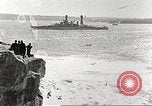
Several U.S. Battleships, destroyers and other ships anchoring and tying up near a large shipyard.
Sightseers, on an overlooking rocky cliff, watch U.S. Navy warships anchored in an outer harbor. A woman and three girls turn to look at the camera. A battleship is anchored close to where they stand, and small boats are seen in the water,around the ship. A stray dog walks past. Two battleships are seen framed by a tree, as viewed from a bluff overlooking the bay. Two destroyers,at anchor, are seen through trees. A destroyer tied up with trees in background. A large ship tied up at a dock, where sightseers look at it. Numerous lines are extended to the dock, and one is seen going out into the water from the bow. The ship has two masts that appear capable of raising sails. A destroyer anchored with multistory buildings seen across the harbor. A destroyer anchored, with an extensive inner harbor shipyard with ships and cranes visible in background. Ship's officers come on deck and pose near forward deck gun. They converse and move about, as if if to make the most of a motion picture. Sailors on deck handle many lines and pose for camera. Sailors carry a large bundle of lines and gather around to unwrap them and begin tying them to the ship's fixtures.
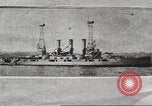
Pictures of three U.S. Navy ships that participated in World War I: USS Vermont (BB-20); USS Salem (SC-3) and USS Alywin (DD-47)
Pictures of U.S. Navy ships that participated in World War I. The battleship USS Vermont (BB-20), Scout Cruiser USS Salem (SC-3) and Destroyer USS Aylwin (DD-47).
Historical references of chemical warfare in the U.S. show an ancient Greek war and the use of a smoke screen.
A film in the U.S. based on historical references of chemical warfare. U.S. soldiers march on a road near a battlefield during World War I. American soldiers setup and fire a World War 1 mortar. Smoke rises from explosions on the battlefield. Series of drawings follows: A drawing depicts an ancient Greek war in which poison gas was used. A drawing depicts usage of 'smoke screen' as a weapon in 1701 by King Charles XII of Sweden which effectively shrouded his forces moving across the Duna River against Russia. A drawing depicts laboratory tests being made by a person in the ancient times.
CRITICALPAST.COM: About Us | Contact Us | FAQs - How to Order | License Agreement | My Account | My Lightboxes | Shopping Cart | Advanced Search | Featured Collections | Website Terms & Conditions | Privacy Policy ©2026 CriticalPast LLC.
License Agreement |
Terms & Conditions |
Privacy Policy
©2026 CriticalPast LLC.