


 Francais
 Deutsch
 Italiano
Refine Your Search
Ohio-State-football stock footage and images
- Showing 337 to 342 of 24494 results more
more Hide
Hide
Workers work at a machine manufacturing factory, a washing machine factory and collect onions from fields in the U.S.
Thousands of workers get back to work in the United States. A group of workers works on equipment inside a machine manufacturing plant in New Jersey. The workers welding inside the factory. Workers collect onions from fields in Kenton, Ohio. Workers increase the production of washing machine in Chicago.
Illustrations and reenactments about America around 1800
Pictures and reenactments illustrating American history. U.S. First Lady, Martha Washington, presiding over discussions of fashion and politics. Reemacted footage of 17th century and 18th century shipwrights and carpenters at work in a colonial-era shipyard. Men sawing logs outdoors. Blacksmiths at work in a colonial village. Picture of Thomas Jefferson. Picture of Potomac River separating Virginia and Maryland, where Washington DC will be founded. Sketch of a farmer with horse-drawn cart, in hills of Virginia. The capital is shifted to Washington. Map showing Colonial States and interior waterways of commerce, including the Ohio and Mississippi rivers down to the Port of New Orleans.
Aviation history; historic early flight scenes; first hand accounts from persons who knew and worked with the Wright brothers.
Views of traffic on a city street around the turn of the 20th century. A mix of horse and buggies and motorcars and bicycles. People waiting for a trolley car. Reenactment of persons using an early telephone and of early filmmakers at work with camera on motion picture film. The Wright brothers home at 7 Hawthorne Street, West Dayton, Ohio. The Wrights' former housekeeper, Carrie Grumbach, recalls December 17, 1903, a telegram arriving about the Wright brothers successful first powered flight. Glimpse of Wright brothers machine shop. Charlie Taylor, who had worked in their shop, speaks of being pleased at their accomplishment. View of the Wrights flying gliders at Kitty Hawk, North Carolina. Charlie Taylor describing how he machined and built the motor for the Wright brothers airplane. Glimpse of that motor or a facsimile. Men positioning the Wright brothers airplane for launching, and French citizens gathered to watch a demonstration of their airplane in France. French aviation pioneer, Henri Farman with two other men in his Voisin-Farman I airplane. They begin takeoff. Closeup of Brazilian aviation pioneer, Alberto Santos-Dumont. Other early aircraft in flight. A Wright Flyer passing over the Fort Myer drill ground in Virginia. An Army balloon in the background. Retired United States Air Force Brigadier General, Frank P. Lahm, walks across the tarmac on an airport and speaks for interviewer (unseen). He speaks about the difficulty the Wright brothers had in convincing the U.S. Army of the value of their airplane. He tells that in December, 1907, Wilbur Wright was finally granted an interview with the Board of Ordnance and Fortifications, which led to a contract, in 1908, with the Signal Corps. Moving imagesof Orville Wright and assistants bringing a Wright Flyer to Fort Myer, Virginia, to conduct flight trials for the Army. Views of the airplane being flown all around the area, watched by spectators. (This footage is a mix of 1909 footage where the aircraft shows two half-rounds of canvas in the front elevator, and 1908 footage, taking off and flying, where the aircraft has a single half-round of canvas in the front elevator.) After landing on the 9th of September, 1908, then, Lieutenant Lahm, accepts Orville Wright's offer to fly with him. Lahm climbs aboard the airplane, sits next to Orville Wright, and they are seen taking off and flying about for six minutes and forty seconds. (Lahm is the first. military officer to ever fly in an airplane.) The next scene shows the wreck of a Wright Flyer, in which Army Lieutenant Thomas Selfridge was killed and Orville Wright injured, on September 17, 1908.
Technicians in WADC buildings and in MIT facilities; and supersonic propeller undergoing test on large test stand at WADC.
Technicians and members in the laboratories and offices of WADC, Dayton, Ohio, United States. Aerial view of approach to Wright Air Development Center (Wright-Patterson Air Force Base), includuing view of Wright Memorial on Wright Brothers Hill. Low altituide aerial view of Aero Medical Laboratory, wind tunnel area, static structural tent building and the main flight line area. Hand holding book entitled, "Wright Air Development Center" (WADC). Hands open book-on first page is: "Mission of WADC". Interior, laboratory research building at Massachusetts Institute of Technology (MIT), airmen push rack down test area and into vault. Exterior view in Cambridge Massachusetts of the MIT Great Dome and Building 10 seen from Killian Court, with text engraving seen on building frieze: Massachusetts Institute of Technology. Two members of the Institute walk down steps of Building 10. Two technicians working in office building. Supersonic propeller undergoing test on large test stand. Superimposed over this picture are the words: Research And Development. Supersonic propeller undergoing tests. Two technicians at control panel of the test stand. USAF B-50 Superfortress aircraft in flight. Engine starting on B-50 in flight-plane equipped with special deicing equipment. B-50 in flight showing special test and research instruments and operator.
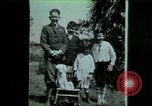
Prior to U.S. Presidential Election of 1968, Richard Nixon recounts his past and reveals details about his Quaker family.
Self-portrait of Republican nominee Richard Nixon aired during his 1968 presidential run against Hubert Humphrey and George Wallace in the United States. An interviewer asks Richard Nixon what sort of a life he lived when he was about 10 years old. He speaks how he used to work on his lemon ranch at that time and later on a service station and says that it was much of work and no play. The interviewer asks how his father and mother met. Nixon responds saying that his father came from Ohio and mother came from Indiana and they met in California. A church. Nixon speaks that his father was a Methodist and his mother a Quaker and they both met in a social church. An old picture of Nixon's father and mother. Nixon speaks more about his Quaker family.
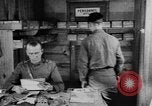
An Army personnel officer looks at the qualification record of a soldier during World War 1 recruiting efforts in America
A United States Army officer in the office of the Provost Marshal General, Washington DC, reviews Qualification Record cards received from millions of American men, in response to a U.S. Government questionnaire about military service in World War I. The personnel officer at a desk at the army personnel office. He takes out a qualification record from a drawer. The officer looks at the qualification record of John Thompson from Cleveland, Ohio. He turns around the card and notes down some information. Fingerprinting of a soldier is shown, for inclusion in the man's personnel record. A completed finger print sheet is displayed.
CRITICALPAST.COM: About Us | Contact Us | FAQs - How to Order | License Agreement | My Account | My Lightboxes | Shopping Cart | Advanced Search | Featured Collections | Website Terms & Conditions | Privacy Policy ©2026 CriticalPast LLC.
License Agreement |
Terms & Conditions |
Privacy Policy
©2026 CriticalPast LLC.