


 Francais
 Deutsch
 Italiano
Refine Your Search
Okinawa Ryukyu Islands 1944 stock footage and images
- Showing 3229 to 3234 of 9587 results more
more Hide
Hide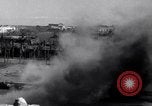
Soldiers of the First Cavalry Division walk down the bank of Cainte River in Luzon in Philippine Islands
U.S. Army soldiers of the First Cavalry Division cross small stream bridged with a canoe. Soldiers walk down the bank of Cainte river. A bulldozer pulls a string of trucks across the river. Soldiers march across an open field. (World War II period).
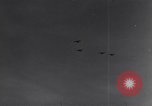
United States F4U and F4F aircraft at Henderson Field on Guadalcanal Island during World War II
United States Navy TBF Avenger aircraft in formation over Quadalcanal during World War 2. Ground crew works on U.S. F4U Corsairs. Pilots converse 'Nylorac' written on an F4F Wildcat plane number 17. F4U Corsair taxis and in flight. F4F Wildcat stand in line on field, one plane is named 'Susan'. A pilot gets out of a F4F plane. A gas truck passes. TBF Avenger aircraft in large formations overhead.
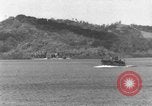
United States Navy destroyers tied up together in Guadalcanal, Solomon Island during World War II.
United States Navy ship underway in Pacific Theater during World War II. A United States YP-415 underway with the shoreline in the background. United States Navy light cruiser anchored at the harbor. A harbor at Guadalcanal. A pig with a flag floats onto the water surface. Overcast sky at dusk. Two United states Navy destroyers tied up side by side at the harbor.
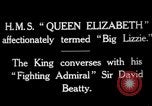
King George V of Britain, visiting HMS Queen Elizabeth and HMS Barham at Scapa Flow, Orkney Islands, in World War I.
View of British battleship HMS Queen Elizabeth at Scapa Flow with the Grand Fleet during World War 1.. King George V visits HMS Queen Elizabeth. He talks with Fighting Admiral Sir David Beatty aboard the deck. Admiral Beatty's staff and officers pose with the King for a group photograph. King George V visits staff, sailors and officers aboard HMS Barham. Sailors march on the deck. Ship's guns in the foreground. King George talks with staff and officers. (World War I; World War 1; WWI; WW1)
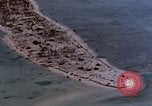
LST (Landing Ship, Tanks) beached in Tarawa Island, Pacific Ocean.
Aerial views of Tarawa Atoll, Pacific Ocean. LST (Landing Ship, Tank) beached. LVT (Landing Vehicle, Tracked) on strip. LST approach beach.
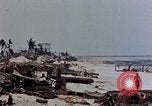
Tarawa atoll fringed with coral reef, Tarawa Island in the Pacific.
Shores of Tarawa Atoll in the Pacific Ocean. Marines milling around, wreckage after battle. Palm trees along shoreline. Wreckage on Tarawa. Marines mill around on beach. (World War II period).
CRITICALPAST.COM: About Us | Contact Us | FAQs - How to Order | License Agreement | My Account | My Lightboxes | Shopping Cart | Advanced Search | Featured Collections | Website Terms & Conditions | Privacy Policy ©2026 CriticalPast LLC.
License Agreement |
Terms & Conditions |
Privacy Policy
©2026 CriticalPast LLC.