


 Francais
 Deutsch
 Italiano
Refine Your Search
Okinawa Ryukyu Islands 1944 stock footage and images
- Showing 3559 to 3564 of 9587 results more
more Hide
Hide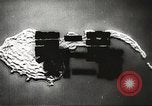
United States prisoners of war at medical aid stations in the Philippines during Japanese occupation (WW2)
During occupation of the Philippines by Japanese troops during World War II. Maps of Manila Bay, the Bataan Peninsula, Corregidor and Caballo islands. Mountains in the foreground. A wrecked U.S. ambulance in Corregidor Island. A U.S. medical aid station. Medics treat wounded soldiers inside a tent. U.S. Army prisoners of war in Corregidor take salt tablets and eat at a field kitchen. A prisoner of war sweeps the ground. A wounded Filipino soldier walking with crutches. Prisoners of war are served with plates of rice. A heap of medical supplies. A man reads The Tribune newspaper. Headlines of the newspaper reads: 'Homma is head of Japan forces'. Soldiers seated inside a tent look at a map.
Damage and destruction at Fort Mills and Corregidor following battle between Japanese and U.S. soldiers
The Japanese invasion and occupation of the Philippine Islands in World War II. An aerial view of Corregidor island. A map shows places. Rubbled buildings and destroyed trees in the area, including bombed Middle Barracks of Fort Mills. Mountains in the foreground. Japanese Soldiers dumping ammunition in gun pits. A destroyed rail road station and wrecked wagons and rails. Prisoner of war soldiers with some of the Japanese forces. Destroyed houses and buildings.

Wrecked U.S. gun emplacements and rubble on Corregidor after the invasion of the Philippines by Japanese troops.
The invasion of the Philippine Islands by Japanese occupying troops during World War II. A car drives past on a street. Animated map shows places. Wrecked U.S. gun emplacements including Battery Crockett on Corregidor after a battle. Japanese soldiers at a destroyed building. Wrecked U.S. Army guns on the island. Wrecked equipment and rubble amid detroyed buildings in the area.
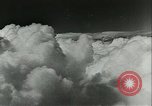
WPA laborers work at various development programs in New York City, United States.
Works Progress Administration (WPA) projects in New York City during the Great Depression. Aerial view of New York City as a plane flies by and clouds part to show Manhattan island below. Buildings and skyscrapers of New York City as seen from river and harbor views, with some ships and tugboats seen. Trucks on roads of Governor's Island at tip of Manhattan. An older home seen under renovation and reconstruction. View of the Brooklyn Navy Yard with WPA workers busy building and improving new roads and shops and warehouses near the docks. A bulkhead construction project is shown at Sheepshead Bay in Brooklyn, to reclaim land from the waters of the Bay. The work includes construction of a new Boulevard and sanitary and sewer system improvements. View of the front entrance of the Beaux Arts style Alexander Hamilton U.S. Custom House on Bowling Green at the tip of Manhattan. Pedestrians and WPA workers are seen in front of the building. WPA laborers on an unidentified Manhattan street (with elevated railway running in background) are busy removing old street car rail lines from the streets, in sections, and loading them into truck beds to haul away. Large public swimming pool and bath house construction projects are shown, influenced by city planner and avid swimmer Robert Moses (scene possibly shows McCarren Park pool - note archway seen under construction). WPA workers are seen building the new East River Drive, including highways, walks, and flanking parks. Construction workers seen building the roadway, with the Williamsburg Bridge in the background. A model of the project is shown with the new drive from Grand Street to 14th Street. Camera pans down from the Empire State Building to show the roof of the New York Public Library teeming with WPA workers as they remove the old corroded copper roof and replace it with a new metal roof. View of busy Manhattan streets below the workers, including a street car passing by.
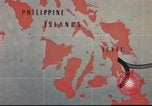
Men aboard the ship underway at sea using the semaphore signaling system.
The sea voyage of the victory ship Hannibal Victory from San Francisco to the Philippine Islands during World War II. The ship underway in the Pacific ocean. A map locates Philippine Islands and Leyte. The ship convoy underway. Men standing near the deck gun. The semaphore signaling system is being used. A man wearing earphones standing near the deck gun.
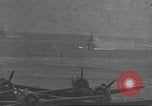
USS Enterprise battles attacking Japanese warplanes in Battle of Santa Cruz during World War II.
Naval Battle of Santa Cruz Island in the Pacific Ocean during World War 2. View from The USS Enterprise (CV-6) during attacks by Japanese airplanes. F4F aircraft parked on her flight deck. A U.S. Destroyer is steaming aft and firing its guns. Battleship, USS South Dakota seen in distance. Black Flak bursts in the air. The Enterprise makes swerving defensive maneuvers while underway. A Japanese airplane flies overhead, aft. View from the ship's island of sailors gathered on flight deck and then running to an F4F that has collapsed with wing over antiaircraft gun positions. Sailors begin to right the airplane but abandon the deck when a bomb hits somewhere aft starboard. Smoke rising from the strike area. Enterprise making severe defensive maneuvers as her antiaircraft batteries fire. Anti-aircraft cruiser, USS San Juan CL-54, visible astern as Enterprise turns hard to starboard. Sky filled with black flak bursts. Black smoke rising from two downed Japanese aircraft in the water. Smoke drifting across the flight deck.
CRITICALPAST.COM: About Us | Contact Us | FAQs - How to Order | License Agreement | My Account | My Lightboxes | Shopping Cart | Advanced Search | Featured Collections | Website Terms & Conditions | Privacy Policy ©2026 CriticalPast LLC.
License Agreement |
Terms & Conditions |
Privacy Policy
©2026 CriticalPast LLC.