


 Francais
 Deutsch
 Italiano
Refine Your Search
Okinawa Ryukyu Islands 1944 stock footage and images
- Showing 4051 to 4056 of 9587 results more
more Hide
Hide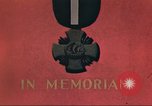
Crewmen of Torpedo Squadron 8 pose near aircraft on the flight deck of USS Hornet underway in the Pacific Ocean.
A film on aviators and crewmen of Torpedo Squadron 8 who gave their lives on June 4, 1942 near Midway Island in the Pacific Ocean during the Battle of Midway of World War II. Names of Lieutenant Commander John Charles Waldron and Horace Franklin Dobbs who was the chief radioman. They pose in front of an aircraft. Ensign Henry R. Kenyon Jr. and Airman 2nd Class Darwin L. Clarke pose near an aircraft and talk. Ensign E. L. Fayle and Seaman 2nd Class Aswell L. Picou pose seated on the wing of an aircraft. Lieutenant Raymond A Moore and Airman 1st Class Tom Hartsel Pettry seated near a bomb loaded in the aircraft. Ensign William Robinson Evans and Airman 3rd Class Ross Eugene Bibb pose. Lieutenant (jg) Jeff Davis Woodson and Airman 2nd Class Otway David Creasy Jr pose near an airplane. Ensign William W Creamer and Seaman 2nd Class Francis Samuel Polston draw a face on a bomb loaded in an airplane and pose. Other crewmen who pose are: Lieutenant James Charles Owens Jr. and Airman 1st Class Amelio Maffei, Ensign Ulvert Matthew Moore and Airman 3rd Class William F Sawhill, Lieutenant (jg) George Marvin Campbell and Airman 2nd Class Ronald Joseph Fisher, Ensign John Porter Gray and Airman 3rd Class Max Arthir Calkin. Ensign G. H. Gay who was rescued and Airman 3rd Class George Arthir Field pose. Ensign Grant W Teats and Airman 2nd Class Hollis Martin, Ensign John Ellison and Carneiro, Ensign William Abercrombie and Aviation Pilot Robert B Miles, Airman 3rd Class Robert K. Huntington and Airman 2nd Class Bernard P Phelps. A chaplain at funeral services on the deck of the carrier USS Hornet (CV-8). The volley squad fires guns and the bugler blows taps. Sunset at sea. U.S. Navy SBD Dauntless in flight overhead.
Scenes from U.S. Air Force orientation film for Airmen to be stationed in Great Britain
A film titled 'You in Great Britain' on the history of Great Britain. A U.S. Airman enters the British Museum and views the Magna Carta. Magna Carta Island. Paintings of signing of Magna carta and of British monarchs, including Queen Victoria. Houses of Parliament, Big Ben, and the Thames River. U.S. Constitution and Bill of Rights. Cartoons of Soviet System vs. Democracy. British soldiers in combat. Animated map showing U.S. Air Bases in Britain. U.S. Airmen in a theater watching the movie. Faces of various soldiers including African American and white soldiers as they watch the film in the theater.

The strafing and bombing of ground targets by U.S. aircraft in the Pacific Theater during World War II.
The strafing and bombing of Japanese installations in the Pacific Theater by the U.S. aircraft during World War II. Aerial view of the target area. Smoke rises from explosions on the ground. Buildings on the ground. Smoke arises from explosions on the island as seen from gun camera footage of U.S. aircraft attacking Japanese enemy targets.
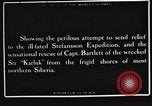
Captain Bartlett comes aboard Whaler "Herman" after escaping from the Karluk in Siberia, Russia during an expedition.
Whaler "Herman" in Siberia, Russia during arctic cruise. Natives on sleds as they bring in news of Captain Robert Bartlett to a ship in Emma Harbor in Siberia. The Eskimo natives travel across a snow covered field on sleds pulled by dogs. Captain Robert Bartlett comes aboard SS Herman (with news of the fate of the ship Karluk and its survivors marooned on Wrangel Island). Captain Christian Pedersen welcomes Bartlett aboard. Ice being cleared for the ship to get underway at sea. Ice floats on the surface of the sea. Captain Bartlett and Captain Pedersen aboard SS Herman, a trading and whaling vessel.
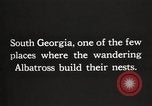
Naturalist George Hubert Wilkins stands near an albatross during Sir Ernest Shackleton's 1921-1922 expedition to Antarctica
A film about Sir Ernest Shackleton's to Antarctica in 1921-1922 (shortly before Shackleton's death on January 5, 1922). An albatross on or near the island of South Georgia. Crew member, naturalist George Hubert Wilkins, walks around the bird in a circle, moving his hand toward the defensive bird. The bird takes off. An albatross seated on a rock.
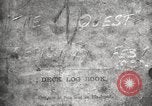
Logbook of ship Quest on death of Ernest Shackleton; his burial and gravesite in Grytviken, South Georgia.
A film about Sir Ernest Shackleton's last expedition to Antarctica. Clip opens with view of cover of ship log book for the Quest. A few frames of the clip show the logbook entry for January 5, 1922 indicating the sudden death of Ernest Shackleton from heart failure and notes about the attending physician, Macklin. Scene changes to show the grave of Ernest Shackleton in Grytviken, South Georgia Island. Crew members approaching and gathered around the grave site of Shackleton on a snow covered field. A wreath at the grave.
CRITICALPAST.COM: About Us | Contact Us | FAQs - How to Order | License Agreement | My Account | My Lightboxes | Shopping Cart | Advanced Search | Featured Collections | Website Terms & Conditions | Privacy Policy ©2026 CriticalPast LLC.
License Agreement |
Terms & Conditions |
Privacy Policy
©2026 CriticalPast LLC.