


 Francais
 Deutsch
 Italiano
Refine Your Search
Okinawa Ryukyu Islands 1944 stock footage and images
- Showing 4765 to 4770 of 9587 results more
more Hide
Hide
Italian refugees including children are evacuated to Southern Italy by Allied powers.
Italian refugees evacuated to Southern Italy by Allied powers. Officers of Allied military Government sit and draw plans for evacuation. Allied flags. Animated map. Allied officer explains the route. Italian refugees evacuated along with children. A soldier on motorcycle. Refugees move on bullock cart. Young children cry. Buildings of Italian people destroyed. Army trucks take refugees to port of embarkation. Giant ship carries Army trucks and human cargoes for transport. Italians evacuated to Southern Italy. (World War II period).
United Nations forces in Britain ready for action and the Allied Generals see new equipment in action.
Chiefs of Allied Invasion Command at the headquarters in England. American General Dwight D Eisenhower meets the soldiers. Military supplies put into action. Trucks, Jeeps and mechanized equipment are assembled. General Montgomery, Deputy Commander General Arthur Tedder and General Eisenhower see new equipment in action. Artillery fired. Aircraft in flight. Paratroopers in sky. General Montgomery, Master of air tactics, General Arthur Tedder and Liberator of North Africa, General Eisenhower. (World War II period).
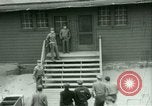
German prisoners at a POW camp in the United States play cards, read books and view pictures of Allied leaders.
German Prisoners of War at a POW camp in the United States during World War 2. German prisoners enter barracks. American Soldier keeps a watch on them. Prisoners seated on bunks play cards, write letters and read books. Three Prisoners of War at a table view picture of President Franklin Roosevelt and Winston Churchill and salute.
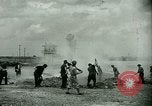
German and Italian prisoners clean up ground, cut lawns and draw German eagle with pebbles at a POW camp in United States.
German and Italian Prisoners of War at a Prisoner of War camp in the United States during World War II. Prisoners of War clean up ground, remove tree trunks by using crane and cut lawn. American soldier keeps a watch on the POWs. A stone with Swastika and inscription 'Es Lebe Unser Fuhrer'. German eagle is drawn with pebbles on ground.
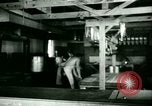
German and Italian prisoners cook meal and eat at a counter canteen in a POW camp, United States during World War II.
German and Italian prisoners of war (POW) cook a meal at a POW camp in the United States during World War 2. Prisoners of war prepare their meals in kitchen. American soldiers eat rice, chicken and noodles at a table. Prisoners eat their meal at a counter canteen.
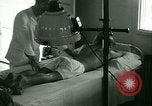
German and Italian Prisoners of War during World War II in U.S. operated POW camp.
German and Italian Prisoners of War receive treatment and massage at a POW camp in the United States during World War 2. Prisoner receives massage and Infra- red ray treatment in camp hospital or medical ward. Prisoner dictates letter to another prisoner. Doctor uses a stethoscope. Prisoner lies on a bed under mosquito net.
CRITICALPAST.COM: About Us | Contact Us | FAQs - How to Order | License Agreement | My Account | My Lightboxes | Shopping Cart | Advanced Search | Featured Collections | Website Terms & Conditions | Privacy Policy ©2026 CriticalPast LLC.
License Agreement |
Terms & Conditions |
Privacy Policy
©2026 CriticalPast LLC.