


 Francais
 Deutsch
 Italiano
Refine Your Search
Okinawa Ryukyu Islands 1972 stock footage and images
- Showing 931 to 936 of 4614 results more
more Hide
Hide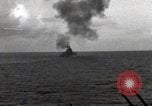
USS warships shell Makin Island.
USS Baltimore shells Makin Island and LCs head in for landing. USS Mississippi fires. Smoke arises. USS Baltimore fires 5 inches guns. Sailors in battle gear, including steel helmets. Artillery mounted on ship is fired. Large column of smoke and fire arise from island. Warships at sea. (World War II period).
U.S. troops take key Japanese bases in the Makin Islands during the World War II.
Allied Forces advance during the World War II. U.S. troops fight on the Makin Islands in the Pacific. Animated map of Makin Islands. The U.S. soldiers waddle in water to reach the shore. They move through jungle terrain. A soldier talks on the radio. More troops and tanks come in. U.S. planes bomb and strafe the Japanese positions. Captured Korean laborers sit. Dead Japanese soldiers. Lieutenant Colonel James Roosevelt drinks from a cup. Tanks and infantry move forward.

U.S. perfects an Anti Ballistic Missile system on the Island of Kwajalein as a precaution against a nuclear attack.
Aerial view of tropical pacific island of Kwajalein. U.S. Anti Ballistic Missile system on the island of Kwajalein, Pacific. An artists' conception of a typical operating missile site. The aim is to guard U.S. against any possible nuclear attack from Communist China. Missiles launched to meet and destroy enemy missiles. Artists' rendition of enemy projectiles far above the Earth's atmosphere. Missiles launched.
General Thomas Farrell, Deputy Commander, Atom Bomb Project expresses his views at North Field base in Tinian Island, in WW II.
Atomic bombing mission in Japan by the United States Army Air Force, during World War II. U.S. military base in North Field, Tinian Island in Mariana Islands, South Pacific. Brigadier General Thomas F. Farrell, Deputy Commander, Atom Bomb Project thanks all people who contributed in the manufacturing of the bomb. He hopes that future use of the atomic power will be for peaceful purposes only.
Captain Kermit Beahan, bombardier of B-29 that dropped atomic bomb on Nagasaki, interviewed at Tinian, Marianas Islands
Setting: Airbase at North Field, Tinian Island in Marianas Islands. Public Affairs Officer, Major John F. Moynahan (not seen) identifies Captain Kermit K. Beahan, bombardier of the B-29, "The Great Artiste." (Note: Captain Beahan was the regular pilot of the B-29, "The Great Artiste", which was scheduled to carry the bomb. But it needed to be re-instrumented for the mission. So, instead, its crew simply switched airplanes with the crew of the B-29 "BocksCar" which was already properly configured. Thus, "BocksCar" was the airplane from which bombardier Beahan actually dropped the bomb.) When asked about his experience, Captain Beahan recalls being greatly relieved when clouds parted and the target, Nagasaki, could be clearly seen. He felt that dropping the bomb on Nagasaki, was the biggest thrill of his lifetime. (World War II period).
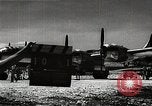
'Enola Gay,' the B-29 that dropped atomic bomb on Hiroshima,parked at North Field base,Tinian, Marianas Islands.
U.S. military base in North Field, Tinian Island in Marianas Islands, South Pacific. 'Enola Gay' the B-29 bomber that dropped the world's first atomic bomb on Hiroshima, Japan, parked on the ramp. The fuselage of Enola Gay. Name Enola Gay painted on its nose. (World War II period).
CRITICALPAST.COM: About Us | Contact Us | FAQs - How to Order | License Agreement | My Account | My Lightboxes | Shopping Cart | Advanced Search | Featured Collections | Website Terms & Conditions | Privacy Policy ©2026 CriticalPast LLC.
License Agreement |
Terms & Conditions |
Privacy Policy
©2026 CriticalPast LLC.