


 Francais
 Deutsch
 Italiano
Refine Your Search
Okinawa Ryukyu Islands 1972 stock footage and images
- Showing 2287 to 2292 of 4623 results more
more Hide
Hide
Pedestrians in Chinatown; view of Alcatraz Island from the Fisherman’s Wharf in San Francisco
Cars parked at Pier 45, Fisherman’s Wharf (43 The Embarcadero, San Francisco, CA 94105, United States) in San Francisco, California. Two ships are docked in front of the coast. View of Alcatraz Island (formerly home to Alcatraz Prison) from Fisherman’s Wharf. A yacht is seen sailing near the prison island. View of a street traffic coming up hill. A street scene in San Francisco’s landmark Chinatown district. Pedestrians walking on the sidewalk. Cars parked near Chinese shops. Shop sign “Ping Yuen Restaurant Bakery”. A faint red moon. Pedestrians walking past the Empress of China Restaurant and Cocktails (838 Grant Ave San Francisco, CA 94108, USA) in Chinatown. A signage of Empress of China, the most iconic and upscale restaurant in Chinatown (presently known as “Empress by Boon”).
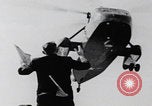
President Kennedy observes a Polaris missile test while onboard USS Observation Island
A man signals to United States Marine Corps (USMC) UH-3A helicopter. United States President John F. Kennedy arrives at the U.S. Navy ship USS Observation Island (EAG-154) by helicopter. A sailor plays his bugle and salutes. The president meets the ship's commander and other officers. President Kennedy observes a Polaris missile test with the USS Andrew Jackson submarine (SSBN-619) firing the missile. Other officials accompany President Kennedy to watch the missile test. President Kennedy gives a short speech on board USS Observation Island. Later in the day, President Kennedy speaks to Major General Davis and Launch Operations Director Kurt Debus in Florida before boarding the Air Force One (VC-137C SAM 26000).

View of the Statue of Liberty on Liberty Island, New York
A three-quarter front view of the Statue of Liberty on Bedloe's Island (present day Liberty Island) in New York City, United States, in the late 1800s.
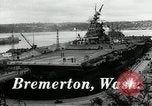
The aircraft carrier USS Bunker Hill being repaired at the Puget Sound Naval Shipyard, Bremerton, Washington, during World War II
View of the aircraft carrier, USS Bunker Hill in dry dock at Bremerton, Washington. She is being repaired after being attacked by Japanese Kamikazes during the invasion of Okinawa in World War 2, in which suffered more than 600 casualties including 346 dead and 43 missing. View of the ship's captain, George Seitz, looking over the damage to the ship. Camera shows severe damage below decks of the Bunker Hill and outside, where the flight deck is seen completely destroyed and collapsed into the ship's interior. View of a large scoreboard displaying a Japanese flag for every enemy plane downed by crew of the Bunker Hill. A sailor totals them and writes "475" on the board. Crew members are massed on shore and wave enthusiastically about returning to sea and rejoining the battle against Japan. (Note: The USS Bunker Hill repairs were not completed until after the war ended.)
American aircraft carrier under Kamikaze attack, off the Japanese coast in World War 2
World War II in the Pacific. American aircraft carriers underway off the coast of Okinawa on May 14, 1945. Japanese Kamikaze (suicide dive bomber) flies through heavy antiaircraft gun fire. One of the Kamikaze gets hit and crashes just ahead of the carrier. Several other kamikaze planes are shot down. Damage control party aboard the USS Enterprise carrier deck fights fires from a Kamikaze strike.
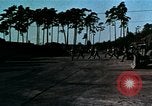
United States Army soldiers deploying in Dominican Republic, 1965, and in battle in Vietnam during Vietnam War
United States Army soldiers patrol the streets and supply food to people in Dominican Republic in 1965 crisis. American soldiers seen giving food and aid to civilians and children in the Dominican Republic. The 1st Infantry Division and 1st Cavalry Division soldiers in Vietnam to counter North Vietnamese aggression. 173rd Airborne Brigade deployed from Okinawa lands in Vietnam and seen unloading from aircraft, and in the field. A brigade of the 101st Airborne division seen debarking from ship in a deployment in Vietnam. 1st Infantry Division Big Red One troops emerging from landing ships on a beach in Vietnam. 1st Cavalry Air Mobile helicopter taking off from deck of an Aircraft Carrier. Aerial view of helicopter of same division seen in flight and firing rockets at target in jungle area in Vietnam. Close up view of rockets being fired from helicopter rocket launcher system. View of construction underway by U.S. Army engineers building base facilities in Cam Ranh Bay on South China Sea in Vietnam. Cranes seen at unfinished dock facilities, and engineers position giant pilings. Cargo in nets unloaded by crane from ship to boat. Views of munitions storage areas in Vietnam, along with crated equipment and oil drums. Group of Army helicopters on the ground preparing for takeoff. Helicopters taking off and in flight as seen from ground and also seen in aerial views in flight. U.S. Army soldiers jump out of helicopters at landing zone. Group of U.S. Army soldiers on patrol in Vietnam and crossing a stream. Artillery piece unloaded from a helicopter. American soldier throws a grenade at a structure in the jungle and explosion is seen. U.S. soldiers fire mortar and reload. U.S. artillery fired on battlefield and reloaded. Soldiers emerge from back of Armored Personnel Carrier (APC) and attack Viet Cong enemy positions in battle.
CRITICALPAST.COM: About Us | Contact Us | FAQs - How to Order | License Agreement | My Account | My Lightboxes | Shopping Cart | Advanced Search | Featured Collections | Website Terms & Conditions | Privacy Policy ©2026 CriticalPast LLC.
License Agreement |
Terms & Conditions |
Privacy Policy
©2026 CriticalPast LLC.