


 Francais
 Deutsch
 Italiano
Refine Your Search
Okinawa Ryukyu Islands 1972 stock footage and images
- Showing 2683 to 2688 of 4623 results more
more Hide
Hide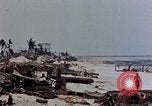
Tarawa atoll fringed with coral reef, Tarawa Island in the Pacific.
Shores of Tarawa Atoll in the Pacific Ocean. Marines milling around, wreckage after battle. Palm trees along shoreline. Wreckage on Tarawa. Marines mill around on beach. (World War II period).
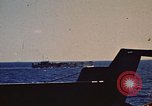
Marines in full combat gear wade ashore, Tarawa Island in Pacific.
Invasion of Tarawa. LST (Landing Ship, Tank) underway at sea. Marines in full combat gear wade ashore. Beach area of Tarawa. Landing craft in the foreground.
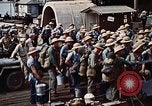
Sailors walk up gangway with pails and sea bags, Tarawa Islands in the Pacific.
Invasion of Tarawa. Sailors in helmets, with pails, packs, and rifles walk up gangway. Jeep and supplies on dock. Navy officers and men talk. Officer checks list as sailor come up gangway with sea bags and gear.

Japanese troops land in Corregidor , Philippines to capture the island during World War II.
Japanese troops in the Battle of Corregidor during World War II. Artillery on Bataan being fired upon Corregidor, Philippines. Japanese troops in boats as they land on the coast of Corregidor. Troops advance inland.
U.S. troops establishing a beachhead on Guam, Mariana Islands, during World War II
U.S. troops wading ashore on Guam, during Marianas campaign, in World War 2. Transport ships in far background. One soldier directing vehicular traffic in the surf, motions to a DUKW amphibious vehicle, carrying a load of troops, that drives past the camera. Troops carrying packs and weapons as they slog through shallow surf. Battle scarred shoreline of sand and palm trees. Vehicles moving through area as troops set up camp. More views of troops wading ashore, through deeper water (tide coming in). Line of amphibious vehicles (DUKWs) coming ashore. Contingent of U.S. troops wading in knee deep water. Some weapons covered in plastic for protection.
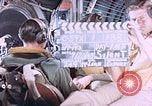
Postwar World War II Hijinks by airmen at 20th Bomber Command Headquarters in Guam, Marianas Islands
About a month after the end of World War 2, .Airmen at the 20th Bomber Command Headquarters create a comic movie about a B-29 aircrew. The aircraft windows are blacked out or fogged out. Three "aircrew" are seen sitting in a B-29 aircraft. Two sing while the third plays a harmonica. In the cockpit, the "pilot" holds a silk stocking in hand. He kisses it and places it in his jacket. On "final approach" to land, the "pilot" has placed the silk stocking over his control pedestal. He manipulates the yoke as if controlling the aircraft, then starts to pull back all four throttles, but has difficulty, until he remembers to release the throttle lock, and then pulls them back, pretending to land the B-29.
CRITICALPAST.COM: About Us | Contact Us | FAQs - How to Order | License Agreement | My Account | My Lightboxes | Shopping Cart | Advanced Search | Featured Collections | Website Terms & Conditions | Privacy Policy ©2026 CriticalPast LLC.
License Agreement |
Terms & Conditions |
Privacy Policy
©2026 CriticalPast LLC.