


 Francais
 Deutsch
 Italiano
Refine Your Search
Okinawa Ryukyu Islands 1972 stock footage and images
- Showing 2719 to 2724 of 4623 results more
more Hide
Hide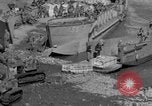
Supplies off loaded from LCM (Landing Craft, Mechanized) by caterpillar tractor at Kiska in Aleutian Islands, Alaska (WW2)
Caterpillar tractor tows sleds loaded with supplies off LCM (Landing Craft, Mechanized). LCT (Landing Craft, Tank) in the background. Caterpillar tractor tows sled loaded with oil drums. LSI (Landing Craft, Infantry) at anchor. (World War II period)
Sergeant R. L. Bose demonstrates reliability of Air Service parachutes at Mitchel Field on Long Island, New York.
Sergeant R. L. Bose demonstrates reliability of Air Service parachutes and disproves a theory that a man falling 500 feet or more loses consciousness. Civilians and military spectators watch the demonstration. Views from the airplane as Sergeant Bose free-falls from 3000 feet, delaying his chute opening until 1500 feet. Some of his free fall in slow motion. He makes a routine parachute landing. Spectators and an ambulance come as a precaution to his landing point.
U.S. Army mobile mortar crew operates and transports a mortar on Bougainville Island, Papau New Guinea, during World War 2
A mobile mortar crew from the U.S. Army operates a 4.2 inch mobile mortar. The shirtless U.S. Army soldiers fire multiple shells rapidly. A soldier using a field telephone receives information on a new Japanese enemy position and the mortar crew disassembles the weapon in a practiced manner. The soldiers load the heavy mortar into a two-wheeled cart, which is lifted into the bed of a truck to be transported to the new position. The crew unloads the mortar and wheeled cart from the truck and runs toward their destination. Men follow behind with ammunition boxes. At the new position the crew swiftly reassembles the mortar, laying for fire. A soldier is hoisted up to an observation post in a tree. Wide view of the surrounding jungle and wetland with Mount Bagana in the background. The narrator notes that the Japanese have been located at the base of the mountain. Close up shots of the mortar crew loading and firing shells toward the Japanese position.
Interview of Capt. William S. Parsons, U.S. Navy, crew member on Enola Gay, after the Hiroshima atomic bombing mission
Setting: North Field, Tinian Island in Mariana Islands, South Pacific, almost a week after the atomic bomb was dropped on Hiroshima Japan, August 8, 1945, during World War II. Public Relations Officer, Major John F. Moynahan (not seen) is interviewing members of the Crew of the B-29, Enola Gay, from which the bomb was dropped. Here he interviews Captain William Sterling "Deke" Parsons of the U.S. Navy who was weaponeer aboard the Enola Gay, during the mission. and who now serves as Scientific Head of the Atomic Bomb Project in the Pacific Theater. Captain Parsons describes the events of the mission from their early morning departure through the actual bombing. He notes that the actual bombing went smoother than earlier practice missions.
Colonel Paul Tibbets, Pilot of the Enola Gay, describes his mission dropping the atomic bomb on Hiroshima Japan.
Crew members of the B-29 Enola Gay are interviewed about their atomic bombing mission over Hiroshima Japan by the United States Army Air Force, during World War II. In this interview at North Field, Tinian Island in Marianas Islands, Public Relations Officer, Major John F. Moynahan (not seen) interviews Colonel Paul W. Tibbets, Jr., Pilot of the Enola Gay Among things Colonel Tibbets mentions, he recounts that he took a steep turn to avoid radiation from the explosion. When he saw the explosion he was surprised about its intensity. The cloud from explosion covered the whole city of Hiroshima.
Major Thomas Ferebee, the bombardier aboard Enola Gay shares his experience of the Hiroshima atomic bombing mission
Setting: North Field, Tinian Island, Marianas Islands. Major Thomas Ferebee, the bombardier aboard Enola Gay (B-29 that bombed Hiroshima) is asked about his experiences, by Public Relations Officer John F. Moynahan (not seen). He recalls - His navigator aligned him correctly with the target. Hiroshima was clearly visible to him and so he was able to deliver the bomb. (World War II period).
CRITICALPAST.COM: About Us | Contact Us | FAQs - How to Order | License Agreement | My Account | My Lightboxes | Shopping Cart | Advanced Search | Featured Collections | Website Terms & Conditions | Privacy Policy ©2026 CriticalPast LLC.
License Agreement |
Terms & Conditions |
Privacy Policy
©2026 CriticalPast LLC.