


 Francais
 Deutsch
 Italiano
Refine Your Search
Okinawa Ryukyu Islands 1972 stock footage and images
- Showing 565 to 570 of 4614 results more
more Hide
Hide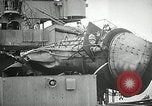
Damaged USS Louisville and men overhaul it in Okinawa, Japan.
Damaged USS Louisville (CA-28) hit by Japanese Kamikase in World War 2. Damaged forward stack of the ship. Float of its scout plane left on catapult, is jettisoned. Large stack of the USS Louisville knocked down. Engine of seaplane blown up by explosion on the signal bridge. Man welds in superstructure. View of other men working to repair damage to the Cruiser.. [Note: The following eyewitness account of the kamikaze attack was recorded by Seamen 1st Class, Enrico Trotta, who was a crew member on the USS Louisville (CA-28) from 1943 to 1946, "At 1923 (hours) two planes which were identified as friendly flew around and one kamikaze dove onto the battleship USS Mississippi BB 41. The other kamikaze plane turned to the Louisville and started to make a run on us. I was on No. #4 - 20 mm AA gun mount on the port side below #2 main battery and I fired 58 rounds to set the kamikaze plane on fire prior to hitting the Louisville’s front smoke stack bending and twisting it and killing 9 men on the 40 mm gun mount mounting on the forward superstructure tripod about 140 feet from our gun mount. The kamikaze also cut our sea plane off and left only the pontoon on the catapult. Three other 20 AA mm gun crews opened up firing 4, 11, and 20 rounds as well. We were not told to fire for we did it on our own. We were only manning the guns at the time and were not on general quarters. Later, the officers came by and said good job."]
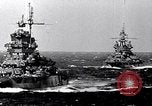
Role of U.S. Naval gunfire during battle for Okinawa, Japan, during World War II.
U.S. Battleships cruising in the Pacific. Close views of naval 16 inch gun barrels Navy personnel manning radio and teletype stations in a communications center. (They are shirtless, presumably due to heat.) They receive a message from General Bruckner, Commanding General, 10th Army, to Admiral Turner, Commander, Task Force 51,praising the active naval support for U.S. ground forces. Scenes of naval gunfire of all types. Japanese aircraft hit and burning. A U.S. naval 16 inch gun fires and produces a giant smoke ring.
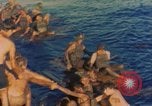
Rescued sailors are helped aboard a U.S. Navy submarine near Okinawa, Japan.
Clinging to pieces of wreckage, exhausted sailors from a destroyed allied vessel are helped aboard an United States Navy submarine by fellow sailors. Some of the rescued sailors are covered in oil. Sailors from the submarine help the victims aboard while others post lookout with binoculars. Some victims are wearing flotation bladders and float on wooden planks. (World War II period).
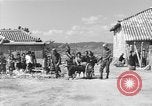
An injured civilian being treated by a U.S. Marine corps medical team during American occupation of Okinawa in World War 2
Okinawan woman pulls a cart containing an injured man to a United States Marine Corps infirmary seeking help. Marines hasten to transfer the wounded man onto a litter and bring him into an infirmary tent.. A Marine Corps doctor and medical team examines the wound on the man's leg inside a tent, and they treat him. Another injured person is seen being brought on a stretcher to the infirmary tent.
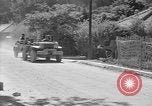
Resettling local people in housing. A Marine road grader used on construction site.US occupation of Okinawa in World War 2
American marines transport Okinawan women and children in jeep and trailer to a housing area.They park and women and children climb down. United States Marines in the housing area.. Women with baggage on their heads. Two old women outside a house. A bearded old man. Local people move down a dirt road.. Marines in a field as a road grader levels the field. A tent in the background.
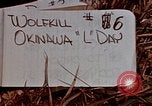
Marines of U.S. 1st Marine Regiment escort civilians across fields in Okinawa.
Marines of U.S. 1st Marine Regiment walk along path with civilians . Back view of Marines with rifles walking along road. Hills in background. Civilians escorted by Marines.
CRITICALPAST.COM: About Us | Contact Us | FAQs - How to Order | License Agreement | My Account | My Lightboxes | Shopping Cart | Advanced Search | Featured Collections | Website Terms & Conditions | Privacy Policy ©2026 CriticalPast LLC.
License Agreement |
Terms & Conditions |
Privacy Policy
©2026 CriticalPast LLC.